Quick Answer: How to Increase Milk Production in Dairy Cows
The seven highest-impact levers for increasing milk yield are: (1) maximize Dry Matter Intake through high-digestibility forage and frequent feed pushing, (2) nail the 6-week transition period, (3) increase milking frequency from 2× to 3× (+12–15% yield), (4) prevent heat stress above a THI of 68, (5) control SCC/mastitis, (6) manage a 45–60 day dry period, and (7) select better genetics via genomic indices. Each strategy is quantified below.
1. Introduction
Achieving peak milk production is the primary goal of any commercial dairy operation, but figuring out exactly how to increase milk production in dairy cows requires a multifaceted approach. It is not about a single magic feed additive; rather, it's about optimizing the complete lifecycle and daily management of your herd. From the precision of genomic selection to the meticulous management of the transition period, every operational choice directly impacts your bottom line. Dairy farming has evolved into an exact science where data-driven decisions dictate success.
In this comprehensive pillar page, we distill decades of dairy science and on-farm data into seven actionable, proven strategies. By focusing on fundamental biology, cutting-edge technology, and rigorous nutritional management, dairy producers can unlock the genetic potential of their herds. We will cover critical metrics, including Dry Matter Intake (DMI), the Temperature-Humidity Index (THI), and Somatic Cell Count (SCC), all of which play pivotal roles in maximizing yield. By implementing these practices, you can drive consistent, year-over-year growth in both production volume and overall herd health, ensuring a sustainable and profitable dairy business.
Quick Facts: The ROI of Dairy Optimization
- Nutrition: Every 1 kg increase in DMI produces roughly 2 kg of additional milk.
- Management: 3x daily milking vs 2x typically increases yield by 12–15%.
- Environment: Heat stress begins at a THI of 68; use SAW strategy (Shade, Air, Water).
- Health: The transition period (3 weeks pre- to 3 weeks post-calving) dictates the entire lactation curve.
Get dairy management tips weekly
Join 200+ dairy farmers getting practical KPIs, breeding insights, and profitability tips — no spam, unsubscribe anytime.
2. Strategy #1: Maximize Dry Matter Intake (DMI)
The golden rule of dairy nutrition is simple: feed drives yield. Dry Matter Intake (DMI) is the total amount of feed a cow consumes minus the water content. The relationship between DMI and milk production is highly predictable and universally recognized in dairy science. For every 1 kg increase in DMI, a cow produces roughly 2 kg of additional milk. Therefore, maximizing DMI is the most direct pathway to increasing milk production. When cows eat more, they consume more of the vital energy and protein required for high-volume milk synthesis.
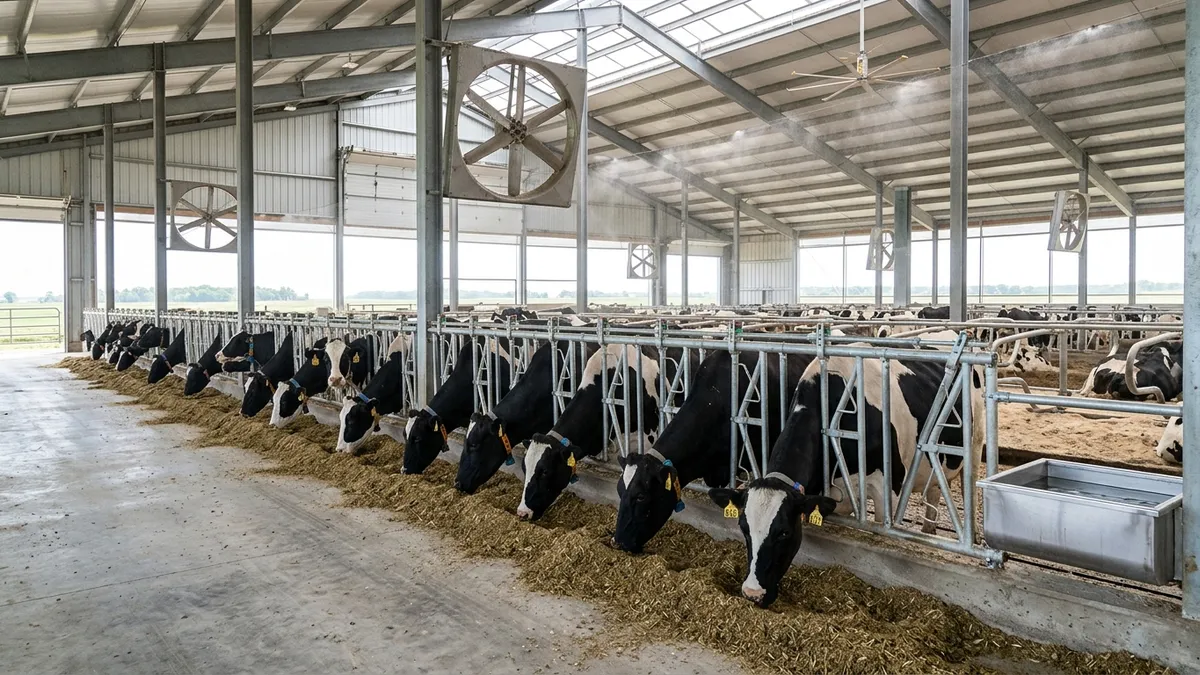
To maximize DMI, producers must ensure feed is highly palatable, perfectly mixed, and constantly available. The Total Mixed Ration (TMR) should be pushed up frequently—at least 10 to 12 times a day—to encourage cows to return to the feed bunk. Feeding behavior is strongly stimulated by the delivery of fresh feed and the physical act of pushing up feed. Bunk space is also critical; overcrowding leads to competition, which disproportionately affects timid cows and first-calf heifers, drastically reducing their DMI and subsequent milk yield.
Furthermore, forage quality cannot be overstated. High-digestibility forages pass through the rumen more quickly, allowing the cow to eat more. Late-harvested, highly lignified forages physically fill the rumen, triggering stretch receptors that signal the cow to stop eating, even if her energy requirements haven't been met. Balancing the ration for optimal neutral detergent fiber (NDF) and utilizing rumen-protected fats can help deliver high energy without compromising rumen health or fill limits.
Water availability is the silent partner of DMI. Milk is roughly 87% water. A high-producing dairy cow requires 30 to 50 gallons of fresh, clean water daily. If water intake is restricted due to dirty troughs, inadequate trough space, or stray voltage, DMI will immediately plummet, taking milk production down with it. Consistently monitoring and cleaning water sources is one of the lowest-cost, highest-return management practices available.
| Milk Yield | Water Intake at 20°C (68°F) | Water Intake at 32°C (90°F) |
|---|---|---|
| 20 kg (44 lbs) | 60–70 L (16–18 gal) | 80–100 L (21–26 gal) |
| 35 kg (77 lbs) | 80–100 L (21–26 gal) | 110–140 L (29–37 gal) |
| 45 kg (99 lbs) | 100–120 L (26–32 gal) | 140–180 L (37–48 gal) |
Rule of thumb: a cow drinks about 4 litres of water per litre of milk produced, and this requirement rises sharply in heat. Use our Water Trough Calculator to size your troughs correctly.
3. Strategy #2: Optimize the Transition Period (the make-or-break 6 weeks)
The transition period—defined as the 3 weeks before calving to the 3 weeks after calving (the 'close-up period')—is widely considered the most critical phase in a dairy cow's life. It is the make-or-break 6 weeks that dictate not only the peak yield of the upcoming lactation but also the cow's overall health and reproductive success. Mismanagement here can lead to a cascade of metabolic disorders, including ketosis, fatty liver, milk fever, and retained placentas, all of which devastate milk production and can permanently stunt a cow's lactation curve.
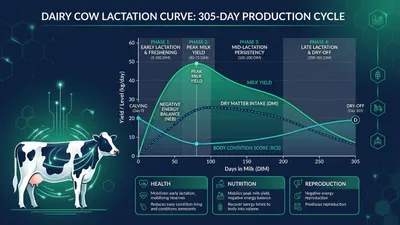
During the close-up period, a cow experiences a natural drop in DMI just as fetal growth reaches its maximum and the udder begins preparing for colostrogenesis. Following calving, energy demands for milk production skyrocket faster than the cow's ability to consume feed, pushing her into a Negative Energy Balance (NEB). The goal of transition management is to minimize the depth and duration of this NEB by encouraging rapid, steady increases in feed consumption postpartum.
Nutritional strategies during this time involve feeding a controlled-energy, high-forage diet (often utilizing chopped straw) during the far-off dry period, transitioning to a more energy-dense, highly palatable ration in the close-up phase. Implementing DCAD (Dietary Cation-Anion Difference) balancing with anionic salts in the close-up ration is highly effective at preventing hypocalcemia (milk fever) by mobilizing bone calcium prior to calving, ensuring smooth muscle function and prompt placenta expulsion.
Beyond nutrition, transition cows require absolute comfort. Overstocking in close-up and maternity pens is a severe error. These vulnerable animals need at least 30 inches of bunk space per head and soft, deep-bedded resting areas to minimize stress. A smooth, stress-free transition allows the cow to hit her peak milk aggressively, setting a high trajectory for the entire 305-day lactation cycle.
4. Strategy #3: Milking Frequency — 2x vs 3x vs Robotic Milking
Altering milking frequency is a powerful tool to stimulate higher production. The physiology of the bovine udder dictates that as milk accumulates, intramammary pressure increases. This physical pressure, along with the accumulation of a local protein known as the Feedback Inhibitor of Lactation (FIL), signals the secretory cells to slow down milk synthesis. By removing milk more frequently, intramammary pressure and FIL concentrations are reduced, thereby stimulating the udder to produce more milk continuously.
Moving a herd from 2x daily milking to 3x daily milking typically increases yield by 12–15%. While the transition requires a substantial increase in labor, parlor operating time, and a proportional increase in feed intake to support the higher yield, the additional revenue from the extra milk often outweighs the costs. This is particularly true in well-managed herds with high genetic potential. The decision to switch requires careful economic analysis, specifically calculating the Marginal Income Over Feed Cost (IOFC) generated by the extra milk against the added operational expenses.
Technological advancements have introduced Automated Milking Systems (AMS/Robots), which revolutionize milking frequency. Instead of batch milking the entire herd at fixed intervals, AMS allow for individualized milking frequency per cow. High-yielding early lactation cows may voluntarily visit the robot 4 to 5 times a day, maximizing their physiological capacity, while late lactation cows may drop to 1.5 to 2 visits. This targeted approach not only boosts overall herd production but also improves udder health by reducing pressure in the highest producers.
| Milking Frequency | Estimated Yield Increase (over 2x) | Primary Management Consideration |
|---|---|---|
| 2x Daily | Baseline (0%) | Standard labor and parlor requirements. |
| 3x Daily | +12% to +15% | Requires 50% more milking labor and higher DMI. |
| 4x Daily (Early Lactation) | +18% to +20% | Often restricted to fresh pens to stimulate peak yield. |
| Robotic / AMS | +10% to +15% (herd avg) | High capital cost; optimized individual cow frequency. |
5. Strategy #4: Heat Stress Management (with THI score guidance)
Heat stress is one of the most significant environmental suppressors of milk production globally. Dairy cows generate a massive amount of metabolic heat due to rumen fermentation and milk synthesis. As environmental temperatures and humidity rise, the cow's ability to dissipate this metabolic heat diminishes, leading to core body temperature elevation and a rapid decline in performance.
Heat stress begins at a Temperature-Humidity Index (THI) of 68. This threshold is lower than many producers realize—it can occur on a 72°F (22°C) day if humidity is high. At a THI of 68 and above, cows redirect blood flow from the internal organs (including the digestive tract and udder) to the skin surface to facilitate cooling. This physiological shift immediately depresses DMI and impairs milk synthesis at the cellular level.
To combat this, producers must implement the SAW strategy (Shade, Air, Water). Providing ample shade is the absolute minimum requirement. Active cooling requires high-velocity air (fans) combined with water (soakers/sprinklers) over the feed line and in the holding pen. The holding pen is the most critical area to cool, as cows are tightly packed, reducing their ability to shed heat, and heat stress experienced here has lingering effects for hours afterward.
Nutritional adjustments are also vital during periods of high THI. Because cows eat less, the ration must become more nutrient-dense. Utilizing rumen-bypass fats can increase energy density without adding the heat increment associated with fermentable carbohydrates. Additionally, shift feeding to cooler parts of day during heat stress—such as late evening or early morning—to encourage higher intake. Betaine supplementation helps water retention; as an osmolyte, betaine maintains cellular hydration and function during severe heat stress, protecting milk yield from catastrophic drops.
6. Strategy #5: SCC & Mastitis Control
Udder health is inextricably linked to milk production volume. Mastitis, the inflammation of the mammary gland, physically damages the secretory epithelial cells responsible for synthesizing milk. Even subclinical mastitis—where the milk appears normal but the immune system is actively fighting an infection—results in significant, silent yield losses across the herd.
The primary metric for monitoring udder health is the Somatic Cell Count (SCC). A high SCC indicates a strong immune response and elevated levels of white blood cells migrating into the udder. Mastitis increases SCC, and research indicates that for every 100,000 cells/mL increase in SCC above a baseline of 100,000, a cow loses approximately 1.5 to 2.5 pounds of milk per day.
Controlling SCC requires vigilant detection and prevention. Incorporating the CMT test for subclinical mastitis detection as a regular screening tool at the cow side allows for rapid intervention before it progresses to clinical stages. Parlor routine is critical: rigorous pre-dipping, adequate contact time, thorough drying with clean towels, and immediate post-dipping with an effective germicide are non-negotiable steps for preventing contagious and environmental mastitis.
Nutrition also plays a defensive role in SCC management. Trace minerals (especially zinc) strengthen udder health and reduce mastitis. Zinc, copper, and selenium are vital for maintaining the integrity of the keratin plug in the teat canal and supporting a robust immune response. Ensuring these trace minerals are supplemented in highly bioavailable forms is a proactive strategy for protecting milk yield and minimizing treatment costs.
7. Strategy #6: Dry Period Management
The dry period is not a vacation for the cow; it is a critical phase of regeneration and preparation. Proper dry period management directly impacts the subsequent lactation's production potential. The dry period 45–60 days critical timeframe allows the mammary gland to fully involute, clear old secretory cells, and regenerate new, healthy tissue for the upcoming lactation. Skipping or mismanaging this phase guarantees suboptimal production in the next cycle.
Shortening the dry period to less than 40 days generally results in reduced milk yield in the subsequent lactation due to insufficient cellular regeneration. Conversely, extending the dry period beyond 70 days increases the risk of cows becoming over-conditioned (fat), setting them up for severe metabolic issues (like ketosis) during the transition period.
The method of drying off is equally important. Research and modern veterinary practices show that abrupt drying off is preferred over gradual milking reduction. Gradual reduction extends the time the teat canal remains open without the regular flushing action of milking, increasing susceptibility to new intra-mammary infections. Abrupt cessation, combined with the application of an internal teat sealant and targeted dry cow therapy (where indicated by herd somatic cell history), provides the most effective protection for the regenerating udder, paving the way for maximum yield upon freshening.
| Dry Period Length | Impact on Subsequent Milk Yield | Physiological Consequence |
|---|---|---|
| < 40 Days | Decrease (10-15% loss) | Incomplete mammary gland involution and regeneration. |
| 45 - 60 Days | Optimal Yield (Baseline) | Maximal cellular renewal; optimal body condition maintenance. |
| > 70 Days | Variable / Increased Risk | High risk of over-conditioning; elevated risk of transition diseases. |
8. Strategy #7: Genetics & Genomic Selection
While nutrition and management dictate how much of a cow's potential is realized, genetics determine the absolute ceiling of that potential. Historically, dairy breeding relied on progeny testing, a slow and expensive process that delayed genetic advancement. Today, the dairy industry has been transformed by DNA technology, making genetic progress faster and more precise than ever before.
Genomic selection and EBV breeding values target yield, health, and disease resistance simultaneously. By evaluating the DNA of young heifers and bulls, producers can predict their future performance with remarkable accuracy based on specific genetic markers. This empowers dairy farmers to make highly accurate selection and culling decisions long before an animal ever enters the milking string, drastically reducing the cost of raising non-profitable replacements.
Modern breeding indices, such as the Net Merit Dollars (NM$) or customized herd indices, do not focus solely on fluid milk volume. They heavily weight components (fat and protein), productive life, daughter pregnancy rate, and mastitis resistance. By systematically breeding for a balanced, genetically superior animal, herds naturally increase their baseline milk production potential generation after generation. These genetically advanced cows are more resilient to environmental stressors, more efficient at converting feed into milk, and ultimately, more profitable for the dairy operation.
Genetics is also where breed choice and crossbreeding enter the picture. Whether you run purebred Holsteins, Jerseys, tropical Sahiwal or Gir cattle, or a structured crossbred herd (crossbred vs purebred), the seven strategies above determine how much of that genetic potential you actually convert into milk.
9. Bonus: Precision Feed Additives & Technologies
Once the fundamentals (forage quality, DMI, transition management, milking frequency, and comfort) are in place, targeted feed additives can deliver incremental gains. These are not substitutes for good management — they amplify it. The table below lists the most researched options with realistic expected responses.
| Additive / Technology | Mechanism | Typical Response |
|---|---|---|
| Rumen-Protected (Bypass) Fat | Adds energy density without the heat increment of starch or rumen fill. | +1–2 kg milk/day; can support body condition in early lactation. |
| Rumen-Protected Amino Acids (methionine, lysine) | Corrects the first limiting amino acids for milk protein synthesis. | +0.1–0.2% protein %; improved milk protein yield. |
| Sodium Bicarbonate / Buffers | Stabilizes rumen pH on high-grain, low-forage rations; prevents subacute ruminal acidosis (SARA). | Protects DMI and butterfat; prevents fat depression. |
| Betaine | Osmolyte that maintains cellular hydration and function during heat stress. | Mitigates heat-stress yield loss; protects persistency. |
| Direct-Fed Microbials (DFMs) | Yeast cultures and selected bacteria stabilize rumen microbial populations through feed changes. | Supports DMI and fiber digestion, especially in fresh cows. |
Additives work best when the ration is already balanced for physically effective NDF, fiber digestibility, and amino acid supply. Evaluate every additive on marginal IOFC — the extra milk revenue minus the added cost — before making it permanent.
10. When to Track Your Progress
Implementing these seven strategies requires rigorous monitoring to ensure a positive return on investment. Tracking changes in DMI, analyzing the cost-benefit of 3x milking, and monitoring the impact of heat stress mitigation all rely on accurate, real-time data collection and analysis.
To effectively manage these variables, utilizing comprehensive farm management software is essential. The DairyFarmManager app provides integrated tools to track daily yields, health events, and reproductive metrics. Furthermore, evaluating the financial viability of your feeding strategies is paramount; utilize our Income Over Feed Cost (IOFC) calculator to ensure that your nutritional investments are driving profitable milk production. Regular performance reviews using these tools will help you identify bottlenecks and refine your strategies for continuous improvement.
These strategies apply across geographies and breeds. See how they translate into national yields in our milk production per cow by country rankings, US state yields, Indian yields, and Pakistani yields. To understand how yield develops over a single lactation, read our lactation curve guide, and to pick the right genetics to apply them to, see our best dairy cow breeds guide.
Frequently Asked Questions
How does Dry Matter Intake (DMI) affect milk production?
There is a direct correlation between DMI and milk yield. For every 1 kg increase in Dry Matter Intake, a dairy cow produces roughly 2 kg of additional milk. Maximizing feed intake is the foundation of high production.
Is milking 3 times a day worth the extra labor?
Milking 3 times (3x) daily versus 2 times (2x) typically increases milk yield by 12–15%. While it requires more labor and feed, the additional revenue from the extra milk often outweighs the costs, particularly in well-managed high-yielding herds.
At what temperature do cows experience heat stress?
Heat stress begins at a Temperature-Humidity Index (THI) of 68. Once THI exceeds this threshold, cows begin to reduce feed intake, respiration rates increase, and milk production drops significantly if mitigation strategies aren't applied.
What is the optimal length for a cow's dry period?
The optimal dry period is 45–60 days. This allows sufficient time for the udder tissue to involute and regenerate. Research shows that abrupt drying off is preferred over gradual reduction, reducing the risk of new intra-mammary infections.
What is the 'transition period' and why is it important?
The transition period, or 'close-up period', encompasses the 3 weeks before to 3 weeks after calving. It is a critical window for managing negative energy balance and preventing metabolic disorders like ketosis and milk fever, which can suppress peak milk yield.
How does Somatic Cell Count (SCC) relate to milk yield?
A high SCC indicates an immune response to mastitis. Subclinical mastitis (often detected via the CMT test) damages milk-producing tissue and drastically lowers yield. Controlling SCC through hygiene and trace mineral supplementation (like zinc) is vital.
Can robotic milking systems increase production?
Yes, Automated Milking Systems (AMS) allow for individualized milking frequencies. High-yielding cows can choose to be milked 3 to 5 times a day, which aligns with their physiological capacity and often leads to higher total daily yields compared to strict 2x batch milking.