Pakistan consistently ranks as the 3rd or 4th largest milk producer globally. Despite this massive volume, the sector remains heavily reliant on buffaloes and operates largely within an informal economy. In this guide, we dive deep into the statistics and dynamics of milk production in Pakistan.
Quick Answer: The average milk yield in Pakistan varies sharply between traditional setups and modern farms. Indigenous cows (like Sahiwal and Cholistani) average 4-8 litres/day, while the famous Nili-Ravi buffalo yields 6-9 litres/day. Meanwhile, modern corporate farms using imported Holsteins can achieve 25-35 litres/day.
Overview of Milk Production in Pakistan
Milk production in Pakistan is unique on a global scale because buffaloes, rather than cattle, are the main engine of dairy output. A vast majority of the milk produced enters an informal supply chain, with only a fraction being processed by formal dairy companies. For a broader context on global averages, see our global milk production per cow guide.
Buffalo vs Cow Production: The Local Breeds
The dairy landscape is shaped by the distinction between buffalo and cattle production. While buffaloes dominate in numbers and preference, local cattle breeds are resilient and adaptable.
| Breed | Daily Yield | Fat % | Notes |
|---|---|---|---|
| Nili-Ravi Buffalo | 6–9 L/day | 6.5–8.0% | "Black gold"; backbone of Pakistan dairy. |
| Sahiwal / Red Sindhi | 4–8 L/day | 4.5–5.5% | Heat/tick resistant, 100% A2. |
| Cholistani | 4–7 L/day | 4.5–5.0% | Hardy, drought-tolerant. |
| Imported Holstein (corporate) | 25–35 L/day | 3.5–4.0% | Climate-controlled corporate farms. |
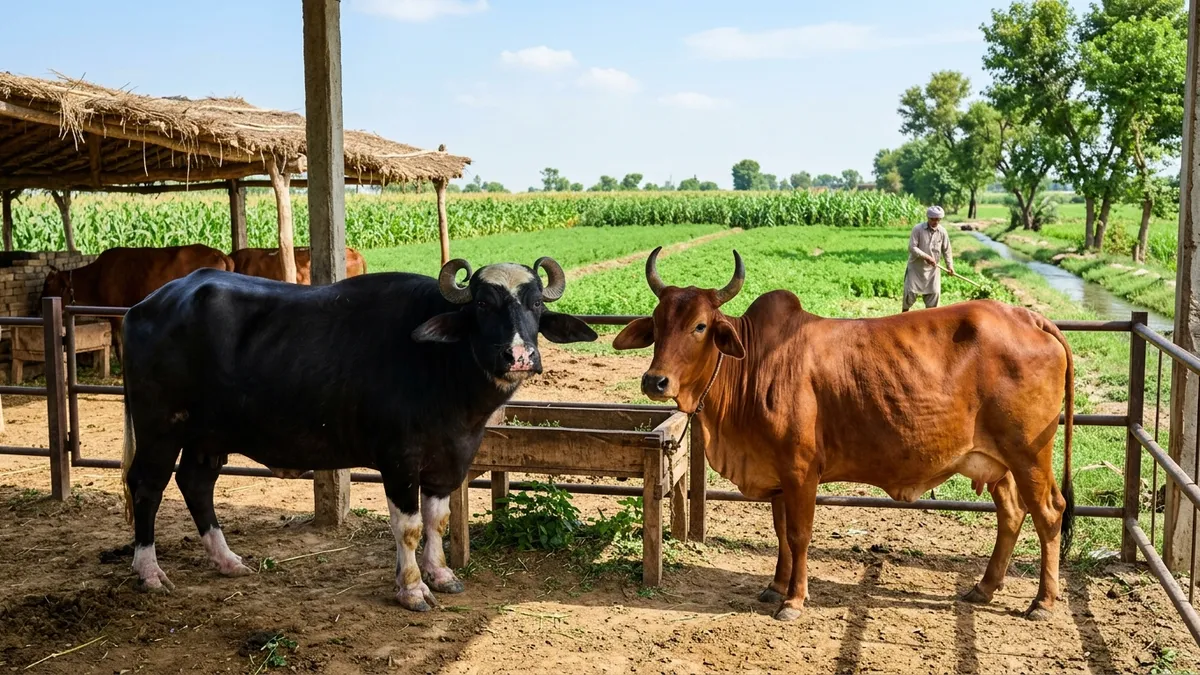
- Nili-Ravi Buffalo: Often referred to as the "black gold" of Pakistan. It is highly valued for its milk, which boasts a high fat content. The average yield is about 6-9 litres per day under typical rural management.
- Indigenous Cows: Breeds such as the Sahiwal, Red Sindhi, and Cholistani are renowned for their heat tolerance and disease resistance. They generally yield around 4-8 litres per day. Learn more in our Sahiwal cow milk production guide.
For comparative regional data, you might also be interested in the average milk production per cow in India.
The Rise of Corporate Dairy
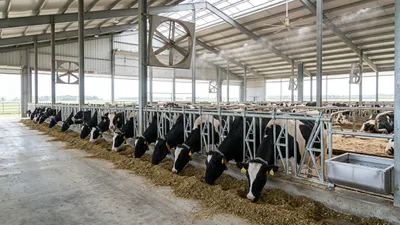
In contrast to the traditional, small-scale farming that defines most of Pakistan's dairy sector, a new wave of modern corporate dairy farming has emerged. These farms rely heavily on imported Holstein Friesian cattle. With advanced management, climate control, and precision nutrition, these operations are achieving impressive yields of 25-35 litres per day per cow, shifting the paradigm of what is possible in the region.
Optimize your dairy revenue: Use our free Milk Rate Calculator to determine the value of your milk based on its composition.
The Yield Gap & Opportunity
The gap between Pakistan's rural average (~4–8 L/day) and its own corporate farms (25–35 L/day) is one of the widest single-country yield spreads in the world — and it represents the sector's biggest opportunity. Closing it does not require importing more Holsteins; most of the gain comes from applying proven management to existing animals:
| System | Avg Yield | Key Gap vs Corporate |
|---|---|---|
| Rural Smallholder | 4–8 L/day | Low genetic base, poor nutrition, no cooling |
| Improved / Semi-Commercial | 12–18 L/day | Better ration + AI; still limited by heat |
| Corporate (imported HF) | 25–35 L/day | Reference benchmark (TMR, cooling, genetics) |
- Better Nutrition: Balanced rations and improved roughage quality can double yields in underproductive animals — the same levers described in our how to increase milk production guide.
- Genetic Improvement: Structured AI programs using high-yielding, tested bulls steadily raise the national genetic base, as seen in India's dairy sector.
- Heat Stress Management: Simple shade, ventilation, and water access protect the yield of exotic and crossbred animals through Pakistan's extreme summers.
- Formal Supply Chains: Cold-chain and collection infrastructure raises farm-gate prices by reducing spoilage and connecting farmers to formal processors.
Challenges in the Pakistani Dairy Sector
Despite being a top global producer, Pakistan's dairy industry faces structural and environmental hurdles:
- Heat Stress: Severe summer temperatures negatively impact milk yields, particularly for imported crossbred and exotic cattle.
- Fodder Scarcity: Seasonal fluctuations lead to shortages of quality green fodder, limiting the nutritional intake necessary for high production.
- Informal Supply Chains: The lack of a formal cold chain and milk collection infrastructure means farmers often receive lower prices for their milk.
- Low Genetic Potential: The majority of rural herds consist of non-descript animals with low genetic potential for milk production.
Improving these yields relies on the same levers used worldwide — see our how to increase milk production guide. For the premium potential of local breeds, read the A2 milk breeding guide, and compare Pakistan against India and the global rankings.
Frequently Asked Questions
What is the average milk yield per cow per day in Pakistan?
The average milk yield for local indigenous cows in Pakistan is around 4-8 litres per day. However, imported Holsteins on corporate farms can average 25-35 litres per day.
How much milk does a Nili-Ravi buffalo produce?
The Nili-Ravi buffalo, known as the 'black gold' of Pakistan, typically produces 6-9 litres of milk per day, with high butterfat content ideal for local consumption.
What are the main dairy breeds in Pakistan?
The primary dairy breeds in Pakistan include the Nili-Ravi buffalo, and indigenous cows like Sahiwal, Red Sindhi, and Cholistani. In recent years, imported Holstein Friesians have become popular in corporate farming.
Is Pakistan a top milk producer globally?
Yes, Pakistan ranks as the 3rd or 4th largest milk producer globally, primarily driven by its massive population of dairy animals, particularly buffaloes, rather than high per-animal yield.
What challenges do dairy farmers face in Pakistan?
Key challenges include heat stress, fodder scarcity, fragmented and informal supply chains, and the generally low genetic potential of rural herds.