A2 milk has moved from a niche health claim to a real, sustained price premium that dairy farmers can capture. Unlike most value-added strategies, transitioning to A2 requires no new equipment, no new facilities, and no production loss — it is a breeding and marketing decision. This guide explains exactly how to test your herd, breed for 100% A2/A2, time the transition, and capture the premium in your milk check.
Quick Answer: Transitioning a Herd to A2 Milk
1. Test your milking herd with a hair/tissue sample (~$12–$42/head) to identify A2/A2 cows. 2. Breed A2/A2 females exclusively to A2/A2 sires (or use sexed A2 semen). 3. Retain A2/A2 heifers as replacements and sell or divert A1/A1 offspring. 4. Verify your milk with a beta-casein protein test before marketing it as A2. Most herds reach 100% A2/A2 in 3–4 generations (6–8 years), with no loss in milk production.
The A2 Milk Opportunity for Dairy Farmers
Consumer demand for A2 milk continues to grow as people who experience discomfort with conventional milk find that A2-only milk is easier on digestion. Retail A2 milk sells at a clear premium — often $4.00 to $4.50 per half-gallon in US grocery stores, well above conventional. Farmers who contract with processors such as The a2 Milk Company receive a premium per hundredweight for verified A2 milk, and smallholders selling direct-to-consumer capture the full retail margin.
What makes A2 unique among value-added dairy strategies: because beta-casein type is controlled by a single gene, you can convert your herd genetically without buying a different breed, changing your parlor, or sacrificing yield. The work is in testing, record-keeping, and disciplined sire selection.
The Science: A1 vs A2 Beta-Casein (Farmer's Summary)
Milk protein is roughly 80% casein, and beta-casein is one of the major casein fractions. It exists in two common variants — A1 and A2 — that differ at just one amino acid out of 209: position 67 holds histidine in A1 and proline in A2.
That single substitution changes how the protein digests. The histidine in A1 allows digestive enzymes to cleave the chain and release a peptide called beta-casomorphin-7 (BCM-7); the proline in A2 blocks that cleavage, so little to no BCM-7 is released. This is the mechanism behind A2 milk's digestibility positioning. Historically, all cows produced A2; the A1 variant arose from a natural mutation in European taurine cattle thousands of years ago.
For a farm, the health-claim debate is secondary. The operational takeaway is simple: the cow's genotype determines the milk's beta-casein type, and you can select for it.
Genotypes: A1/A1, A1/A2, A2/A2
Every cow carries two copies of the beta-casein gene (one from each parent). Testing sorts your herd into three genotypes, and the milk each produces follows directly:
| Genotype | Milk Produced | Breeding Role in an A2 Transition |
|---|---|---|
| A1/A1 | Only A1 beta-casein | Cull from the A2 program or sell; do not retain as replacements. |
| A1/A2 (heterozygous) | Both A1 and A2 beta-casein | Useful during transition — bred to an A2/A2 sire, ~50% of offspring will be A2/A2. Milk is not pure A2. |
| A2/A2 (homozygous) | Only A2 beta-casein | The target. Retain as replacements and milk into your A2 tank. |
Because A2 is dominant at the phenotype level (one copy is enough to produce some A2), only A2/A2 cows produce pure A2 milk. A1/A2 cows produce a mix and cannot be milked into a certified-A2 tank — but they are valuable during the transition because crossing them to A2/A2 sires produces more A2/A2 daughters.
A2 Milk by Breed
The breed of cow strongly predicts the starting frequency of the A2 allele in your herd:
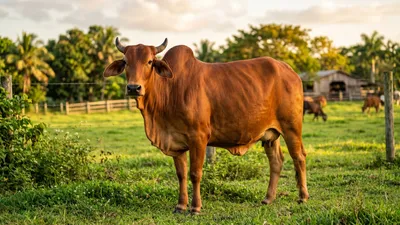
- Indigenous Zebu Breeds: Breeds like the Gir and Sahiwal naturally produce 100% pure A2 milk and carry almost exclusively the A2 allele.
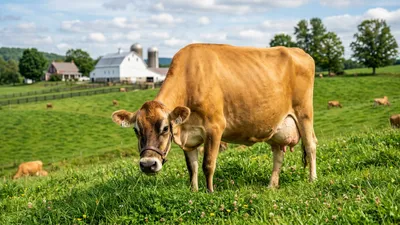
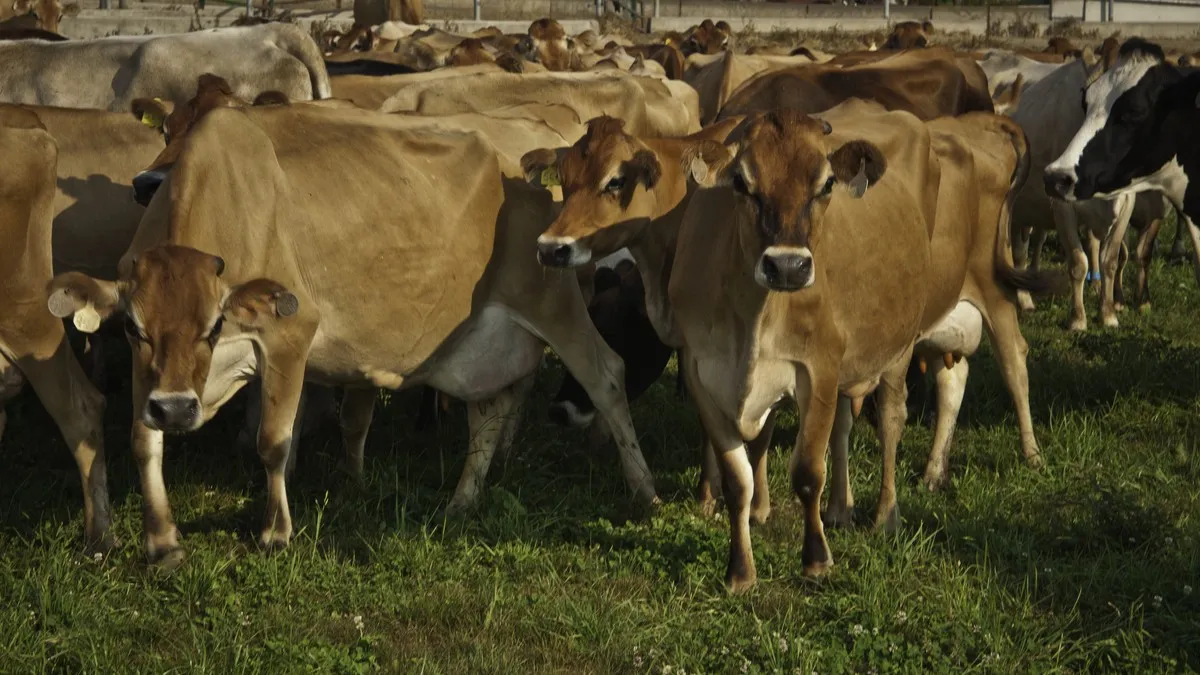
- Guernsey and Jersey: These breeds have a high prevalence of A2 genetics and are often the fastest to convert to a fully A2/A2 herd.
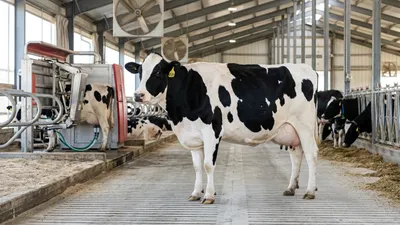
- Holstein: Standard Holsteins predominantly carry A1, but a meaningful minority are A2/A2. Through selective breeding with A2/A2 sires, a Holstein herd can produce 100% A2 milk without sacrificing high yields.
- Brown Swiss, Ayrshire, Milking Shorthorn: Intermediate A2 frequencies; test-and-select works well here too.
Testing & Breeding Protocol for an A2/A2 Herd
Transitioning to a pure A2 herd is a disciplined, repeatable process. Follow these steps:
Step 1: Test the milking herd
Collect a hair (tail switch), tissue (ear notch), or blood sample from every milking cow and every replacement heifer and send it to a genomic lab. Providers include Neogen, Zoetis, and university veterinary genetics labs. If you already run genomic testing for production and health traits, the A2 test can be added on for a low marginal cost; if not, an A2-only test typically runs about $12 to $42 per head.
Step 2: Sort and record
Record each animal's genotype in your herd management software. Sort your milking herd into A2/A2, A1/A2, and A1/A1 groups. This record is the foundation of the entire program — without it, you cannot verify your milk or make correct mating decisions.
Step 3: Breed deliberately
- A2/A2 females: Breed exclusively to A2/A2 sires. All offspring will be A2/A2.
- A1/A2 females: Breed to A2/A2 sires. Roughly 50% of offspring will be A2/A2 — retain and re-test them.
- A1/A1 females: Either breed to A2/A2 sires to convert their daughters (all will be A1/A2) or route them toward cull/beef. Do not retain A1/A1 daughters as dairy replacements.
- Sires: Source only A2/A2 bulls (many AI studs now label A2 status). Using sexed A2/A2 semen on your best females accelerates progress.
Step 4: Verify the milk
Before marketing milk as A2, verify it with a beta-casein protein test (milk-based, not just genotype-based). This is required for certification by most A2 programs and protects you from a single A1/A1 cow contaminating a tank.
Herd Transition Timeline
Because a heifer takes about two years to reach first calving, the biological clock sets a floor on transition speed. The table below shows a typical progression for a commercial Holstein or Jersey herd using A2/A2 sires on tested females.
| Generation | Years Elapsed | Approx. A2/A2 Herd % | Action |
|---|---|---|---|
| Baseline | Year 0 | 10–30% (varies by breed) | Test entire herd; identify A2/A2 females and source A2/A2 sires. |
| Gen 1 | ~2–3 years | 40–55% | First A2/A2-sired heifers freshen; retain them, cull A1/A1. |
| Gen 2 | ~4–5 years | 70–85% | A2/A2 females dominate the milking string; segregate any A1/A2 cows. |
| Gen 3–4 | ~6–8 years | ~100% | Full A2/A2 herd; verify milk and market as certified A2. |
Important: you do not have to wait for a fully converted herd to capture value. Some farms segregate — milking A2/A2 cows into a separate tank — and capture the premium immediately while the rest of the herd converts over the following years.
Economics: Premiums & ROI
The transition cost is modest relative to a dairy's annual budget, but it is real and multi-year:
- Genomic testing: ~$12–$42 per head for A2 status (cheaper when bundled with full genomic evaluation).
- A2/A2 semen premium: AI studs charge a modest premium for confirmed A2/A2 sires.
- Record-keeping: genotype tracking in your herd software.
- Time value: 3–4 generations before the whole herd is A2/A2.
The return side is the milk premium. A farm milking 100 cows at 30,000 lbs each produces 3,000,000 lbs (30,000 cwt) per year. Even a $1.00/cwt A2 premium is worth $30,000 annually; larger premiums or direct-to-consumer retail margins push this much higher. Model your own premium scenario with our Dairy Profit Calculator and Milk Rate Calculator.
| Scenario (100-cow herd, 30,000 lbs/cow) | Annual Premium Value |
|---|---|
| $0.50/cwt premium | +$15,000 / year |
| $1.00/cwt premium | +$30,000 / year |
| $2.00/cwt premium | +$60,000 / year |
Marketing & Certification
To sell your milk as "A2 milk," it must be verified to contain only A2 beta-casein. The main routes to market are:
- Contract with an A2 processor (e.g., The a2 Milk Company), which pays a premium to enrolled farmers who meet their testing and herd-verification requirements.
- Direct-to-consumer sales (farm store, farmers market, local delivery), where you control labeling and capture the retail premium.
- Local/value-added processors that accept verified A2 milk for branded products.
In all cases, keep your genotype records and milk test results current — they are your proof of claim.
Frequently Asked Questions
What is the difference between A1 and A2 milk?
A1 and A2 milk differ by a single amino acid at position 67 of the beta-casein protein chain: A1 has histidine, A2 has proline. During digestion, A1 beta-casein can release a peptide called BCM-7, while the proline in A2 blocks that cleavage. For farmers, the practical difference is genetic — a cow's genotype (A1/A1, A1/A2, or A2/A2) determines whether her milk contains A1, both, or only A2 beta-casein.
Which cow breeds produce A2 milk naturally?
Indigenous Zebu breeds like Gir and Sahiwal naturally produce 100% A2 milk. Channel Islands breeds such as Guernsey and Jersey have a high prevalence of A2 genetics, while standard Holsteins predominantly produce A1 milk — though a meaningful minority of Holsteins carry the A2A2 genotype and can be bred for A2.
How do farmers test cows for A2 genetics?
Farmers test cows using a hair (tail switch), tissue (ear notch), or blood sample sent to a genomic lab such as Neogen, Zoetis, or a veterinary genetics lab. An A2-only test runs roughly $12 per animal; adding A2 to a full genomic evaluation is often cheaper per head. Milk-based protein (beta-casein) tests are also available for verifying milk, not just the cow's genotype.
How long does it take to transition a herd to A2/A2?
It takes roughly 3 to 4 generations, or about 6 to 8 years, to bring most commercial herds to 100% A2/A2 using A2/A2 sires on tested A2/A2 females. Because the A2 allele is dominant and determined by a single gene, progress is faster than for most traits — but heifer raising time (about 2 years to first calving) sets the minimum pace.
Is A2/A2 genetically linked to lower production?
No. Large herd datasets show A2/A2 cows perform as well as their A1 counterparts for milk yield and components. The A2 allele is not genetically linked to production, fertility, or health traits, so selecting for A2 does not cost you production — the cost is simply the testing and semen premium during transition.
Is it worth the cost to transition to A2 milk?
It can be highly profitable if you have access to a market — a direct consumer base, a local processor, or a contract with a company like The a2 Milk Company — willing to pay a premium for certified A2 milk. Farmers must weigh this premium against the multi-year timeline and the cost of genomic testing and A2/A2 semen. Model the ROI with your own milk price and premium using our Dairy Profit Calculator.
Can Holstein cows produce A2 milk?
Yes. Some Holsteins carry the A2A2 genotype. By testing the milking herd, retaining A2/A2 females, and breeding them exclusively to A2/A2 sires, a Holstein herd can be converted to 100% A2 milk while maintaining high yields — capturing A2 premiums without giving up volume.