India is the world's largest milk producer by volume, contributing nearly 24% of global milk production. However, the average milk yield per cow remains significantly lower than in Western countries. In this guide, we explore the nuances of milk production in India, detailing cow vs buffalo yields, state-wise data, and what's driving the industry forward in 2026.
Quick Answer: The average milk yield per cow in India is heavily dependent on breed and management. Indigenous cows yield about 3-5 litres/day, while crossbreds yield 7-10 litres/day. Uttar Pradesh, Rajasthan, and Madhya Pradesh are the top milk-producing states.
Overview of Indian Milk Production
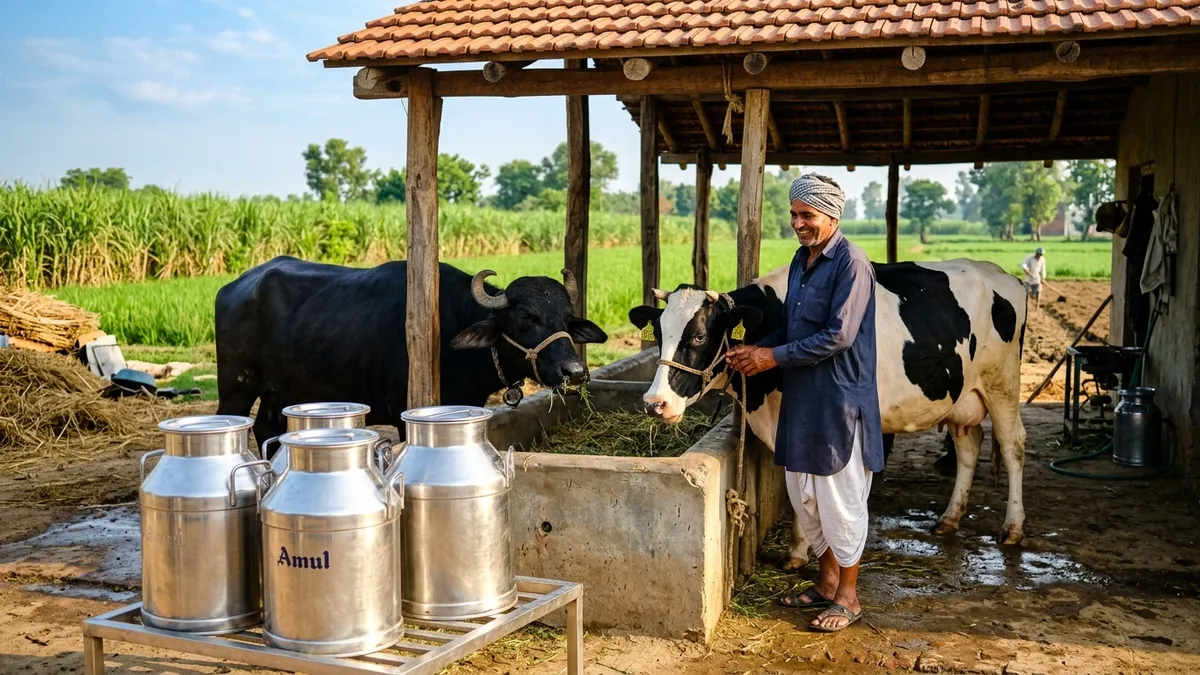
While India's total milk output is staggering, it relies on a massive population of cattle and buffaloes rather than high per-animal productivity. The average yield per cow in the US might exceed 30 litres per day, but India's landscape is different. It is dominated by smallholder farmers with 2 to 5 animals, utilizing agricultural byproducts and limited concentrates. For global benchmarks, you can check our general milk production per cow guide.
Cow vs Buffalo Yields: Breed Comparison
Buffaloes are the backbone of India's dairy sector, contributing over 50% of total milk production despite representing a smaller population than cattle. Here is a comparison of average daily yields:
| Animal / Breed Category | Average Daily Yield (Litres) | Fat Content (%) | Notes |
|---|---|---|---|
| Crossbred Cows (e.g., HF Cross, Jersey Cross) | 7–10 | 3.5–4.5 | Higher volume, popular in commercial dairies. |
| Indigenous Cows (e.g., Gir, Sahiwal) | 3–5 | 4.5–5.5 | Highly heat tolerant, rich A2 milk. See Gir cow guide and Sahiwal cow guide. |
| Buffalo (e.g., Murrah, Nili-Ravi) | 5–8 | 6.5–8.0 | Very high butterfat, excellent for ghee and sweets. |
| Non-Descript / Local Cattle | 1.5–2.5 | 4.0–4.5 | Very low input, low output. |
State-Wise Breakdown of Milk Production
Milk production is not evenly distributed across India. The northern and western states dominate the dairy landscape due to stronger cooperative networks and favorable climatic conditions for certain high-yielding breeds.
| Rank | State | Key Drivers |
|---|---|---|
| 1 | Uttar Pradesh | Huge cattle population, dominant buffalo farming. |
| 2 | Rajasthan | Strong cooperative presence, arid climate suited for indigenous breeds. |
| 3 | Madhya Pradesh | Rapidly growing commercial dairy sector. |
| 4 | Gujarat | Home to Amul, excellent cooperative model, high-yielding buffaloes. |
| 5 | Andhra Pradesh | Strong private dairy sector, high adoption of crossbreds. |
Indian farmers: Calculate your earnings efficiently with our free Milk Rate Calculator based on FAT and SNF parameters.
Challenges & Opportunities in Indian Dairying
The gap between India's potential and actual yield presents significant opportunities for improvement.
- Nutrition Deficits: A severe shortage of quality green fodder and expensive concentrated feed limits genetic potential. Better ration balancing is a key opportunity.
- Heat Stress: As temperatures rise, heat stress drastically reduces milk yield, especially in crossbreds like HF. Indigenous breeds handle this better, but crossbreds need active cooling.
- Transition to Commercial Farming: The shift from subsistence farming to commercial dairying is introducing better management practices, AI (artificial insemination) for genetic improvement, and modern milking technologies.
Closing this yield gap comes down to the same management levers used worldwide — see our how to increase milk production guide. For the premium side of indigenous breeds, read the A2 milk breeding guide, and compare India against Pakistan and the global rankings.
How India Is Closing the Yield Gap
India's per-cow average (~1,800 kg/year) sits far below the global leaders, but the trajectory is upward. Four structural shifts are driving improvement:
- Rising Crossbred Share: HF and Jersey crossbreds already yield 7–10 L/day versus 3–5 for indigenous cows, and their share of the national herd keeps growing — especially in states like Andhra Pradesh and Punjab.
- Sexed Semen & Genomics: Wider adoption of sexed semen for high-yielding genetics and genomic testing is accelerating genetic gain, mirroring the selection indices used in US state herds.
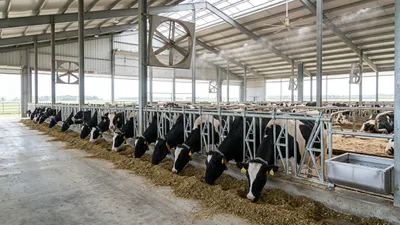
- Commercial Farming: The shift from 2–5-cow smallholders to organized commercial dairies brings TMR, cooling, and record-keeping that lift individual-cow output.
- Premium Indigenous Channels: Pure Gir and Sahiwal A2 milk is carving out premium urban markets, improving margins even at lower volume.
The realistic near-term goal for most Indian operations is not to match Israel's 12,000 kg/cow, but to move a subsistence 3–5 L/day cow to a well-managed 10–12 L/day — a doubling that is achievable with better nutrition and health management alone.
Frequently Asked Questions
What is the average milk yield per cow per day in India?
In India, the average milk yield is approximately 3-5 litres per day for indigenous cows, while crossbred cows average 7-10 litres per day. Overall, the national average is around 7-8 litres per day when accounting for commercial and crossbred herds.
Which state has the highest milk production in India?
Uttar Pradesh is currently the highest milk-producing state in India, contributing over 15% to the total national milk production, followed closely by Rajasthan and Madhya Pradesh.
How much milk does a Murrah buffalo produce per day?
A healthy Murrah buffalo typically produces 5-8 litres of milk per day on average, though high-yielding individuals can reach 12-20 litres/day under good management. Buffalo milk is prized for its high fat content (6.5-8%).
Which cow breed gives the highest milk in India?
Crossbred cows, particularly Holstein Friesian (HF) crosses, produce the highest volume of milk in India, often yielding 15-25 litres per day. Among indigenous breeds, Gir, Sahiwal, and Red Sindhi are the highest yielders (5-14 litres/day).
Why is the average milk yield low in India?
The average milk yield in India is lower than Western countries primarily due to nutritional deficits, heat stress, a high proportion of non-descript cattle breeds, and limited access to veterinary care and quality feed resources in rural areas.