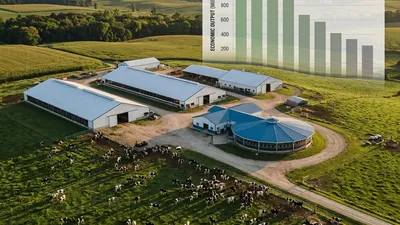
Heat stress is the silent profit killer on dairy farms worldwide. When temperatures rise, cows divert energy from milk production to cooling themselves — and the financial damage adds up fast. A 100-cow Holstein herd experiencing moderate heat stress for just 30 days can lose $4,500–$8,700 in milk revenue alone. This guide explains how to calculate heat stress risk using the Temperature-Humidity Index (THI), estimate your milk losses, and implement the most effective cooling strategies.
Key Takeaways
- THI 68 is the threshold where modern Holsteins begin experiencing mild heat stress — and the damage starts before you see visible signs.
- Every THI point above 68 reduces milk yield by 0.2–0.4 lbs/day per cow — costs that compound quickly across a herd.
- Water intake can double during heat stress, from 30 gallons to 60+ gallons per cow per day.
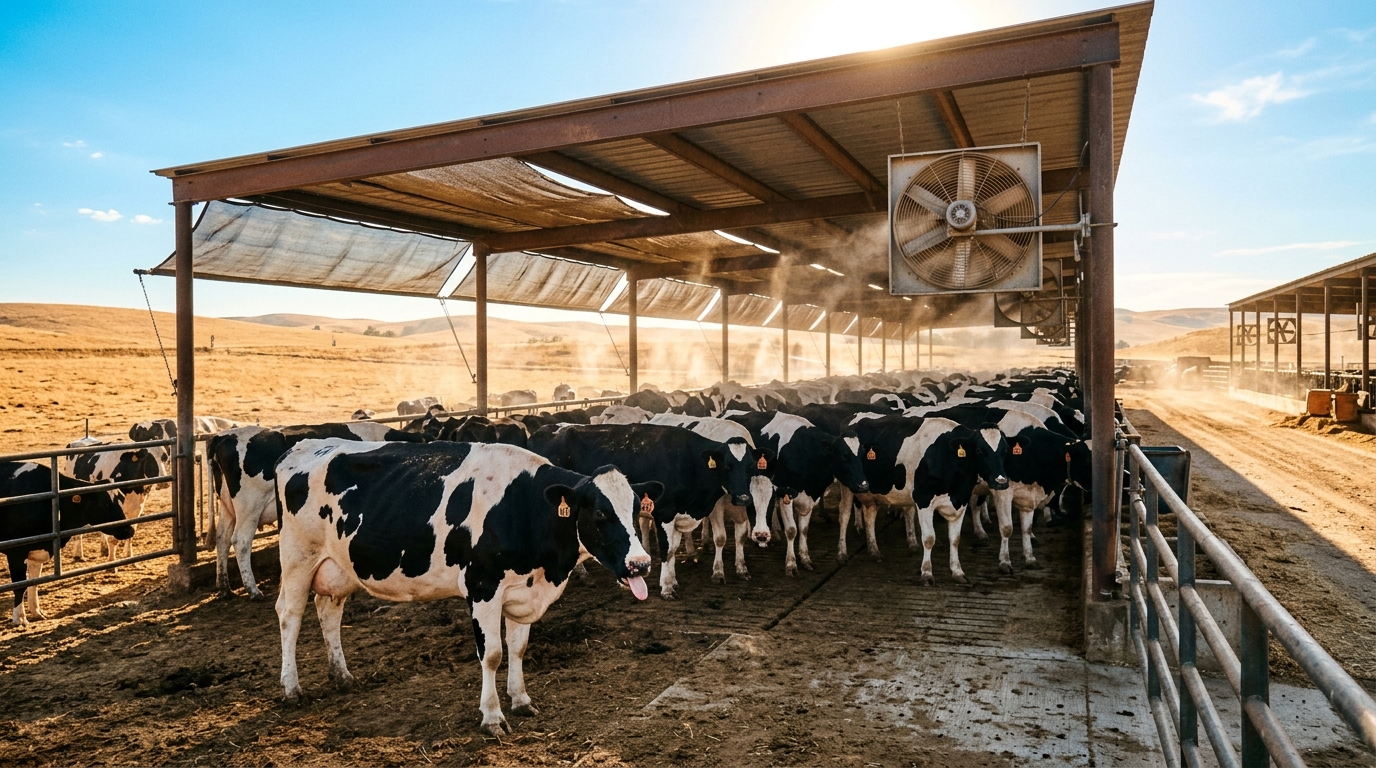
- Shade + fans + sprinklers are the most cost-effective combination, reducing THI by 10–15 points in the resting area.
What Is Heat Stress in Dairy Cattle?
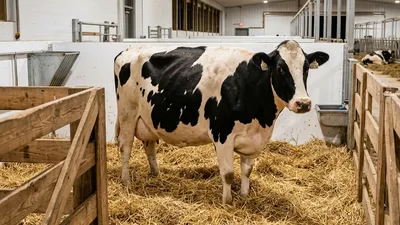
Heat stress occurs when a cow's metabolic heat production exceeds her ability to dissipate it to the environment. Cows produce heat through digestion, fermentation, and milk synthesis — a high-producing Holstein generates 2–3 times more metabolic heat than other livestock of similar size. When the ambient environment cannot absorb this heat fast enough, the cow's core body temperature rises, triggering a cascade of physiological responses.
The cow's primary cooling mechanisms are panting (evaporative cooling from the respiratory tract) and sweating (evaporative cooling from the skin). However, dairy cows have relatively few sweat glands compared to other species, making them heavily dependent on panting. In humid conditions, even panting becomes less effective because the air is already saturated with moisture.
The Thermoneutral Zone
Every cow has a thermoneutral zone — the temperature range where she can maintain her body temperature without expending extra energy. For lactating dairy cows, this range is approximately 41–68°F (5–20°C). Below this range, the cow uses energy to stay warm. Above it, she uses energy to cool down. The goal of heat stress management is to keep cows within or near this zone, especially during the hottest hours of the day.
Modern dairy cows are particularly vulnerable to heat stress because of their high milk production. A cow producing 80 lbs of milk per day generates significantly more metabolic heat than a cow producing 40 lbs. This is why heat stress thresholds are lower for high-producing cows than for the general cattle population.
The THI Formula Explained
The Temperature-Humidity Index (THI) is the gold standard for measuring heat stress risk in dairy cattle. Developed by the National Research Council (NRC) in 1971, THI combines air temperature and relative humidity into a single number that represents the combined thermal load on the animal.
THI = (1.8 × Ta + 32) − [(0.55 − 0.0055 × RH) × (1.8 × Ta − 26)]
Where Ta = air temperature in °C, RH = relative humidity in %
Why does humidity matter? When humidity is high, the air cannot absorb as much moisture from panting and sweating, making evaporative cooling less efficient. A cow at 85°F with 30% humidity (THI 76) is under less stress than the same cow at 80°F with 80% humidity (THI 79). That's why THI — not temperature alone — is the correct metric.
For example: at 80°F and 50% humidity, THI = 75. At 80°F and 80% humidity, THI = 82. The same temperature produces very different stress levels depending on moisture in the air.
Check Heat Stress Risk
Calculate THI and estimate milk yield losses for your current temperature and humidity.
THI Thresholds by Breed
Not all cows experience heat stress at the same THI. Breed, production level, and acclimation all affect when stress begins. The table below shows the standard thresholds used by dairy nutritionists and veterinarians:
| Stress Level | Holstein | Jersey | Brown Swiss | What Happens |
|---|---|---|---|---|
| No Stress | THI < 68 | THI < 72 | THI < 70 | Normal production, normal feed intake |
| Mild Stress | THI 68–72 | THI 72–79 | THI 70–76 | Reduced feed intake, slight milk drop, increased water intake |
| Moderate Stress | THI 72–79 | THI 79–84 | THI 76–82 | Significant milk loss, increased respiration rate, sweating |
| Severe Stress | THI 79–89 | THI 84–89 | THI 82–89 | Heavy panting, droupiness, severe milk loss, reproductive failure |
| Fatal | THI > 89 | THI > 89 | THI > 89 | Death risk — emergency cooling required immediately |
Heat-tolerant breeds like Brahman and Gir have higher thresholds (THI 75–80) due to their evolutionary adaptation to tropical climates. Crossbreeding with Bos indicus genetics (such as Girolando or Braford) can improve heat tolerance in tropical dairy operations.
How Heat Stress Reduces Milk Production
Heat stress reduces milk production through two primary mechanisms: reduced dry matter intake (DMI) and redirected energy allocation. When a cow is heat-stressed, she eats less feed, which directly reduces the energy available for milk synthesis. Additionally, she diverts energy away from milk production toward cooling mechanisms (panting, sweating, increased respiration).
The Milk Loss Formula
Milk Loss (lbs/day) = (0.0742 × TW − 2.68) × DMI
Where TW = THI-weighted temperature factor, DMI = dry matter intake in lbs
In practical terms, research consistently shows that for every THI point above 68, milk yield drops by approximately 0.2–0.4 lbs/day per cow. This means:
| THI | Est. Milk Loss (lbs/day) | Est. Daily Loss per 100 Cows | Monthly Revenue Loss (at $20/cwt) |
|---|---|---|---|
| 72 | 2–4 lbs | 200–400 lbs | $1,200–$2,400 |
| 78 | 6–8 lbs | 600–800 lbs | $3,600–$4,800 |
| 85 | 10–15 lbs | 1,000–1,500 lbs | $6,000–$9,000 |
| 90+ | 15–25 lbs | 1,500–2,500 lbs | $9,000–$15,000 |
The loss is not temporary. Research from the University of Wisconsin shows that cows exposed to severe heat stress during the first week of lactation produce 8–12% less milk for the entire lactation — not just during the heat event. Prevention is far more profitable than recovery.
Water Requirements During Heat Stress
Water is the most important nutrient during heat stress — milk is approximately 87% water, and panting losses must be replaced. Under normal conditions, a lactating Holstein drinks 30–35 gallons per day. During severe heat stress, this requirement can double to 60+ gallons.
Key water management principles during heat stress:
- Water temperature: Cows prefer water between 40–65°F (4–18°C). Cool water encourages intake; warm water discourages it.
- Trough capacity: Ensure troughs can refill fast enough that all cows can drink within 30–45 minutes. If cows are walking away from the trough, your flow rate is too low.
- Trough placement: Position water near shade structures and feed bunks. Cows will not walk far for water during heat stress.
- Water quality: Clean water encourages intake. Algae, debris, or strong odors reduce consumption.
Size Your Water Trough
Calculate daily water intake per cow and the recommended trough size for your herd.
Why Conception Rates Drop in Summer
Heat stress severely impacts dairy cow reproduction through multiple mechanisms:
- Reduced estrus expression: Heat-stressed cows show shorter, less intense standing heat, making detection more difficult.
- Lower embryo survival: Elevated core body temperature directly damages developing embryos. Conception rates can drop by 15–25% when THI exceeds 72.
- Impaired oocyte quality: Heat stress during the follicular phase (before ovulation) reduces egg quality, lowering the chance of successful fertilization.
- Reduced blood flow to the uterus: During heat stress, blood is redirected to the skin for cooling, reducing nutrient supply to the reproductive tract.
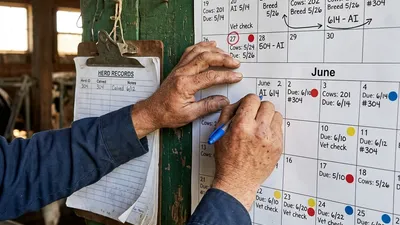
Many dairies experience a "summer slump" in pregnancies, with conception rates dropping from 35–40% in spring to 15–25% in mid-summer. The economic impact extends beyond the immediate breeding failure — more days open means higher semen costs, longer calving intervals, and increased risk of premature culling.
10 Proven Cooling Strategies
The most effective heat stress management combines shade, air movement, and direct cooling. Here are the top strategies ranked by cost-effectiveness:
| # | Strategy | Cost | THI Reduction | Key Details |
|---|---|---|---|---|
| 1 | Shade structures | Low–Medium | 5–8 points | Cover feed bunks and loafing areas. 40–60 sq ft per cow minimum. Reduce radiant heat load by 30–50%. |
| 2 | High-volume fans | Medium | 3–5 points | Install 48–60" fans every 20–24 ft in resting areas. Air speed of 4–6 mph over cows provides significant convective cooling. |
| 3 | Misters/sprinklers | Medium | 5–8 points | Fine mist over feedbunk or holding pen. Must be combined with fans for evaporative cooling. Water droplets should wet the hair coat, not just the air. |
| 4 | Soaking (wet/dry) | Low | 8–12 points | Heavy soak of cow's back, then turn off. Fans dry the coat, pulling heat from the body. Most effective single strategy when combined with fans. |
| 5 | Abomasal buffers | Low | Indirect | Sodium bicarbonate (150–200g/cow/day) buffers rumen pH during reduced intake, maintaining fermentation efficiency. |
| 6 | Night feeding | None | Indirect | Feed 60–70% of TMR after 4 PM. Cows eat more during cooler evening hours, reducing daytime metabolic heat. |
| 7 | Ration adjustments | Low | Indirect | Increase energy density (add fat), reduce fiber (less fermentation heat), increase protein digestibility. |
| 8 | Scrape alleys | Medium | 2–3 points | Remove manure from alleys 3–4x daily during heat events. Wet manure generates heat and harbors bacteria. |
| 9 | Timers on sprinklers | Low | Optimization | Activate cooling when THI exceeds 68. Use weather station data or on-farm sensors to trigger systems automatically. |
| 10 | Soaker fans at entrance | Medium | 5–8 points | Cool cows before they enter the parlor holding pen — the hottest area on most dairies. Reduces stress during milking. |
The Wet/Dry System: Best ROI
Research from the University of Florida and Arizona consistently shows that the wet/dry cooling system (soaking cows, then allowing fans to dry the coat) provides the greatest milk production response per dollar invested. The principle is simple: water absorbs heat from the cow's body as it evaporates, and fans accelerate evaporation. A 10-second soak followed by 3–5 minutes of fan drying is more effective than continuous misting.
How to Monitor Heat Stress on Your Farm
You can't manage what you don't measure. Here are the most practical monitoring methods:
Daily THI Tracking
Record daily maximum temperature and humidity using a weather station or smartphone app. Calculate THI manually or use our free calculator. Track THI throughout the summer to identify peak risk periods and evaluate when cooling systems should be activated.
Panting Score
Walk through the barn during the hottest hours (2–5 PM) and score cows on a 0–4 scale:
- Score 0: Normal respiration, no visible distress
- Score 1: Slight increase in respiration rate, ears slightly out
- Score 2: Moderate panting, mouth open, tongue may extend
- Score 3: Heavy panting, mouth open, salivation, distress
- Score 4: Severe distress, labored breathing, drooling, may be lying down
If more than 10% of cows score 3 or above, your cooling system needs immediate attention.
Milk Yield Trending
Track daily milk production per cow. A sudden drop of 5–10% during hot weather — with no change in ration — indicates heat stress. Compare current production to the same period in spring to quantify the seasonal impact.
Water Intake Monitoring
If your water system has a meter, track daily water consumption. A spike in water use during hot weather is normal, but a drop in water use during heat stress is a red flag indicating illness or trough problems.
Frequently Asked Questions
What is heat stress in dairy cattle?
Heat stress occurs when a cow's heat production exceeds her ability to dissipate it. Modern high-producing Holsteins are especially vulnerable because they generate 2–3x more metabolic heat than other livestock. Heat stress is measured using the Temperature-Humidity Index (THI), which combines air temperature and relative humidity into a single risk score.
At what temperature do dairy cows get heat stress?
Modern high-producing Holsteins begin experiencing mild heat stress at a THI of 68 (approximately 77°F / 25°C at 50% humidity). Jerseys are slightly more tolerant, starting at THI 72. However, heat stress can occur at lower temperatures if humidity is high — that's why THI matters more than temperature alone.
How much milk do cows lose from heat stress?
A cow can lose 5 to 15 pounds of milk per day during severe heat stress. For a 100-cow Holstein herd at THI 78 for 30 days, the estimated milk revenue loss is $4,500–$8,700. The formula is: Loss (lbs/day) = (0.0742 × TW − 2.68) × DMI, where TW is the temperature-humidity weighted index.
How much water does a dairy cow drink during heat stress?
In thermoneutral conditions, a lactating dairy cow drinks about 30–35 gallons of water per day. During severe heat stress (THI > 80), her requirement can double, reaching up to 50–60 gallons per day to replace fluids lost through panting and sweating.
How can you prevent heat stress in dairy cows?
The most effective strategies are shade structures, fans, misters/sprinklers, and soaker systems. Cows should have access to shade during the hottest hours, and cooling systems should activate when THI reaches 68 for Holsteins. Feeding in the evening and adjusting rations for lower fiber also help reduce metabolic heat production.
References
- Penn State Extension. (2025). "Heat Stress in Dairy Cattle: Temperature-Humidity Index and Management Strategies." Penn State University.
- University of Wisconsin-Madison Extension. (2025). "Heat Stress Effects on Dairy Cow Reproduction and Production." UW-Madison Division of Extension.
- USDA Agricultural Research Service. (2025). "Heat Stress and Dairy Cattle: Cooling Strategies for Improved Welfare and Productivity." ARS Heat Stress Research.
- National Research Council. (1971). "A Guide to Environmental Research on Animals." NRC, Washington DC. (Original THI formula development.)