Choosing the right dairy cow breed is the single most consequential decision a new dairy farmer makes — it determines your milk check, your feed bill, your vet bills, and how much of your life you spend fighting heat stress or calving problems. There is no single "best" cow; the right breed depends on your climate, feed resources, target market (volume vs. butterfat/cheese), and management experience. This guide compares the major dairy breeds on real production data so you can match a breed to your farm.
Best Dairy Cow Breeds for Beginners — Quick Picks
- Best overall for beginners: Jersey — easy calving, docile, heat-tolerant, high butterfat, efficient on pasture.
- Best for maximum milk volume: Holstein Friesian — highest yield, but needs excellent feed and management.
- Best crossbreed: Holstein × Jersey (or ProCROSS) — hybrid vigor, fertility, and balance of volume and components.
- Best for hot/tropical climates: Sahiwal or Gir — natural heat and disease resistance, 100% A2 milk.
- Best family milk cow: Jersey or Brown Swiss — small, calm, and manageable on a small farm.
Get dairy management tips weekly
Join 200+ dairy farmers getting practical KPIs, breeding insights, and profitability tips — no spam, unsubscribe anytime.
Why Breed Selection is Your Most Important Decision
If you are learning how to start a dairy farm, choosing your cow breed is step one. Breed genetics set the ceiling for your herd's production; your management determines how close you get to it. A Holstein fed poor grass will underperform a well-managed Jersey. The wrong breed in the wrong climate — say, a Holstein in tropical India without cooling — will hemorrhage money through heat stress, disease, and low fertility.
Before comparing breeds, clarify three things: (1) your climate (temperate vs. tropical), (2) your payment system (volume-based vs. component/butterfat-based), and (3) your labor and capital availability (intensive TMR systems vs. pasture-based family farms).
Dairy Breed Comparison Table
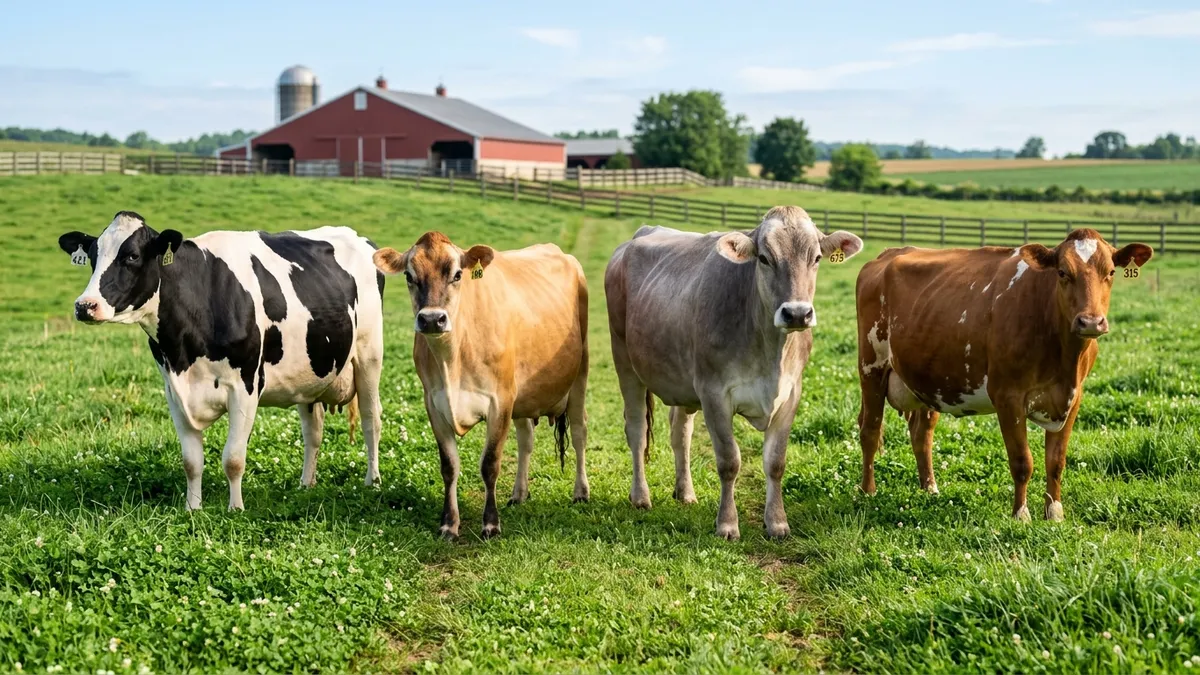
The table below compares the major dairy breeds across the metrics that actually matter for profitability and manageability. Use it as a quick reference, then read the detailed breed profiles below.
| Breed | Milk/Day | 305-Day Total | Fat % | Protein % | Climate | Best For |
|---|---|---|---|---|---|---|
| Holstein Friesian | 70–80 L | 10,000–12,000 L | 3.6–3.8% | 3.0–3.2% | Temperate | Max volume, commercial |
| Jersey | 20–25 L | 6,000–8,000 L | 4.8–5.5% | 3.6–4.0% | All / hot-tolerant | Beginners, butterfat, pasture |
| Brown Swiss | 25–30 L | 7,000–9,000 L | 4.0–4.2% | 3.5–3.7% | Temperate / rugged | Longevity, cheese, hills |
| Guernsey | 20–25 L | 5,500–7,000 L | 4.5–5.0% | 3.4–3.6% | Temperate | Golden A2 milk, family farms |
| Ayrshire | 20–25 L | 5,500–7,000 L | 3.9–4.0% | 3.2–3.4% | Temperate / hardy | Robust grazing, tough terrain |
| Milking Shorthorn | 20–25 L | 5,000–6,500 L | 3.8–4.0% | 3.2–3.3% | All / adaptable | Dual-purpose, small farms |
| Sahiwal | 8–15 L | 1,800–2,200 kg | 4.8–5.0% | 3.3–3.5% | Tropical | Heat/tick resistance, A2 |
| Gir | 8–12 L | 1,800–2,200 kg | 4.5–5.0% | 3.5% | Tropical | Heat tolerance, A2, docile |
See how these breeds compare to global averages in our average milk production per cow guide.
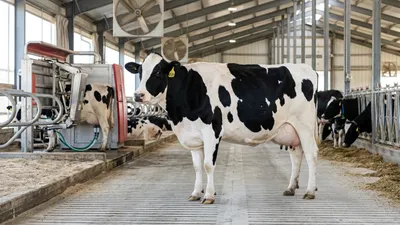
For Maximum Milk Volume: Holstein Friesian
The Holstein Friesian is the most popular dairy cow in the world for one reason: massive fluid volume. They average 70–80 litres (155–175 lbs) per day and 23,000+ lbs per lactation, dominating commercial dairy herds (about 94% of the US herd).
- Pros: Highest milk volume, generating maximum revenue in volume-based payment markets; extensive genetic data and AI availability.
- Cons: High feed demand (24–28 kg DM/day), highly sensitive to heat stress (THI >68), prone to metabolic issues (ketosis, milk fever) if not managed perfectly.
- Best for: Commercial indoor setups, temperate climates, and experienced managers with a nutritionist.
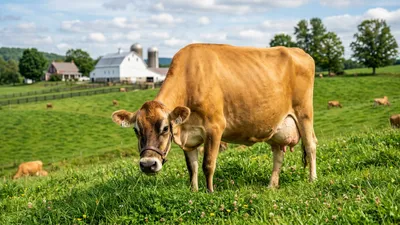
For Premium Milk & Efficiency: Jersey
The Jersey cow is smaller (~400 kg) but produces milk with exceptionally high butterfat (4.8–5.5%) and protein, earning premiums from cheese and butter processors and on component-priced milk markets.
- Pros: Premium component price, excellent feed conversion (more milk solids per kg of DMI), docile temperament, very easy calving, heat-tolerant.
- Cons: Lower fluid volume, lower salvage value for male calves, smaller frame means less meat value.
- Best for: Beginners, pasture-based systems, hot climates, and farms selling to cheese/butter processors or on A2 markets.
For Dual Purpose & Hardiness: Brown Swiss, Guernsey, Ayrshire
Beyond the big two, several breeds offer excellent combinations of hardiness, longevity, and milk quality.
Brown Swiss
Originating in the Alps, the Brown Swiss is a large, rugged cow that produces large volumes of high-protein milk with a favorable casein profile for cheese.
- Pros: Exceptional longevity (often 5+ lactations), strong legs and hooves, high protein-to-fat ratio ideal for cheese, docile.
- Cons: Slower to mature, large body size requires more maintenance feed.
- Best for: Hilly/rugged terrain, cheese markets, and farmers wanting cows that last.
Guernsey
The Guernsey produces rich, golden milk (the color comes from high beta-carotene) and has a high prevalence of A2 genetics.
- Pros: High butterfat, naturally high A2 beta-casein, efficient grazier, docile, good for family milk and A2 markets.
- Cons: Smaller population, less available genetics than Holstein/Jersey.
Ayrshire & Milking Shorthorn
Both are hardy, adaptable graziers with strong immune systems and good fertility. The Milking Shorthorn is genuinely dual-purpose (milk and beef), making it attractive for small farms that also raise beef calves.
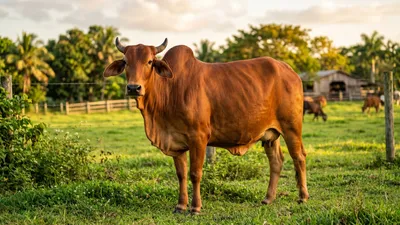
For Tropical & Hot Climates: Sahiwal & Gir
If you live in India, Pakistan, Brazil, or equatorial Africa, exotic breeds like Holsteins will struggle with the heat and tick-borne diseases. Indigenous Zebu breeds like the Sahiwal and Gir are your best options.
- Pros: Extreme heat tolerance, tick/disease resistance, longer productive lives (8–10 lactations), produce 100% premium A2 milk.
- Cons: Much lower daily milk yield (8–15 litres/day) than exotic breeds.
- Best for: Tropical climates, organic farming, smallholder systems, and the premium A2 milk market.
A popular strategy in tropical commercial dairies is crossing indigenous cows with Holstein or Jersey genetics (crossbreds yield 15–25 litres/day) while retaining some Zebu hardiness. See our milk production in India data for crossbred vs. indigenous benchmarks.
Crossbreeds & Hybrid Vigor
Crossbreeding captures heterosis (hybrid vigor), which is especially valuable for low-heritability traits like fertility, survivability, and disease resistance. Structured systems like ProCROSS (Holstein × Jersey × Viking Red) consistently show crossbred cows with better fertility, longer productive life, and lower culling than pure Holsteins, at only modestly lower volume.
- Best beginner cross: Holstein × Jersey — keeps decent volume with Jersey's fertility, components, and easier calving.
- Key rule: Use structured, recorded crossbreeding rather than random grading-up, and track breed composition for consistent results.
For a detailed analysis, read our crossbred vs purebred dairy cows comparison.
Breed Decision Matrix
Use this quick guide to make your final choice. Once you've selected a breed, use our Milk Yield Calculator to project your farm's output and our Feed Cost Calculator to estimate feed expenses.
- Choose Holstein if: You want maximum fluid volume, have cheap high-quality feed, and can manage metabolic risk.
- Choose Jersey if: You are a beginner, have limited pasture, get paid for butterfat, or want an easy family cow.
- Choose Brown Swiss if: You want longevity, cheese-solids milk, and rugged terrain adaptability.
- Choose a Crossbreed if: You want a low-maintenance herd with high fertility and hybrid vigor.
- Choose Sahiwal/Gir if: You operate in a hot, tropical environment and want to sell A2 milk.
Track your herd’s performance in one place
Log milk yield, monitor breeding, track expenses, and generate reports — all from your browser. No download needed.
Frequently Asked Questions
Which cow breed is most profitable for beginners?
For beginners, the Jersey or a Jersey crossbred is often the most profitable and easiest to manage. Jerseys have fewer calving difficulties, better heat tolerance, higher butterfat premiums, and lower feed requirements than pure Holsteins, making them more forgiving for new farmers. A Holstein-Jersey cross gives hybrid vigor plus solid volume.
What is the easiest dairy cow to raise?
Jerseys and Brown Swiss are renowned for their docile temperament, making them very easy to handle. Sahiwal and Gir cows are exceptionally easy to raise in tropical climates due to their natural resistance to ticks, heat, and local diseases.
Which cow gives the most milk?
The Holstein Friesian is the undisputed champion of milk volume, averaging 70–80 lbs (32–36 litres) per day and 23,000+ lbs (10,400 kg) per 305-day lactation. However, they require pristine management, high-quality feed, and often climate control to achieve and maintain these yields.
Are crossbred dairy cows good?
Yes, crossbreeding is becoming highly popular (e.g., the ProCROSS system). Crossbred cows benefit from 'hybrid vigor' (heterosis), resulting in better fertility, longer productive life, fewer veterinary bills, and better heat tolerance compared to purebreds, while maintaining excellent milk production.
Can I raise a dairy cow on just grass?
You can, but milk yield will be significantly lower. High-yielding breeds like Holsteins cannot physically eat enough grass to support their energy needs and will lose body condition. If you plan to feed 100% grass, a smaller breed like a Jersey or a dual-purpose breed like Brown Swiss or Shorthorn is much better suited.
How much does a dairy cow cost for a beginner?
Purchase prices vary widely by breed, age, and genetics. A quality bred heifer typically costs $1,500–$2,500 for Jerseys and Brown Swiss, and $2,000–$3,500+ for high-genomic Holsteins. Family milk cows sold as pets or with confirmed A2A2 genetics can command $3,000–$5,000+. Budget for feed, shelter, and vet care on top of the purchase price.
What breed of dairy cow is best for a small farm or family milk cow?
For a family milk cow on a small farm, the Jersey is the top recommendation: small size (400 kg), docile temperament, high butterfat, easy calving, and efficient on pasture. Brown Swiss and Guernsey are also excellent family cows. Avoid pure Holsteins unless you can provide grain supplementation and have experience.