Dairy Farm Management Software: The Essential Tech Stack for 2026
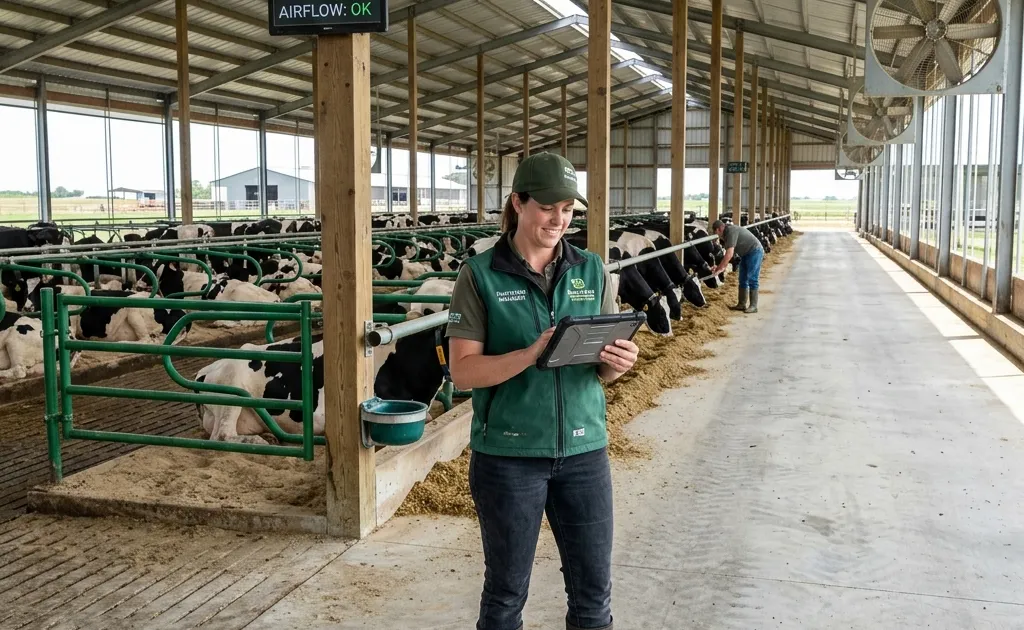
The role of the dairy farm manager has fundamentally changed. Ten years ago, success was defined by how hard you worked in the parlor. Today, success is defined by how well you manage your data. A modern dairy farm manager doesn't just manage cows—they manage profit margins, genetic potential, and operational efficiency through software.
Key Takeaways
- Dairy farm management software replaces whiteboards, notebooks, and spreadsheets with real-time mobile tracking
- The non-negotiable tech stack: herd management software, THI heat stress calculators, and reproductive tracking tools
- Top 6 KPIs to track daily: IOFC, feed cost per litre, feed efficiency, milk production, profit margin, and SCC
- Software ROI is among the highest of any farm investment — $5,000/year subscription can unlock $50,000+ in margin improvements
- Excel costs more than it saves — manual entry errors, no push notifications, no mobile parlor access
The Shift: From Pitchforks to iPads
Historically, a dairy farm manager's day was entirely physical. The focus was on feeding, milking, and treating sick animals. While animal husbandry remains the foundation of dairy farming, the margins in the dairy industry have become too tight to rely on "gut feeling" or visual observation alone.
Today's highly profitable dairy farm managers are essentially data analysts who wear rubber boots. They rely on connected systems, sensors, and robust dairy farm management software to make decisions that impact the bottom line.
The transformation happened gradually. Ten years ago, only the largest operations (2,000+ cows) could afford enterprise software. Today, cloud-based platforms with mobile apps put the same analytics in the hands of a 50-cow operation. The technology barrier has collapsed — the competitive advantage now belongs to whoever uses it most effectively, not whoever can afford it.
Core Responsibilities of a Modern Manager
The daily checklist of a top-tier dairy farm manager looks vastly different than it used to. While physical herd checks are still necessary, the modern manager spends a significant portion of their day analyzing farm data to prevent issues before they occur.
The Modern Manager's Daily Schedule
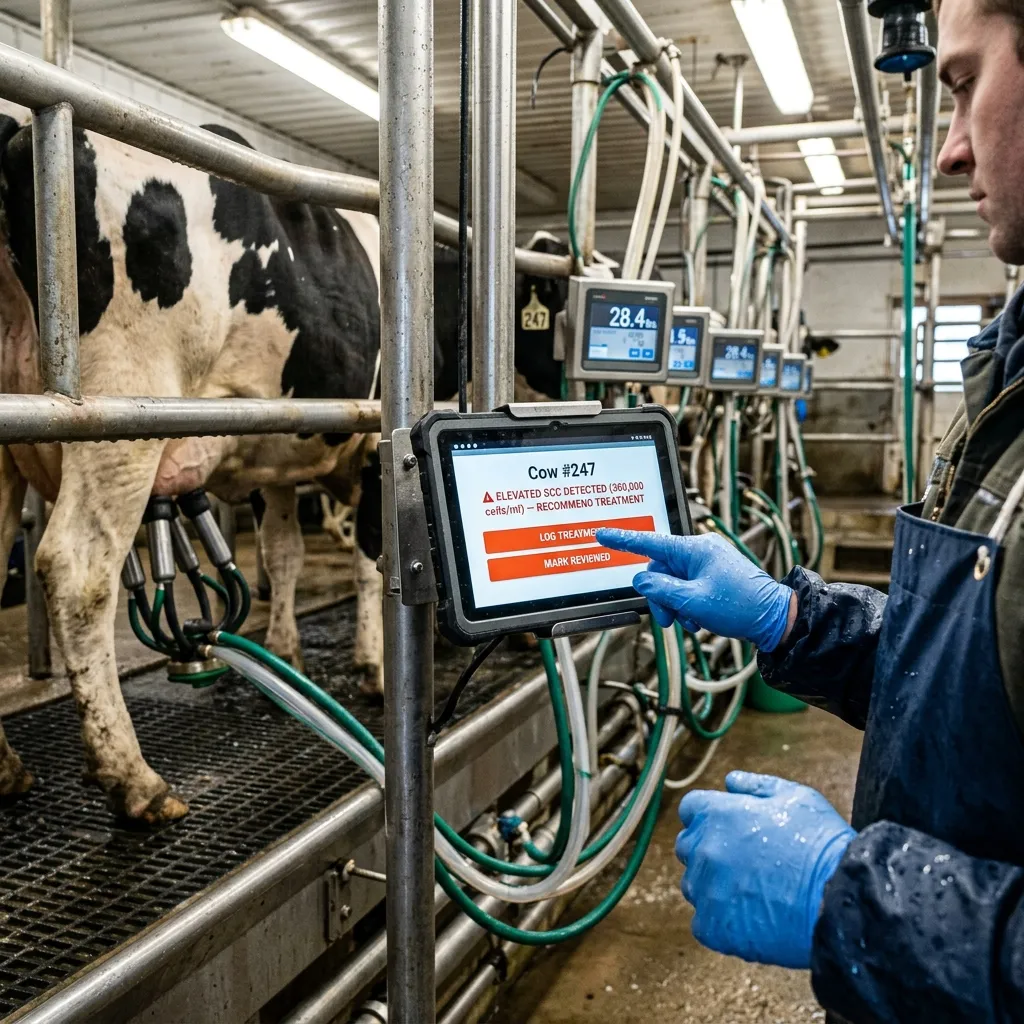
- 5:00 AM - The Parlor Check: Rather than just milking, the manager reviews the morning parlor data. They check for sudden drops in milk yield from individual cows, which is often the first indicator of metabolic issues or mastitis.
- 8:00 AM - Data & Dashboard Review: Reviewing the farm's dashboard to check overnight alerts. Did the THI index spike? Which cows are flagged for heat today?
- 10:00 AM - Feed & Bunk Management: Analyzing dry matter intake (DMI) from the morning feed. Adjusting rations based on current feed prices to maintain strict Income Over Feed Cost margins.
- 2:00 PM - Labor & Task Delegation: Using digital task delegation so milkers, herdsmen, and the farm veterinarian know exactly which cows need attention during the afternoon shift, eliminating miscommunication.
Labor Management & Team Leadership
Labor is one of the top three expenses on any commercial dairy operation, and managing farmhands is often a manager's biggest pain point. High turnover rates mean constant training. A modern dairy farm manager mitigates this by standardizing protocols (SOPs) within their software. When a new milker starts, the exact protocols for pre-dipping, wiping, and post-dipping are clearly defined, tracked, and measured through the resulting Somatic Cell Count (SCC) data. (Read our guide on SCC management) For a complete overview of herd management responsibilities, see our Dairy Herd Management guide.
The Ultimate Dairy Farm Manager's Tech Stack
You cannot manage what you do not measure. Here is the non-negotiable technology stack for anyone running a commercial dairy operation today:
1. Cloud-Based Herd Management Software
This is the central nervous system of your farm. A proper herd management app replaces whiteboards, notebooks, and messy spreadsheets. It should allow you to pull up any cow's complete medical, breeding, and production history while standing right next to her in the barn.
Need help choosing software?
We spent 40+ hours analyzing every major option on the market. See our definitive Dairy Farm Software Comparison Guide to find the best fit for your operation size.
2. Environmental Stress Calculators
Summer heat can destroy profit margins overnight through milk loss and dropped conception rates. Modern managers don't wait for cows to start panting; they use tools like a THI Heat Stress Calculator to activate cooling protocols proactively.
3. Precision Reproduction Trackers
Missing a heat cycle costs approximately $3 to $5 per cow, per day open. Automated calving date calculators and heat watch alerts ensure you never miss a breeding window. For a complete breeding program guide, see our Dairy Cow Breeding Guide.
Software by Farm Size: What You Actually Need
Not every farm needs the same software. A 50-cow operation has fundamentally different requirements than a 5,000-cow enterprise. Choosing the right platform means matching features to your actual needs — not paying for capabilities you'll never use.
Small Operations (Under 100 Cows)
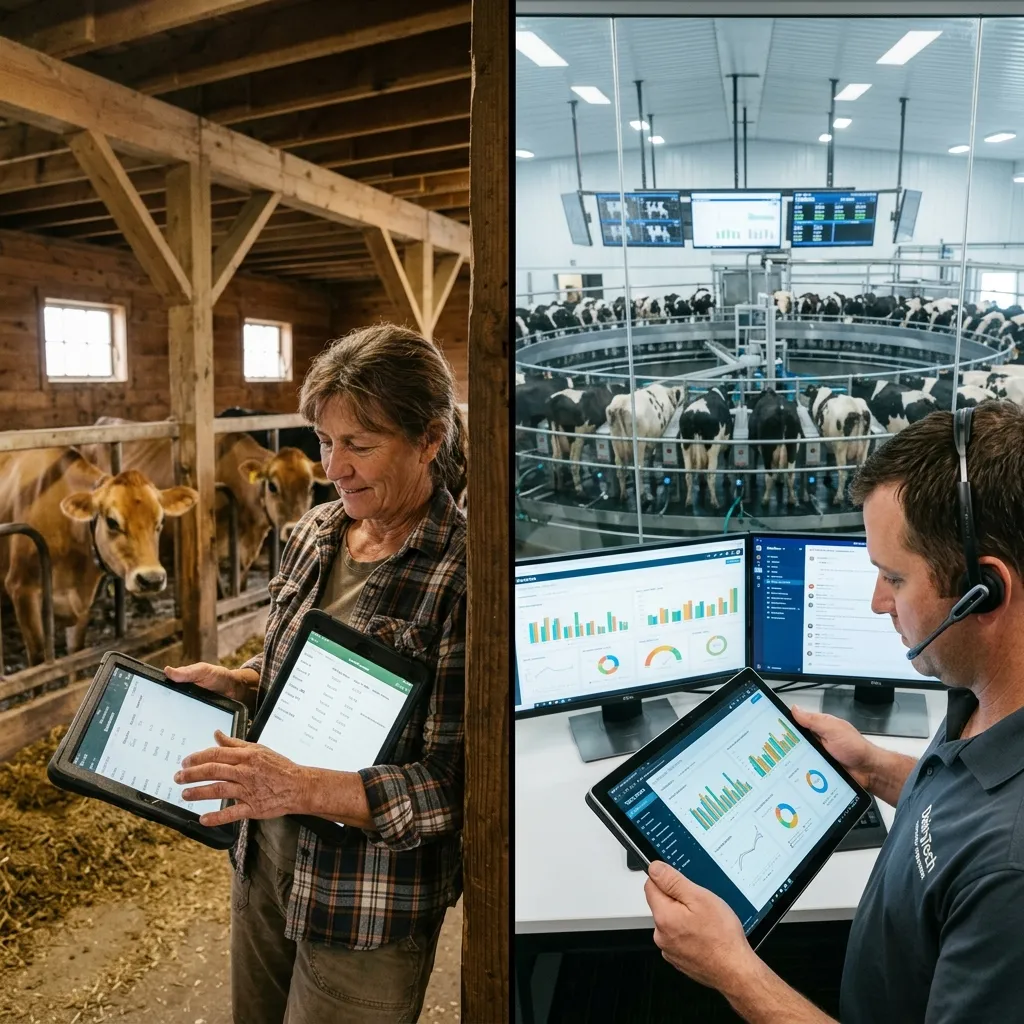
Priority features: simple health and breeding records, basic production tracking, mobile access for two or three users. Skip enterprise features like task delegation, group-level feed analysis, or multi-parlor integration. Free or low-cost apps like Cattly or Herdwatch cover the essentials. The ROI threshold is lower — you need software that saves at least 2–3 hours per week to justify the cost.
Mid-Size Operations (100–500 Cows)
This is where software ROI becomes dramatic. You need: production tracking by cow and group, feed cost analysis, reproductive management with heat detection alerts, SCC monitoring, and basic financial dashboards. Multiple users (manager, herdsman, nutritionist) need simultaneous access. Platforms like DairyFarmManager, DairyComp, or PC-DART fit this tier. The embedded calculator below shows the margin improvement available at this scale.
Large Operations (500+ Cows)
Enterprise requirements: multi-user with role-based access, task delegation and protocol management, integration with DHIA and milk processors, group-level and pen-level analytics, custom reporting, and API access for data export. Integration with automated milking systems (AMS) and precision feeding equipment becomes critical. The software decision at this scale is a 5–10 year commitment — choose platforms with proven uptime, data portability, and active development.
Track your herd’s performance in one place
Log milk yield, monitor breeding, track expenses, and generate reports — all from your browser. No download needed.
Financial KPIs Every Manager Must Know
A great herdsman knows how to treat a sick cow. A great dairy farm manager knows how much treating that sick cow impacts the month's profit margin.
If you are managing a dairy, these are the metrics you should be checking on your dashboard every single morning:
- Income Over Feed Cost (IOFC): The ultimate metric of profitability. According to Penn State Extension, IOFC is the most effective way to evaluate a dairy farm's financial health, as feed costs often consume over half of gross milk income. If you aren't tracking this, you are flying blind. (Learn how to calculate IOFC). See our 2026 IOFC benchmarks for current-year targets.
- Feed Cost Per Litre: With feed making up 50-70% of operational costs, tracking your feed cost per litre is essential for pricing your milk contracts correctly and locking in grain futures. Compare against feed cost per cow benchmarks for your region.
- Feed Efficiency (ECM/DMI): The biological conversion of feed to milk. A higher feed efficiency means more milk from the same feed. See our Feed Efficiency guide for the formula and 2026 benchmarks.
- Average Milk Production: Knowing where your herd stands relative to average milk production benchmarks helps identify underperforming groups and culling candidates.
- Profit Margin Per Cow: The complete financial picture — all revenue minus all costs. See our Dairy Farm Profitability guide for the full breakdown and Profit Margin Guide for step-by-step calculation.
- SCC Penalty Impact: High somatic cell counts don't just mean sick cows; they mean docked milk checks. Research published in the Journal of Dairy Science continually highlights the massive economic losses associated with subclinical mastitis. Top managers use an SCC Penalty Calculator to instantly see the financial ROI of culling a chronic high-cell cow versus continuing treatment.
Data Security & Privacy
Your farm data is valuable — and vulnerable. Production records, breeding history, financial metrics, and veterinary treatments represent years of operational intelligence. If that data is lost, stolen, or held hostage by ransomware, the impact goes far beyond inconvenience. A single data breach can expose employee records, financial statements, and proprietary genetic information.
What to Demand from Your Software Provider
At minimum: (1) automatic daily backups with 30-day retention, (2) encryption in transit (HTTPS) and at rest (AES-256), (3) two-factor authentication for user accounts, (4) role-based access control so employees only see data relevant to their role, and (5) a clear data ownership policy — you should be able to export all your data in standard formats (CSV, XML) at any time without asking permission.
Ask these questions before signing up: Where is my data stored? Who owns it? What happens to my data if I cancel? Can I export everything? Is there an audit trail for data changes? If the vendor can't answer these clearly, choose a different platform. Your farm data is your competitive advantage — treat it with the same care you treat your genetics records.
Integrations & Compatibility
Dairy farm management software doesn't operate in isolation. It needs to exchange data with DHIA testing laboratories, milk cooperative systems, feed management platforms, and potentially automated milking systems (AMS). The quality of these integrations determines whether your software saves time or creates more work.
Essential Integrations
DHIA Integration: Automatic import of test-day milk production, component, and SCC data eliminates manual entry and ensures your records are always current. Ask whether the platform supports your regional DHIA lab's data format — most major labs (Central Livestock Association, Dairy Records Management Systems, etc.) are supported by leading platforms.
Milk Processor/Cooperative: Some platforms can import milk check data directly from your processor, automatically matching revenue to production records. This closes the loop on IOFC calculations without manual data entry.
Feed Management: Integration with TMR software (like Nutritionist or FeedWatch) allows automatic import of ration formulations and actual feed delivered, enabling real-time feed cost tracking.
Automated Milking Systems: If you run robots or parlors with automated identification, the software should import milking data (yield, conductivity, flow rate) in real time. This is a critical feature for AMS operations — without it, you lose the primary benefit of the technology.
Hardware Requirements
Software is only half the equation. The hardware that runs it — and the sensors that feed it data — determine whether your system actually works in the barn environment. Dairy barns are harsh: dust, humidity, temperature extremes, and occasional direct water exposure. Consumer-grade electronics fail quickly.
Minimum Hardware Setup
Mobile devices: At least one smartphone or tablet per milking parlor and one for the herd manager. Ruggedized cases are worth the investment — a $50 case prevents a $500 phone replacement. Android tablets in the $200–$400 range (Samsung Galaxy Tab Active series) balance cost and durability.
Internet connectivity: Cloud-based software requires reliable internet. If your barn has weak WiFi, invest in a barn-rated access point or cellular hotspot. The cost of connectivity ($50–$100/month) is trivial compared to the cost of data loss from manual records.
Sensors (optional but high-ROI): Activity monitors for heat detection ($150–$250/cow, payback in 1–2 breeding cycles), rumination sensors ($100–$200/cow, early health alerts), and automated body condition scoring cameras. Start with activity monitors — they deliver the fastest and most measurable ROI of any sensor investment.
Getting Started & Record Keeping
Implementing software on an existing operation requires a phased approach. Start with the basics — herd health tracking and breeding records — then add production monitoring, feed cost analysis, and financial dashboards as your team becomes comfortable. The goal is not to use every feature on day one; it's to build a data habit that compounds over time.
For a complete blueprint on structuring your operation from scratch, see our How to Start a Dairy Farm guide. For the data foundation that makes software valuable, read our Dairy Farm Record Keeping guide.
Why Top Managers Are Ditching Excel
Many farm owners try to build their own "management software" using Microsoft Excel. While it feels free, it is arguably the most expensive mistake a manager can make.
Excel requires manual data entry (which leads to errors), it doesn't send push notifications when a cow is in heat, and it cannot be easily updated from a smartphone in the milking parlor. For a deep dive into the hidden costs of spreadsheets, read our analysis on Why Excel is Costing Dairy Farmers. Use our ROI Calculator to see if switching to software pays for itself on your farm.
Become a Better Dairy Farm Manager Today
The best tool a manager can have is one that gets out of their way. DairyFarmManager was built specifically for this purpose: to give you enterprise-level tracking in a simple, mobile-friendly interface.
Start Your Free AccountFrequently Asked Questions
What does a modern dairy farm manager do?
A modern dairy farm manager oversees the operational, financial, and herd health aspects of a dairy farm. While they still manage animal husbandry, their primary role today involves analyzing data (like IOFC and SCC), managing labor, and using software to optimize milk production and profit margins.
How much does dairy farm management software cost?
Dairy farm management software ranges from free (like DairyFarmManager's basic tier) to several hundred dollars a month for enterprise-level desktop solutions like DairyComp 305. The ROI on modern software typically pays for itself within the first month through saved labor and optimized feed costs.
Why should a dairy farm manager not use Excel?
Excel is highly prone to manual data entry errors, lacks mobile optimization for barn use, and cannot send automated push notifications for critical events like heat cycles, calving dates, or vet checkups. Dedicated software provides real-time alerts and actionable dashboards.
 Management
 How to Start a Dairy Farm: The Complete 2026 Guide
Comprehensive step-by-step guide to starting a dairy farm. Covers startup costs, choosing breeds, essential equipment, feeding, and operations.
Read Guide →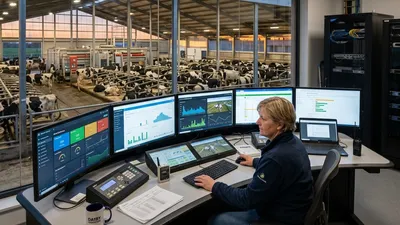 Management
 Dairy Farm KPIs: The Complete Metrics Guide (2026)
Master every dairy farm KPI — from IOFC and profit margins to SCC and pregnancy rates. Learn what to measure and industry benchmarks.
Read Guide → Management
 Dairy Farm Record Keeping Guide & Excel Templates
Master dairy farm record keeping with our complete guide. Learn the 6 essential record types, download free Excel templates, and build a routine.
Read Guide →Get dairy management tips weekly
Join 200+ dairy farmers getting practical KPIs, breeding insights, and profitability tips — no spam, unsubscribe anytime.