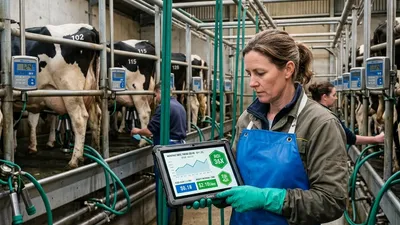
Record keeping is the single highest-leverage activity on a dairy farm � and it costs nothing. A University of Guelph study found that farms using digital records captured complete treatment data 3.5x more often than paper-only operations. Cornell's 68-year Dairy Farm Business Summary consistently shows that farms performing business analysis are more profitable than those that don't. In this guide, you'll learn the six record types every farmer needs, download free templates to start immediately, and build a daily routine that takes less than two minutes. Eventually, you will want to consider why spreadsheets cost 5 hours/week and how digital tools simplify this.
Why Dairy Farmers Need Records (and What It Costs to Skip Them)
Farms that benchmark financially have, on average, lower production costs and higher profitability than the national average (Ramsbottom et al., 2021, cited by Penn State Extension). A study of 912 dairy herds found that farms adopting computerized record keeping saw a gross margin increase of $6,890 over five years, with a 163% marginal return on their investment (MDPI Animals, 2020).
The costs of not keeping records are equally clear:
- Tax liability increases 5�15% when expenses aren't properly categorized and documented
- Operational efficiency drops 15�25% without data-driven decision making (Farmonaut, 2024)
- 10�20% overspending on uncategorized or duplicate purchases goes unnoticed
- FDA penalties for missing treatment records can result in milk classified as adulterated under federal law
- Lost breeding windows when heat detection and pregnancy data aren't tracked, costing $150�$300 per missed cycle in extended days open
On a 100-cow dairy, these inefficiencies can add up to $15,000�$30,000 in annual losses. On a 500-cow operation, the figure can exceed $75,000. Record keeping isn't paperwork � it's profit protection.
The 6 Types of Dairy Farm Records Every Farmer Must Keep

Milk Production Records
Daily yield per cow, test days, somatic cell counts, and butterfat percentages. These drive culling, feeding, and breeding decisions.
Herd Health & Vet Records
Vaccination schedules, treatment logs, drug usage with withdrawal dates, illness history, and vet visit notes. FDA requires these by law.
Breeding & Pregnancy Records
Heat detection dates, insemination logs, pregnancy check results, expected calving dates, and dry-off schedules.
Feed & Nutrition Records
Daily ration components, feed costs per cow, consumption rates, and feed conversion efficiency. Critical for tracking IOFC.
Financial Records
Milk sales, feed expenses, veterinary costs, labor, equipment, depreciation, and monthly profit/loss statements.
Daily Farm Activity Log
Day-to-day events: calvings, treatments, moves, observations. The foundation all other records build on.
| Record Type | What to Track | Frequency | Related Tool |
|---|---|---|---|
| Milk Production | Yield per milking, SCC, butterfat, protein | Daily | Dairy Profit Calculator |
| Herd Health | Treatments, vaccinations, vet visits, withdrawal dates | As events occur | Herd Health Template |
| Breeding | Heat dates, AI logs, pregnancy checks, calving dates | Per event | Calving Date Calculator |
| Feed & Nutrition | Rations, feed costs per cow, consumption rates | Daily | IOFC Calculator |
| Financial | Milk sales, expenses, depreciation, profit/loss | Monthly | Dairy Profit Calculator |
| Daily Activity | Calvings, treatments, moves, observations | Daily | Daily Milk Log |
Milk Production Records
Daily milk yield per cow is the foundation of dairy record keeping. Track pounds or liters per milking, somatic cell counts (SCC), butterfat percentage, and protein levels. The Dairy Herd Improvement Association (DHIA) program provides standardized testing across all 50 states.
Production data serves three critical functions:
- Culling decisions: Identify low performers that cost more to keep than they generate in revenue
- Feed adjustments: High producers need different rations than mid-lactation cows
- Breeding value: Daughters of high-production cows are worth more as replacements
Worked Example: Daily Milk Log for 5 Cows
| Cow ID | Morning (lbs) | Evening (lbs) | Daily Total | SCC (cells/mL) | Notes |
|---|---|---|---|---|---|
| H-1042 | 42 | 38 | 80 | 185,000 | Normal |
| H-1087 | 55 | 51 | 106 | 120,000 | Top performer |
| J-2015 | 35 | 32 | 67 | 210,000 | Monitor SCC |
| H-1103 | 48 | 44 | 92 | 95,000 | Normal |
| J-2041 | 29 | 26 | 55 | 380,000 | Spike � check mastitis |
In this example, J-2041's elevated SCC (380,000) signals a potential mastitis case. Without daily recording, this spike might go unnoticed until it affects the whole herd. Early detection saved an estimated $200�$500 in treatment costs and lost production.
Use our free Dairy Profit Calculator to convert your production data into actual revenue per cow and identify your most profitable animals.
Herd Health & Vet Records
FDA regulations require documented treatment records including drug name, animal identity, date, dose, route of administration, withdrawal period, and withdrawal end date (FDA, 2023). The National FARM Program mandates written records of all medicine administered. Beyond compliance, health records help you spot disease patterns, track treatment efficacy, and make informed culling decisions.
Every health record should capture:
- Animal identification: Ear tag number, name, or microchip ID
- Date and time of observation and treatment
- Symptoms observed: Be specific � "left rear quarter, swollen, hot to touch"
- Diagnosis: Confirmed or suspected condition
- Treatment given: Drug name, dosage, route (injection, oral, intramammary)
- Withdrawal period: Days until milk and meat are safe for human consumption
- Withdrawal end date: Calculated from treatment date plus withdrawal days
- Vet involvement: Was a veterinarian consulted? VCPR documentation?
Breeding & Pregnancy Records
Log heat detection dates, insemination dates and bull/sire used, pregnancy check results, expected calving dates, and dry-off schedules. Accurate breeding records let you calculate calving intervals, plan your dry cow program, and identify repeat breeders early.
Key metrics to track from breeding records:
- Days open: Time from calving to successful conception (target: under 120 days)
- Services per conception: How many inseminations before pregnancy (target: 1.5�2.0)
- Calving interval: Days between consecutive calvings (target: 12�13 months)
- Heat detection rate: Percentage of heats correctly observed (target: 50�60%)
Plan breeding and calving timelines with our free Calving Date Calculator � just enter the insemination date to get your expected due date.
For practical guidance on heat detection methods, insemination timing, and reproductive KPIs, see our complete dairy cow breeding guide. To benchmark your farm's performance against industry targets, explore our guide to dairy farm KPIs.
Feed & Nutrition Records
Record daily ration components, feed costs per cow, and consumption rates. Feed typically represents 50�60% of total dairy production costs. Without feed records, you can't calculate Income Over Feed Cost (IOFC) � the single most important daily profitability metric.
Feed records should include the components of your Total Mixed Ration (TMR), daily cost per cow, dry matter intake estimates, forage test results, and any changes to the ration. When you track feed alongside production, you can see exactly which cows are converting feed to milk efficiently and which are costing you money.
Calculate your daily IOFC with our free IOFC Calculator and benchmark against industry targets of $8�$12 per cow per day.
Financial Records
Track milk sales, feed expenses, veterinary costs, labor, equipment, supplies, and depreciation. Separate personal and business finances � mixing them is the #1 farm bookkeeping mistake, costing 10�20% in lost revenue deductions. The IRS requires documentation of cash sales, expenses, depreciation, and government program participation.
A monthly profit and loss statement should be the minimum for every dairy operation. Compare each month against the same month in prior years to spot trends. Track these key line items:
- Gross milk revenue: Pounds sold � price per pound
- Feed costs: All ration components, forages, supplements, minerals
- Labor: Hired labor, family labor (imputed), benefits
- Veterinary: Routine care, emergency treatments, reproductive services
- Equipment: Fuel, maintenance, repairs, depreciation
- Overhead: Insurance, utilities, property taxes, loan payments
Daily Farm Activity Log
The daily log captures everything that happens on the farm: calvings, treatments, animal moves, weather events, equipment issues, and staff observations. Penn State Extension designed a Daily Fresh Cow Health Monitoring Card specifically for this purpose, tracking fresh cow observations for up to 14 days post-calving.
This is the record that feeds all other records. Without a consistent daily log, your monthly financial statements lack context, your breeding records have gaps, and your health records are incomplete. The daily log is the single most important record to establish first.
Worked Example: Cost Savings from Proper Records
Without Records
Mastitis cases detected late$800/treatment � 4 cows
Missed heat cycles$250 � 8 extra days open
Uncategorized expenses15% tax overpayment
Annual Loss$6,200
With Records
Early mastitis detection$200/treatment � 2 cows
Timely breeding$0 extra days open
Categorized expenses$1,800 tax savings
Annual Savings$3,400
On a 100-cow herd, switching from no records to basic record keeping can save $3,000�$8,000 per year in prevented losses, better breeding decisions, and optimized tax deductions.
Free Dairy Farm Record Keeping Templates (Download)
Download our free templates to start organizing your records today. Each template covers one of the six core record types and is ready to use in Excel or Google Sheets.
Complete Record Keeping Template
All-in-one Excel workbook with tabs for milk production, herd health, breeding, feed costs, and financial tracking.
Download Free Template ?Daily Milk Log
Record daily milk yield per cow with date, milking session, and production notes.
Download CSV ? ??Herd Health Record
Track treatments, vaccinations, vet visits, and withdrawal dates for every animal.
Download CSV ? ??Expense Log
Log all farm expenses by category with dates, amounts, and vendor details.
Download CSV ?Calculate Your Farm's Profitability
Once you have your records, use our free calculators to turn raw data into actionable insights. Track your Income Over Feed Cost, calculate profit per cow, and plan your breeding calendar.
Open All CalculatorsCalculate Your Farm Profit
Enter your revenue and costs to see your actual profit margin and net income per cow.
Calculate Your Time Savings ROI
See how much time and money you could save by switching from spreadsheets to digital herd management.
Paper vs Digital: When to Switch to an App
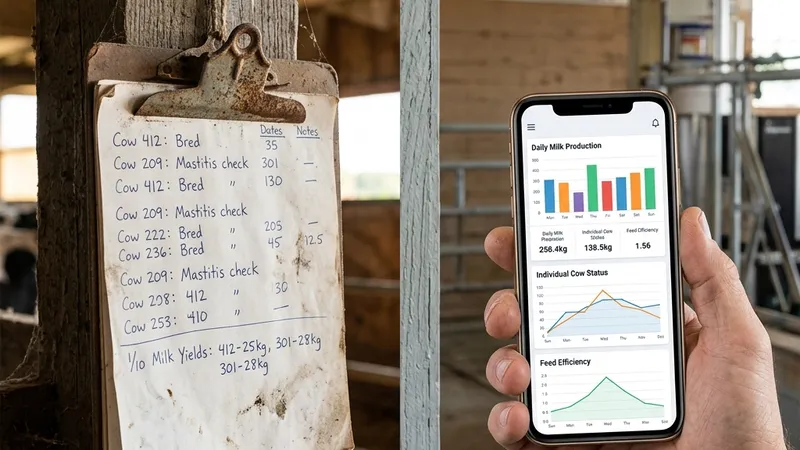
According to USDA NAHMS data, over 70% of small dairy operations (30�99 cows) still use handwritten records, while 94% of large operations (500+ cows) use computerized systems. Neither approach is wrong � the right choice depends on your herd size, budget, and comfort with technology.
| Factor | Paper Records | Digital Records |
|---|---|---|
| Startup cost | Low (paper + pen) | Moderate (software or device) |
| Ease of use | Immediate, no learning curve | Requires initial setup time |
| Error rate | Higher (illegible handwriting, lost sheets) | Lower (validation, drop-downs) |
| Analysis | Manual � you do the math | Built-in charts and reports |
| Accessibility | One location only | View from phone, barn, or office |
| Treatment compliance | Baseline | 3.5x more complete (U of Guelph) |
The best approach for most small to medium farms is a hybrid: keep a handwritten daily log in the barn, then transfer key data to a spreadsheet or app weekly. This captures real-time observations without overwhelming you with data entry. As your comfort grows and your herd expands, transition more categories to digital � starting with financial records, which benefit most from sorting and analysis. If you're wondering whether to stick with spreadsheets or make the jump to dedicated software, see our Excel vs dairy farm software comparison for a realistic time and cost breakdown. See also our side-by-side comparison of spreadsheets vs DairyFarmManager. For a detailed look at every option on the market, see our full 2026 dairy farm software comparison.
How to Build a Daily Recording Routine (2-Minute System)
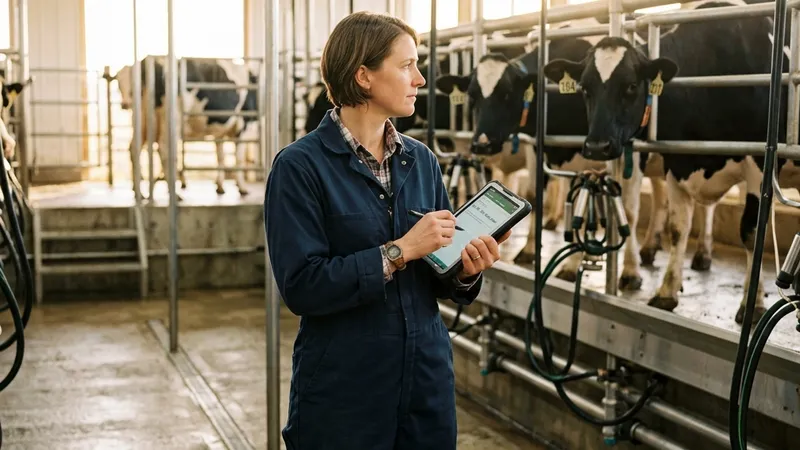
Experts agree: the biggest record keeping mistake is recording data long after it happens (Bovine Vet Online, 2026). Here's a simple daily routine that takes under two minutes:
Morning Milking (30 seconds)
After each milking, jot down total yield per cow or group. Note any animals that showed signs of illness, lameness, or unusual behavior. If using our daily milk log template, fill in one row per cow.
Midday Walk (30 seconds)
Record any treatments given, vet calls, or calvings. Note feed consumption � did they clean up the bunk or leave significant waste? Any changes in water intake or manure consistency?
Evening Review (60 seconds)
Enter any financial transactions (feed purchases, supply orders). Flag items that need follow-up tomorrow. Review the day's observations and update the herd health log if any treatments were given. This is your daily checkpoint.
At the end of each week, spend 15 minutes reviewing your entries. At the end of each month, sit down for 30 minutes to compare your numbers against last month and against industry benchmarks. This weekly and monthly review cycle is where raw data becomes actionable intelligence.
Regulatory Record Keeping Requirements
Dairy record keeping isn't just good management � it's the law in several areas. Here's what different authorities require and how long you must keep the records:
| Authority | Retention Period | What to Keep |
|---|---|---|
| FDA (Drug Treatment Records) | Minimum 2 years | Must include drug name, animal ID, date, dose, route, withdrawal period |
| USDA (Dairy Product Reporting) | Minimum 2 years | Contracts, receipts, and records related to dairy product sales |
| FSMA Traceability | 2+ years | Must be available to FDA within 24 hours of request |
| USDA Organic Certification | 5 years | Health care, animal inventory, feed rations, sales/production records |
| IRS Tax Records | 3�7 years | Cash sales, expenses, depreciation, government program participation |
| National FARM Program | 2+ years | All medicine administered: date, animal ID, drug, disease, dosage, route |
The FDA's requirements are particularly important for drug treatment records. District courts have ruled that failure to keep adequate drug records causes food to be adulterated under the Federal Food, Drug, and Cosmetic Act. In practical terms, this means every dose of antibiotics, every deworming treatment, and every anti-inflammatory given to a milking cow needs a paper trail with the drug name, animal ID, date, dose, route, and withdrawal end date.
The National FARM Program, administered by the National Milk Producers Federation, goes further by requiring a Veterinary-Client-Patient Relationship (VCPR) form, a recommended drug list, a treatment plan, and daily treatment records. These must be maintained for at least 2 years and be available for audit at any time.
5 Common Record Keeping Mistakes (And How to Fix Them)
Recording data weeks later
Fix: Log events within 24 hours. Memory fades fast on a busy farm.
Using vague health terms
Fix: Write "left rear quarter, Staph treatment, 5cc" not "cow was sick."
Collecting data no one reviews
Fix: Schedule a 15-minute weekly review. Data without action is wasted effort.
Keeping dead animals in records
Fix: Update herd inventory monthly. Stale data skews your KPIs.
Tracking everything at once
Fix: Start with milk yield and health events. Add categories as your routine solidifies.
Only 19% of dairy producers recorded all calf illnesses, and just 43% recorded all antimicrobial treatments � numbers that leave farms exposed to both health risks and regulatory penalties (Edwards, 2024, University of Guelph). The good news: these numbers improve dramatically when farms adopt even basic digital tools. Start simple, stay consistent, and build from there. If you're new to the industry, our guide on starting a dairy farm covers the fundamentals.
Frequently Asked Questions
What records should a dairy farmer keep?
Every dairy farmer should maintain six core record types: milk production records, herd health and veterinary records, breeding and pregnancy records, feed and nutrition records, financial records (income and expenses), and a daily farm activity log. These cover regulatory compliance, profitability tracking, and day-to-day herd management.
How do I start record keeping on my farm?
Start with one simple daily log sheet and build from there. Record milk yields, health events, and feed costs every day. Use our free templates to get started � they require less than two minutes to fill out. Once you have a routine, add breeding records and financial tracking.
What is the best app for dairy farm records?
The best app is one you actually use consistently. Digital systems are 3.5x more likely to capture complete treatment records than paper methods (University of Guelph, 2024). Look for an app that covers herd management, milk tracking, breeding, and finances in one place.
Are dairy farm records legally required?
Yes, in many cases. The FDA requires treatment records including drug name, animal ID, date, dosage, route, and withdrawal period. USDA mandates 2-year record retention for dairy product reporting. The Food Safety Modernization Act (FSMA) requires traceability records for certain foods. Organic operations must keep auditable records for 5 years.
How much does poor record keeping cost a dairy farm?
Farms that perform regular business analysis are consistently more profitable than those that don't (Cornell DFBS, 68 years of data). A study of 912 herds found computerized record keeping yielded a 163% marginal return on investment. In contrast, inconsistent record keeping can increase tax liability by 5�15% and reduce operational efficiency by 15�25%.
What is the difference between paper and digital farm records?
Paper records are cheap and easy to start but time-consuming with limited analysis potential. Digital records cost more upfront but offer multi-location access, fewer errors, and built-in analytics. A hybrid approach � handwritten logs input into a digital system weekly � gives small and medium farms the best of both worlds.
How often should I review my dairy farm records?
Daily logs should be reviewed weekly. Financial records should be reviewed monthly. Full business analysis � comparing costs, production, and margins against benchmarks � should happen quarterly at minimum. Penn State Extension recommends monthly investment reviews per cow in the milking string.
Can I use a spreadsheet for dairy farm record keeping?
Yes. Spreadsheets like our free Excel template are an excellent middle ground between paper and full software. They allow sorting, filtering, and basic charts while staying offline and requiring no subscription. As your herd grows past 50�100 cows, consider transitioning to dedicated herd management software.
References
- Penn State Extension � Enhancing Dairy Farm Efficiency: Business Analysis and Benchmarking.
- MDPI Animals (2020) � The Use of Computer Records: A Tool to Increase Productivity in Dairy Herds.
- University of Tennessee Extension � Record Keeping for Improved Herd Management (W 969).
- FDA (2023) � Adequate Records Help Prevent Illegal Drug Residues and Ensure Food Safety.
- eXtension � Establishing and Using a Farm Financial Record-Keeping System.
- Penn State Extension � Handwritten Records: An Important Tool to Monitor Health in Transition Cows.
- University of Wisconsin Extension � How Can You Improve Your Dairy's Data?
- Better Farming (2024) � Good Records Help You Ask Better Questions.
- National Dairy FARM Program � Animal Care Manual and Record-Keeping Templates.
- FDA FSMA � Final Rule on Requirements for Additional Traceability Records.