Starting a dairy farm is one of the most rewarding — and demanding — ventures in agriculture. It offers the satisfaction of working with livestock, producing food for your community, and building a multigenerational business. But it also demands significant capital, relentless daily commitment, and deep operational knowledge. This guide walks you through every critical decision: from evaluating whether dairy farming fits your goals, to understanding startup costs, selecting breeds, building facilities, and launching your first milking operation. Whether you are planning a small 30-cow direct-to-consumer dairy in Wisconsin, a 10-cow zero-grazing unit in Kenya, or a 200-cow cooperative operation in Punjab, the fundamentals covered here will give you a clear, realistic roadmap.
The Global Dairy Landscape in 2026
Before diving into the specifics of starting a dairy farm, it helps to understand where the global dairy industry stands. Milk production is one of the most widely practiced forms of agriculture on Earth, with every continent except Antarctica producing significant volumes. The industry is dominated by a handful of countries, but dairy farming models range from single-cow household operations in rural India to 10,000-cow megadairies in the American West.
| Rank | Country / Region | Milk Production (MMT) | Key Characteristics |
|---|---|---|---|
| 1 | India | 221.4 | World's largest producer. Driven by 80+ million smallholder farmers. Dominated by crossbred cows and Murrah buffaloes. Cooperative model (Amul) is the benchmark. |
| 2 | European Union | 148.95 | Global powerhouse in cheese, butter, and powder exports. Germany, France, Netherlands, Poland lead. Increasing focus on value-added and sustainability. |
| 3 | United States | 106.19 | Highly mechanized, large-scale commercial farms. Average herd size 300+ cows. Precision feeding, robotic milking, genetic advancements. |
| 4 | China | 41.51 | Rapidly modernizing. Growing domestic demand driving massive investment in large-scale farms. Increasing self-sufficiency goal. |
| 5 | Pakistan | 62.6 | Large buffalo dairy sector. Nili-Ravi and Murrah buffaloes are primary breeds. Growing cooperative and processing infrastructure. |
| 6 | Brazil | 29.35 | South America's largest producer. Extensive pasture-based systems. Growing middle class driving domestic consumption. |
| 7 | New Zealand | 21.8 | Pasture-based export giant. Fonterra cooperative dominates. Highly efficient grass-fed model, small nation with outsized global trade influence. |
India's position at the top is particularly noteworthy. Unlike the U.S. or EU, where large commercial operations dominate, India's 221.4 million metric tonnes of annual production comes primarily from millions of smallholder farmers keeping 2–5 cows or buffaloes each. The cooperative model — exemplified by Amul and the National Dairy Development Board — has transformed rural economies across Gujarat, Rajasthan, Maharashtra, and Punjab. If you are starting a dairy in South Asia, East Africa, or Southeast Asia, the smallholder cooperative model may be more relevant than the American commercial farm template.
Meanwhile, Kenya's dairy sector contributes over 4% of national GDP, with demand exceeding 5.2 billion liters annually against a supply of roughly 4 billion liters — representing a clear market gap. In the EU, structural changes are pushing farms toward cheese and specialty product manufacturing rather than fluid milk. Understanding your specific market context is essential before committing capital.
Is Dairy Farming Right for You?
Before investing a single dollar, honestly assess whether dairy farming aligns with your lifestyle, financial situation, and long-term goals. Dairy farming is not a 9-to-5 occupation. Cows need to be milked twice or three times a day, every day, 365 days a year. There are no holidays, no sick days, and no vacations unless you have reliable backup labor.
The financial commitment is substantial. A minimum viable dairy operation requires $100,000–$300,000 in startup capital, and profitability typically takes 3–5 years. You will be managing living animals, fluctuating milk prices, regulatory compliance, equipment breakdowns, and weather-dependent forage production — often simultaneously.
That said, dairy farming offers unique advantages. It provides a consistent, recurring revenue stream (milk is purchased daily or weekly by processors), strong community ties, and the potential for generational wealth-building. If you are willing to invest the time to learn, work hard, and manage your operation like a business, dairy farming can be deeply fulfilling and financially rewarding.
Key Questions to Ask Yourself
- Can you commit to daily milking? Cows must be milked on schedule. This is non-negotiable and the single biggest lifestyle commitment in dairy.
- Do you have access to capital? Most agricultural lenders require 20–30% down payment and a detailed business plan.
- Are you comfortable with animals? You will handle birthing, illness, injury, and culling. Compassion and practicality must coexist.
- Do you have a market? Identify your milk buyer before you buy your first cow. Processor contracts, raw milk sales, and on-farm processing each have different requirements.
- Is your family supportive? Dairy farming affects the entire household. Spousal and family buy-in is critical for long-term success.
Types of Dairy Farms
Dairy farms come in several models, each with different scale, market, and management requirements. Your choice of model determines your startup costs, daily workload, revenue potential, and the skills you will need to develop.
Conventional Commercial Dairy
High VolumeLarge-scale operations selling milk to processors through cooperative or direct contracts. Typically 200–5,000+ cows. Requires significant capital, efficient systems, and strong management. Revenue depends on milk price and production volume. The majority of U.S. milk comes from this model.
Small-Scale Direct-to-Consumer
Premium PricingSmall herds (10–50 cows) selling raw milk, cheese, yogurt, or other value-added products directly to consumers, restaurants, or farmers markets. Higher per-unit margins but requires marketing, customer relationships, and additional processing licenses. Lower startup costs than conventional.
Organic Dairy
CertifiedConventional or small-scale dairies certified organic under USDA National Organic Program. Requires organic feed, pasture access, no antibiotics or hormones, and a 3-year transition period. Organic milk commands a significant price premium but input costs are higher and management is more complex.
Grass-Fed Dairy
Niche MarketCows are managed primarily on pasture with minimal grain supplementation. Produces milk with distinct flavor profiles and omega-3 fatty acid content. Requires excellent pasture management, adequate acreage, and access to premium buyers. Lower feed costs but lower milk volume per cow.
Choosing a Dairy Breed
Breed selection is one of your first and most impactful decisions. Each breed has distinct characteristics in milk production, butterfat content, temperament, feed efficiency, and climate adaptability. The right choice depends on your production goals, market, climate, and management preferences.
| Breed | Milk/Day | Butterfat | Weight | Best For |
|---|---|---|---|---|
| Holstein Netherlands | 70–85 lbs | 3.6–3.8% | 1,500 lbs | Commercial operations, high-volume production |
| Jersey Isle of Jersey | 45–55 lbs | 4.8–5.5% | 1,000 lbs | Small farms, direct-to-consumer, artisan cheese |
| Guernsey Isle of Guernsey | 40–50 lbs | 4.5–5.0% | 1,100 lbs | Specialty milk, small-scale operations |
| Brown Swiss Switzerland | 60–70 lbs | 4.0–4.2% | 1,500 lbs | Mixed operations, cheese production |
| Ayrshire Scotland | 55–65 lbs | 3.8–4.0% | 1,200 lbs | Grazing operations, mixed farms |
| Gir India (Gujarat) | 30–40 lbs | 4.5–5.0% | 1,000 lbs | Tropical climates, heat-tolerant dairies, crossbreeding |
| Sahiwal India (Punjab) | 25–35 lbs | 4.8–5.2% | 900 lbs | Hot arid climates, smallholder systems |
| Murrah Buffalo India (Haryana) | 35–50 lbs | 7.0–8.5% | 1,500 lbs | Buffalo dairy systems, ghee and paneer production |
| Friesian (Kenya) Kenya (imported) | 55–85 lbs | 3.5–3.8% | 1,300 lbs | High-altitude zones (Kiambu, Nyeri, Uasin Gishu) |
| Ayrshire (Kenya) Kenya (imported) | 40–55 lbs | 4.0–4.3% | 1,000 lbs | Medium-altitude zones (Nakuru, Trans Nzoia, Kisii) |
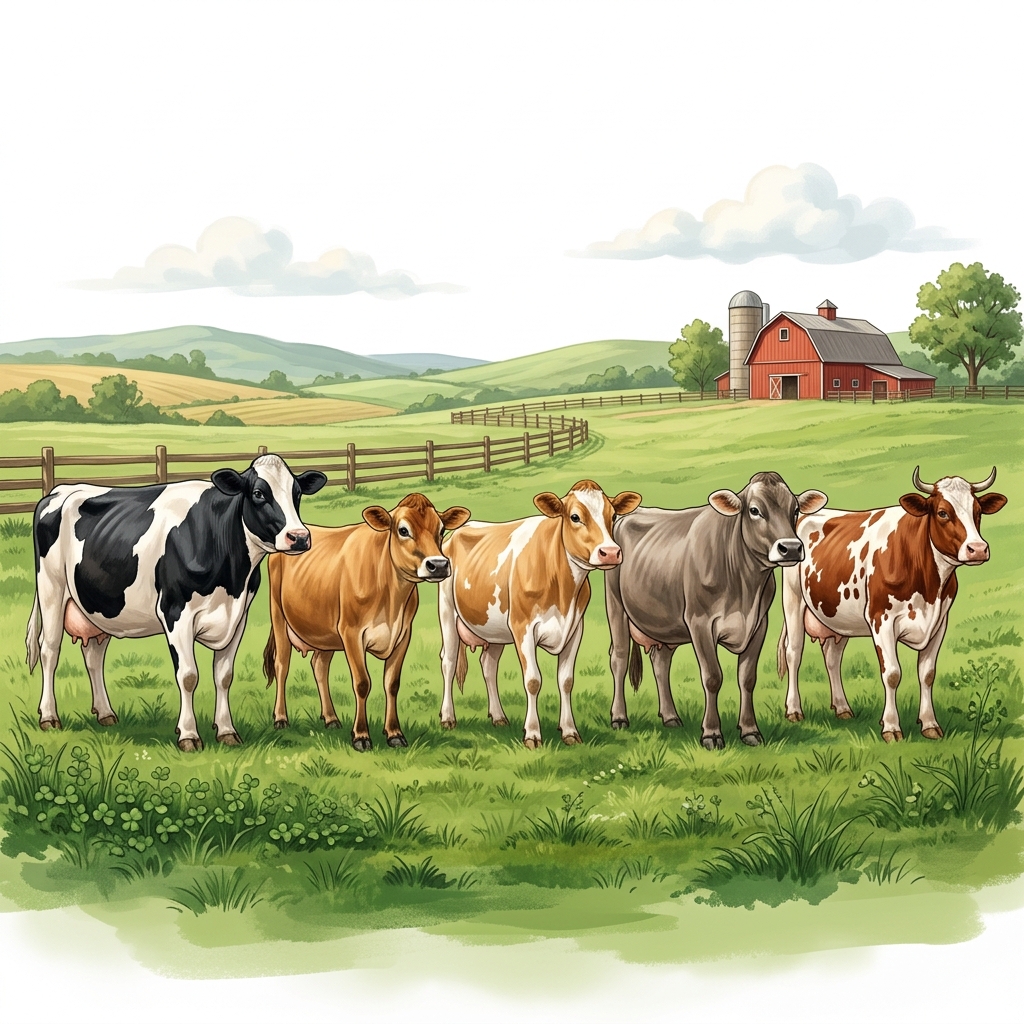
Breed Comparison: Holstein vs. Jersey on 50 Cows
Holstein (50 cows)
Milk per cow/day80 lbs
Annual milk (50 cows)1,460,000 lbs
Feed cost/cow/day$5.50
Annual feed cost$100,375
Jersey (50 cows)
Milk per cow/day50 lbs
Annual milk (50 cows)912,500 lbs
Feed cost/cow/day$3.80
Annual feed cost$69,350
Jerseys produce 37% less milk volume but at 4.8–5.5% butterfat. Component premiums often offset the volume gap, making Jerseys more profitable per cwt of milk for small farms selling directly to consumers or cheese makers.
Plan Your Calving Schedule
Use our free Calving Date Calculator to plan breed-specific dry-off schedules and calving windows from a single insemination date.
Open Calving Date CalculatorStartup Costs Breakdown
Understanding the full cost picture is critical before committing to dairy farming. Costs vary enormously by region, herd size, and whether you are building from scratch or converting existing facilities. The table below provides realistic ranges for a new dairy operation in the United States as of 2026.
| Category | Low Estimate | High Estimate | Notes |
|---|---|---|---|
| Land and Property | $50,000 | $500,000+ | Depends on location, acreage, and existing infrastructure. 100+ acres for a mid-size operation. |
| Facilities and Barns | $100,000 | $750,000 | Milking parlor, free-stall barn, feed storage, heifer housing. Can be reduced with existing structures. |
| Milking Equipment | $50,000 | $300,000 | Parlor system, bulk tank, milk cooling, pipelines. Robotic systems run $150K–$250K per unit. |
| Initial Herd (50–200 cows) | $75,000 | $600,000 | Pregnant heifers or fresh cows. Price varies by breed, genetics, and production records. |
| Tractors and Equipment | $40,000 | $200,000 | Tractor, feed mixer, manure spreader, hay equipment. Used equipment reduces costs significantly. |
| Feed and Bedding (Year 1) | $50,000 | $250,000 | Concentrates, forages, hay, straw bedding. Higher if not growing your own feed. |
| Working Capital | $25,000 | $100,000 | Reserve for operating expenses, vet bills, emergencies, and cash flow gaps. |
| Licensing and Legal | $5,000 | $25,000 | Permits, insurance, environmental compliance, business formation, legal fees. |
Worked Example: 100-Cow Dairy Startup Budget
Capital Investment
Land (150 acres)$225,000
Barns and facilities$350,000
Milking parlor + bulk tank$180,000
Initial herd (100 cows)$200,000
Tractors and equipment$120,000
Total Capital$1,075,000
Operating Costs (Year 1)
Feed (100 cows × 365 days)$182,500
Labor (2 FT + 1 PT)$95,000
Vet and health programs$18,000
Utilities and insurance$24,000
Working capital reserve$50,000
Total Operating (Year 1)$369,500
Total investment: $1,444,500 for a 100-cow dairy. At $22/cwt milk price and 75 lbs/cow/day, gross milk revenue is approximately $602,000/year. Breakeven typically occurs in Years 3–5 depending on debt service and operating efficiency.
The single biggest factor in startup cost is whether you buy land and build from scratch versus purchasing an existing dairy operation. An established dairy with facilities, equipment, and a milking herd may cost more upfront but eliminates the 12–18 month facility construction period and provides immediate cash flow.
International Startup Cost Comparison
Startup costs vary dramatically by country, driven by land prices, labor costs, regulatory requirements, and the scale of operation. The table below provides realistic ranges for different markets as of 2026.
| Country | Small Dairy (10–30 cows) | Medium Dairy (50–100 cows) | Key Cost Drivers |
|---|---|---|---|
| United States | $100,000–$300,000 | $500,000–$1,500,000 | Land, facilities, equipment, regulatory compliance. High labor costs offset by mechanization. |
| India | ₹5–15 lakh ($6,000–$18,000) | ₹50–150 lakh ($60,000–$180,000) | Cattle purchase, shed construction, feed. Lower land and labor costs. Government subsidies available through NABARD and state dairy development boards. |
| Kenya | KES 500K–1.5M ($4,000–$12,000) | KES 3–8M ($24,000–$63,000) | Heifer cost (KES 100K–250K each), zero-grazing unit (KES 150K–250K for 4 cows), feed. Cooperative membership provides market access. |
| European Union | €80,000–€250,000 | €400,000–€1,200,000 | Strict environmental regulations, high land costs, animal welfare standards. CAP subsidies can offset 30–50% of investment. |
| New Zealand | NZD $200K–$600K | NZD $1–3M | Land is the major cost. Pasture-based system reduces facilities cost. Fonterra supply quota system affects entry. |
| Brazil | R$80K–250K ($15,000–$47,000) | R$400K–1.5M ($75,000–$280,000) | Extensive pasture-based systems keep facility costs low. Land in Minas Gerais and Goiás is more affordable. |
In India, the NABARD (National Bank for Agriculture and Rural Development) dairy entrepreneurship scheme provides subsidized loans covering 25–33% of project costs for new dairy units. State-level programs like the Rajiv Gandhi Grameen Vikas Yojana and the National Dairy Plan also offer technical and financial support. The cooperative model — where farmers pool milk and share processing infrastructure — dramatically reduces individual capital requirements.
Location and Land Requirements
Location determines your access to milk markets, feed sources, labor, veterinary services, and favorable growing conditions. The ideal dairy location balances affordable land with proximity to a milk processing plant or cooperative pickup point.
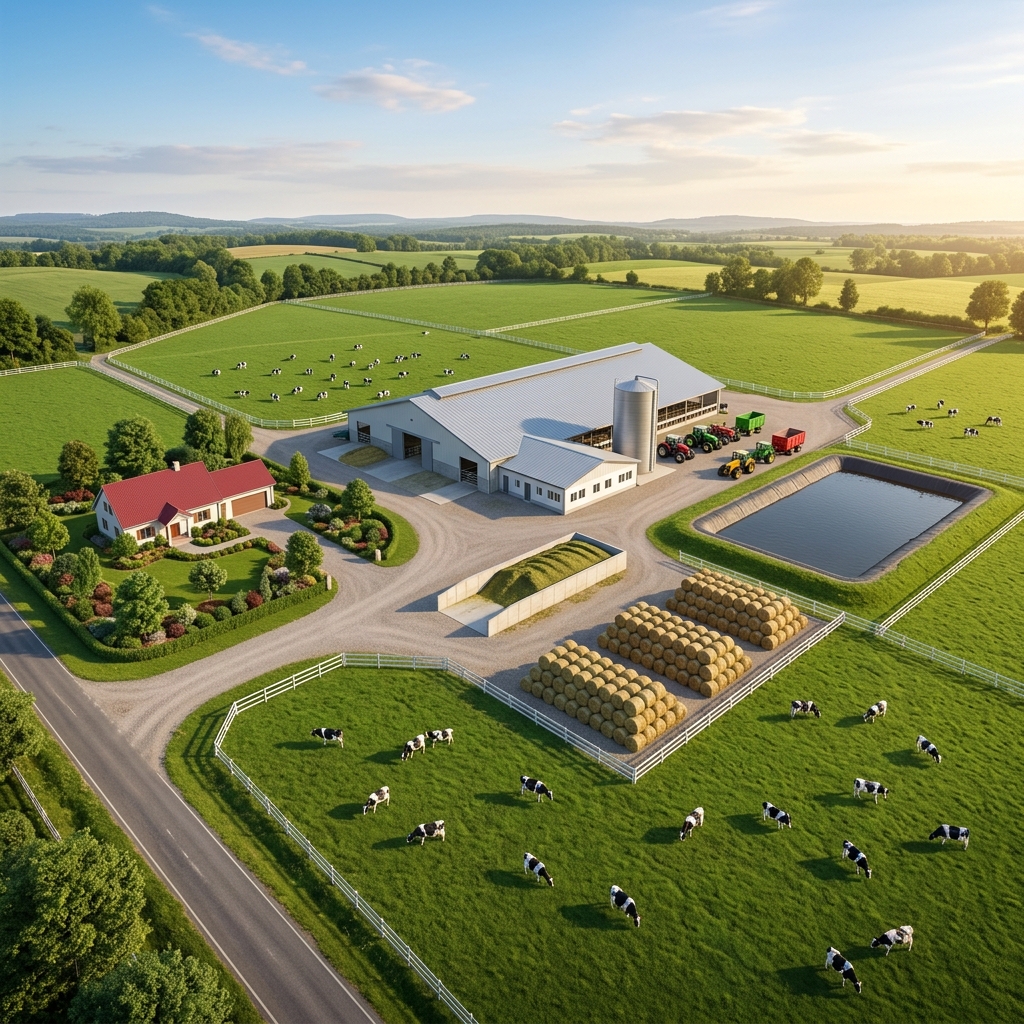
Land Requirements
The amount of land you need depends on whether you grow your own feed or purchase it. General guidelines:
- Growing all forage: 1.5–2.0 acres per milking cow (150–200 acres for 100 cows)
- Purchasing all feed: 0.5–1.0 acres per cow (50–100 acres for facilities and manure management)
- Grass-fed operations: 2.0–3.0 acres per cow (200–300 acres for 100 cows)
Key Location Factors
- Distance to milk buyer: Within 60 miles of your processing plant or pickup point is ideal. Longer haul distances increase freight costs and reduce milk quality.
- Water availability: Dairy operations require abundant, clean water. A 100-cow herd uses 10,000–15,000 gallons daily. Ensure well capacity or municipal access is sufficient.
- Soil and climate: fertile soils and adequate rainfall (30+ inches annually) support productive forage growth. Drought-prone regions may require purchased feed.
- Zoning and regulations: Check local zoning ordinances, environmental regulations, and setback requirements before purchasing land. Some areas restrict dairy operations near residential zones.
- Community acceptance: Proximity to neighbors matters. Odor, noise, and traffic from a dairy operation can create conflicts. Rural areas with existing agricultural activity are preferable.
Essential Equipment
Equipment represents a major portion of your startup investment. Prioritize reliability and efficiency over lowest upfront cost. Quality used equipment can reduce initial investment by 40–60% without sacrificing functionality.
Milking System
Pipeline or parlor-based milking equipment with bulk tank. The most critical investment on a dairy farm.
Bulk Tank
Refrigerated storage for raw milk. Must maintain milk at 38–40°F. Size depends on herd and pickup schedule.
Feed Mixer (TMR)
Total Mixed Ration wagon that blends forages, grains, and supplements into a consistent daily ration.
Tractor
75–120 HP minimum for a small dairy. Used for hauling feed, bedding, manure, and fieldwork.
Hay and Silage Equipment
Mower, tedder, rake, baler (round or square), or silage chopper and bunker for forage production.
Manure Spreader
Critical for waste management and nutrient recycling on cropland. Chain or hydraulic drive recommended.
Skid Steer or Loader
Versatile for barn cleaning, feed handling, and general farm maintenance tasks.
Water System
Clean, abundant water supply. Cows drink 30–50 gallons/day. Well, municipal, or surface water with treatment.
Robotic milking systems are an increasingly popular option for new dairy startups. These automated units allow cows to milk on their own schedule, reducing labor requirements by 50–70%. However, the upfront cost of $150,000–$250,000 per robotic unit — and the need for one unit per 60–70 cows — makes them better suited for operations with strong capital positions.
Building Your Herd
Your herd is the engine of your dairy operation. Building it correctly from the start — with healthy, productive, well-bred animals — determines your financial trajectory for years to come.
Purchasing Options
- Springing heifers (pregnant, pre-fresh): The most common way to start. Heifers calve within weeks of purchase and begin producing milk immediately. Expect to pay $2,000–$3,500 per head depending on breed, genetics, and region.
- Fresh cows (recently calved): Already in milk, providing immediate revenue. Riskier — you may inherit health or production issues from the previous owner. $2,500–$4,000 per head.
- Pair cows (cow-calf pairs): Purchase a milking cow with her calf. Useful for grass-fed or direct-marketing operations. $3,000–$5,000 per pair.
- Raising your own replacements: The most economical long-term strategy. Retain heifer calves from your best cows. Requires 24–28 months from birth to first freshening.
Herd Health Essentials
Work with a dairy veterinarian before purchasing any animals. Establish protocols for:
- Pre-purchase examination: Vet check before buying ensures animals are healthy, pregnant, and free of contagious diseases.
- Vaccination program: Core vaccines include IBR, BVD, PI3, BRSV, leptospirosis, and vibrio. Customize with your vet based on regional disease risks.
- Disease testing: Test for Johne's disease, bovine leukemia virus (BLV), and tuberculosis. Start with a clean herd to avoid costly eradication later.
- CMT and mastitis screening: California Mastitis Test all quarters before purchase. Mastitis is the costliest disease in dairy and is easily introduced through new animals.
Track Your Herd's Profitability
Once your cows are in milk, use our free Dairy Profit Calculator to compute net income, profit margin, and revenue per cow from your actual production data.
Open Dairy Profit CalculatorFeeding and Nutrition
Feed is the single largest expense on a dairy farm, consuming 40–60% of total operating costs. A well-designed feeding program is the difference between a profitable dairy and a money pit. Every cow should receive a balanced ration formulated by a qualified dairy nutritionist.
Feed Components
- Forages (50–70% of ration): Alfalfa hay, corn silage, grass hay, or pasture. Forage quality is the foundation of milk production. Test every cutting for protein, fiber, and moisture.
- Concentrates (20–40% of ration): Corn grain, barley, soybean meal, or byproducts. Concentrate levels increase with milk production level. High-producing cows need more energy-dense feed.
- Minerals and vitamins (1–3% of ration): Calcium, phosphorus, magnesium, potassium, and trace minerals. A standard dairy premix ensures proper balance. Work with your nutritionist.
- Additives: Yeast cultures, bypass fats, buffers, and ionophores can improve feed efficiency and production. Use based on specific ration needs and economic analysis.
Feed Cost Management
The most profitable dairies are not necessarily those with the cheapest feed — they are the ones with the best feed efficiency. Feed efficiency is measured as pounds of milk produced per pound of dry matter consumed (usually 1.4–1.7 lbs milk per lb DM intake). A key metric is Income Over Feed Cost (IOFC), which measures how much revenue remains after covering feed expenses.
Practical strategies to manage feed costs include: growing your own forages, purchasing ingredients in bulk during harvest season, maintaining forage quality through proper harvest timing and storage, and working with your nutritionist to formulate least-cost rations that still meet production goals.
Measure Your Feed Efficiency
Use our free IOFC Calculator to measure Income Over Feed Cost per cow per day — the gold standard KPI for dairy feed profitability.
Open IOFC CalculatorHealth and Veterinary Care
A herd health program is not optional — it is a legal and financial necessity. Dairy cows are susceptible to mastitis, lameness, metabolic disorders, reproductive problems, and infectious diseases. Prevention is always cheaper than treatment.
Essential Health Programs
- Preventive veterinary care: Regular herd visits (monthly or quarterly), disease surveillance, and protocol development with your veterinarian.
- Mastitis prevention and control: Pre- and post-milking teat dipping, proper milking procedures, dry cow therapy, and CMT testing at every milking.
- Transition cow management: The 3 weeks before and after calving are the highest-risk period. Proper close-up and fresh cow diets, calcium supplementation, and monitoring reduce metabolic disease incidence by 50%+.
- Lameness prevention: Regular foot trimming (every 3–6 months), proper stall design, dry bedding, and avoiding concrete surfaces in loafing areas.
- Reproductive management: Regular breeding soundness exams, heat detection protocols (or activity monitors), and pregnancy checking to maintain a 12–13 month calving interval.
Cost of Common Health Issues
| Condition | Cost per Case | Prevention Strategy |
|---|---|---|
| Clinical Mastitis | $200–$500 | Teat dipping, milking hygiene, dry cow therapy, clean bedding |
| Lameness | $150–$400 | Regular trimming, stall comfort, flooring design, foot baths |
| Displaced Abomasum | $500–$1,000 | Transition cow nutrition, proper fiber intake, calcium supplementation |
| Metritis | $100–$300 | Clean calving environment, assisted deliveries, calcium management |
| Infertility / Extended Days Open | $3–$5/day | Heat detection, timely breeding, reproductive monitoring |
Milking Operations
Milking is the core daily activity on a dairy farm. It happens twice or three times per day, every day, and the efficiency of your milking routine directly impacts milk production, herd health, and labor costs.
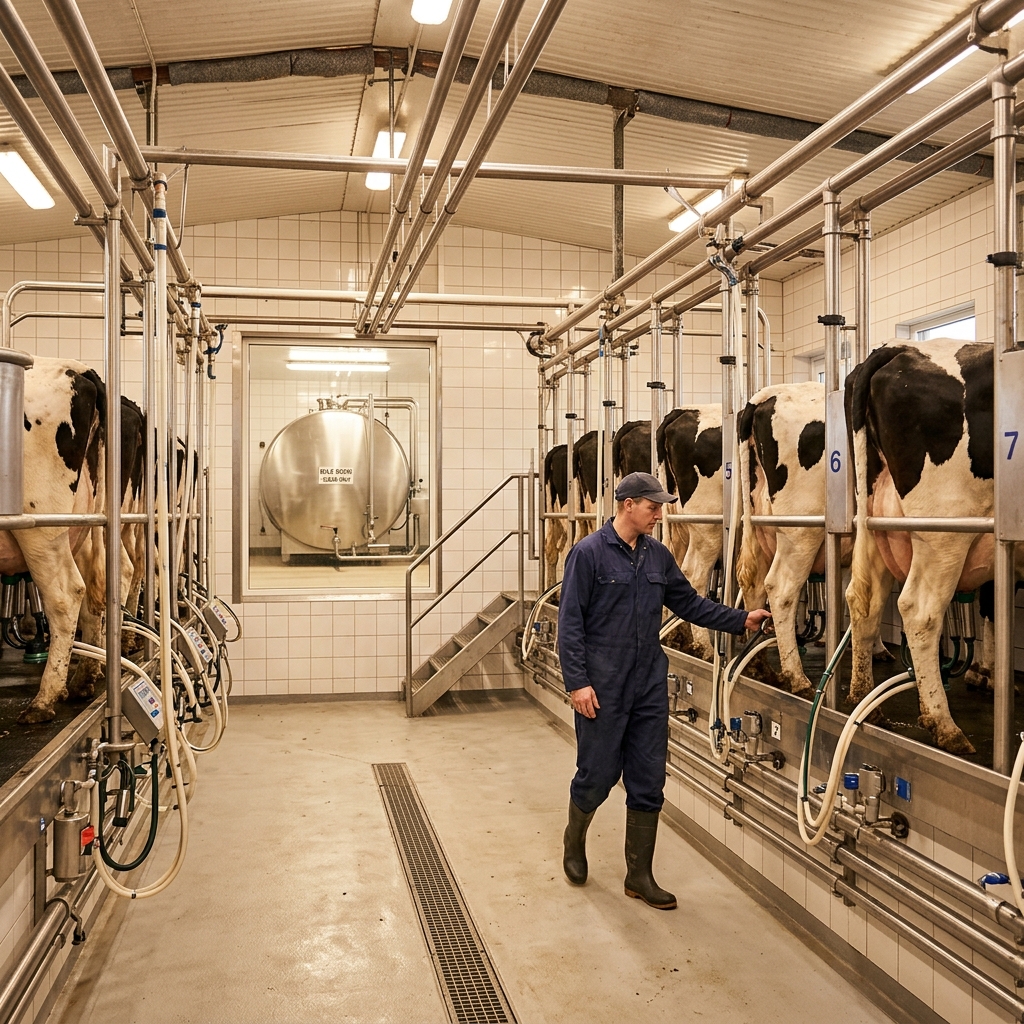
Milking Parlor Types
- Parallel parlor: Cows stand perpendicular to the pit. Most common in mid-to-large dairies. Handles 60–80 cows/hour. Moderate cost, high throughput.
- Herringbone parlor: Cows stand at an angle. Slightly slower than parallel but easier to design for narrow barns. 40–60 cows/hour.
- Side-opening (tandem) parlor: Cows enter individual stalls from the side. Lower throughput but excellent for close animal contact. Best for small operations.
- Robotic milking systems: Fully automated. Cows milk on demand. Eliminates milking labor but requires $150K–$250K per unit and cow training period.
Milking Best Practices
Consistent, hygienic milking procedures maximize production and minimize mastitis risk. Key practices include: pre-milking teat cleaning and stimulation (20–30 seconds), proper unit attachment, maintaining vacuum levels per manufacturer specs, post-dipping with approved disinfectant, and regular equipment maintenance and cleaning (CIP systems).
Financial Planning and Profitability
Dairy farming is a business, and like any business, it requires disciplined financial management. The farms that survive market downturns and thrive long-term are the ones that treat financial planning as a daily discipline, not an annual exercise.
Key Financial Metrics to Track
- Profit margin: The percentage of revenue remaining after all costs. Healthy dairies maintain 15–30% margins. See our Dairy Farm Profit Margin Guide for detailed calculations.
- Feed cost per cwt (F$/CWT): How much it costs to produce 100 lbs of milk. Benchmark: below $4.50 is excellent; above $6.50 needs attention.
- Revenue per cow: Total income per milking cow per year. $4,000–$7,000 is typical depending on production and milk price.
- Days in milk (DIM): Average lactation stage of the herd. Cows in early lactation (under 100 DIM) produce the most milk.
- Break-even milk price: The milk price at which revenue equals total costs. Knowing this number tells you exactly when you are profitable.
Simple Profitability Analysis — 100-Cow Dairy
Revenue (Annual)
Milk (100 cows × 75 lbs × 365 ÷ 100 × $22/cwt)$602,250
Cull cows (30 sold × 1,400 lbs × $0.70/lb)+$29,400
Calf sales+$9,600
Total Revenue$641,250
Expenses (Annual)
Feed (100 cows × $5.00/day × 365)−$182,500
Labor (2 FT + 1 PT)−$95,000
Vet, breeding, supplies−$32,000
Utilities, insurance, depreciation−$48,000
Debt service (mortgage, equipment loans)−$85,000
Total Expenses$442,500
Net Profit = $641,250 − $442,500 = $198,750
Profit Margin = ($198,750 ÷ $641,250) × 100 = 31.0%
This example assumes efficient management and a favorable milk price. A $2/cwt drop in milk price would reduce annual profit by approximately $120,000 — illustrating why profit margin management and risk strategies are essential.
Worked Example: 10-Cow Dairy Startup in India
Capital Investment
Land (0.5 acre, rural Punjab)₹3,00,000
Shed construction (10 cows)₹4,00,000
Milking machine (portable)₹1,50,000
Initial herd (5 crossbred + 5 Gir)₹5,00,000
Chaff cutter, misc equipment₹80,000
Total Capital₹14,30,000
Monthly Operating (10 cows)
Feed (concentrate + roughage)₹60,000
Vet, AI, minerals₹8,000
Labor (1 helper)₹10,000
Utilities, misc₹5,000
Monthly Operating₹83,000
Monthly milk revenue: 10 cows × 15 liters/day × 30 days × ₹38/liter = ₹1,71,000
Monthly net: ₹1,71,000 − ₹83,000 = ₹88,000
Annual net: ₹10,56,000 (~$12,600 USD)
With NABARD subsidies covering 25–33% of capital costs, payback period is approximately 1.5–2 years. The cooperative model (selling through Amul or state dairy unions) provides guaranteed market access and stable pricing.
Regulations and Compliance
Dairy farming is one of the most heavily regulated sectors of agriculture. Compliance is not optional — violations can result in fines, loss of milk marketing permits, and facility closure. Understanding regulatory requirements before you start saves costly retrofits later.
Key Regulatory Areas
- Grade A milk licensing: Required to sell milk to any processor. Your state department of agriculture sets facility standards for milking parlors, bulk tanks, water supply, and waste management.
- Environmental compliance: Nutrient management plans for manure application, water quality protection, and air quality regulations. Large operations may need EPA permits under the Clean Water Act.
- Animal welfare: Federal Animal Welfare Act and state-level livestock care standards. Applies to housing, transport, and slaughter conditions.
- Raw milk regulations: If selling raw milk directly to consumers, state laws vary dramatically. Some states permit it with permits; others prohibit it entirely. Check your state's specific requirements.
- Organic certification: Required if marketing as organic. USDA National Organic Program standards include feed, health care, pasture access, and a 3-year transition period.
- Labor laws: Minimum wage, overtime, worker safety (OSHA), and I-9 employment verification. Agricultural labor exemptions vary by state.
Marketing and Selling Milk
Your milk marketing strategy determines your revenue stability and growth potential. There are three primary channels for selling milk:
- Cooperative membership: The most common model globally. In the U.S., you deliver milk to a cooperative (e.g., Land O'Lakes, Dairy Farmers of America, Cabot). In India, cooperatives like Amul, Mother Dairy, and state-level unions (Karnataka Milk Federation, AAVIN) are the primary buyers. In Kenya, New KCC and Brookside are major processors. Cooperatives provide stable pricing, pooling, and risk management but less control over price and buyers.
- Direct-to-processor contracts: Sell directly to a local processing plant. May offer premium pricing but requires consistent volume and quality. Good for medium-to-large operations near processing facilities. In the EU, direct sales to cheese factories or specialty processors are common.
- Direct-to-consumer: Sell raw milk, cheese, yogurt, ice cream, or other products directly through farm stores, farmers markets, CSA programs, or online. In India, value-added products like paneer, ghee, dahi (yogurt), and flavored milk can double or triple per-liter revenue. In Kenya, pasteurized milk and Mala (fermented milk) sold at KES 100–120/liter versus KES 50/liter farm-gate price represent a 100–140% margin improvement.
Value-added processing is an increasingly important revenue diversification strategy. On-farm creameries, cheese production, and bottled raw milk sales can double or triple your per-gallon revenue compared to selling commodity fluid milk to a cooperative. However, the capital investment, regulatory requirements, and marketing demands are significantly higher.
Government Grants and Subsidies
One of the most overlooked advantages of starting a dairy farm is the substantial government support available in most countries. Dairy is considered a strategic food security sector, and governments worldwide offer grants, subsidized loans, tax incentives, and technical assistance to new and expanding dairy operations. Ignoring these programs is leaving free money on the table.
United States
- USDA Beginning Farmer and Rancher Development Program (BFRDP): Competitive grants funding education, mentoring, and technical assistance for beginning farmers. Individual grants up to $100,000. Administered through universities and nonprofit organizations.
- USDA Environmental Quality Incentives Program (EQIP): Cost-share payments for conservation practices — manure storage facilities, nutrient management plans, grazing infrastructure, and milking center wastewater systems. Dairy operations can receive up to $450,000 over the life of the contract.
- USDA Value-Added Producer Grant (VAPG): Up to $75,000 for planning activities or $250,000 for working capital to develop value-added products like cheese, yogurt, or ice cream from your milk.
- Farm Service Agency (FSA) Microloans: Simplified loan process for operations under $50,000. Designed specifically for beginning and small-scale farmers who may not qualify for traditional agricultural lending.
- Dairy Margin Coverage (DMC): Federal safety-net program that makes payments when the difference between the all-milk price and feed cost falls below a selected threshold. Enrollment annually through FSA.
- State-level programs: Many states offer additional dairy-specific incentives. New York's Dairy Acceleration Program provides $30,000 grants for business planning. Wisconsin's DATCP offers cost-sharing for facility upgrades.
India
- NABARD Dairy Entrepreneurship Development Scheme (DEDS): Subsidized loans covering 25% of project cost (33% for SC/ST farmers) for new dairy units, milking machines, bulk coolers, and transport vehicles. Maximum subsidy of ₹10 lakh per project. Available through commercial banks and regional rural banks.
- National Dairy Plan (NDP Phase II): Government of India program investing in productivity improvement, milk procurement infrastructure, and quality assurance. Supports creation of new dairy cooperatives and strengthening existing ones.
- Rashtriya Gokul Mission: Financial assistance for indigenous breed conservation and development. Subsidies for establishment of Goshalas and conservation farms for Gir, Sahiwal, Rathi, and other indigenous breeds.
- State-level dairy development programs: Gujarat's Dairy Vikas Yojana, Maharashtra's Gokul Gram scheme, Rajasthan's Kampoo Pashudhan Yojana — each offering varying subsidies for shed construction, cattle purchase, and equipment.
- Kisan Credit Card (KCC): Provides short-term crop loans at 4% interest (after government subsidy) for dairy feed, veterinary care, and operational expenses. Available through all commercial banks.
European Union
- Common Agricultural Policy (CAP) Direct Payments: Annual per-hectare payments to active farmers. Dairy farms receive basic income support regardless of production volume. Average €200–€400/hectare depending on member state.
- CAP Rural Development Funds: Investment aid covering 40–60% of eligible costs for farm modernization, young farmer installation, and value-added processing. Young farmers (under 40 years) receive an additional 25% top-up.
- National envelope schemes: Many EU countries offer dairy-specific coupled support payments. Ireland's Dairy Equipment Scheme covers 40% of milking equipment and cooling investment costs.
Kenya and East Africa
- Kenya Dairy Development Project: Government-backed initiative supporting smallholder dairy through subsidized AI services, artificial insemination training, and cooperative strengthening.
- Youth Enterprise Development Fund: Government loans at reduced interest rates for youth-led agribusiness ventures including dairy farming. Covers up to KES 500,000 for startups.
- Subsidized sexed semen: Through KAGRC partnerships, the cost of sexed semen has been slashed from KES 6,000+ to KES 1,000–2,000, guaranteeing 90% female calves for herd expansion.
The key to maximizing government support is to apply before you invest, not after. Most programs require pre-approval and will not retroactively fund completed projects. Build relationships with your local agricultural extension office, FSA office (U.S.), NABARD district office (India), or county agricultural officer (Kenya) early in your planning process.
Insurance and Risk Management
Dairy farming carries significant financial risks — from animal mortality and disease outbreaks to milk price volatility and natural disasters. Insurance is not optional; it is a critical component of your risk management strategy. The right coverage protects your investment and ensures you can recover from setbacks that would otherwise bankrupt the operation.
Livestock Insurance
- Livestock mortality insurance: Covers death of individual animals due to accident, illness, or disease. Premiums typically run 2–5% of the animal's insured value per year. Essential for protecting your initial herd investment, especially high-value bred heifers or recently purchased animals.
- Livestock named-peril policies: Broader coverage including theft, fire, flood, electrocution, and transit accidents. More comprehensive than basic mortality but carries higher premiums.
- Blanket herd insurance: Insures the entire herd at a set value per head. Convenient for large operations but may over- or under-insure individual animals. Review annually as herd composition changes.
Crop and Feed Insurance
- USDA Federal Crop Insurance Program: If you grow corn, alfalfa, or other forage crops, multi-peril crop insurance (MPCI) protects against yield loss from drought, flood, hail, and pests. Premiums are subsidized 55–62% by USDA for most crops.
- Whole-farm revenue protection: Insures total farm revenue rather than individual crop yields. Ideal for diversified operations growing their own feed. Covers revenue shortfalls from any cause including price declines.
Liability Insurance
- General farm liability: Covers bodily injury and property damage claims arising from farm operations. Essential if you have employees, visitors, or sell products directly to consumers. Premiums range from $500–$2,000/year depending on operation size.
- Product liability: Specifically covers claims arising from milk or dairy products you produce and sell. Critical for direct-to-consumer operations. Often included in commercial general liability riders for agricultural operations.
- Pollution liability: Covers environmental claims related to manure runoff, water contamination, or chemical spills. Increasingly important as regulatory enforcement tightens.
Milk Price Risk Management
- Dairy Revenue Protection (DRP): Federal program that insures against revenue loss when milk price declines or production drops. Sold through approved insurance providers. Premiums are subsidized 44–55%.
- Dairy Margin Coverage (DMC): Makes payments when the margin between milk price and feed cost falls below a chosen threshold ($4.00–$9.50/cwt). Basic coverage is free for the first 5 million pounds; supplemental coverage available at higher levels.
- Forward contracting and hedging: Lock in milk prices through Class III futures, forward contracts with processors, or cooperative price-sharing programs. Not insurance per se, but a critical risk management tool.
In India, livestock insurance under the Livestock Insurance Scheme covers up to 80% of the animal's market value, with the government subsidizing premiums for small and marginal farmers. In Kenya, Kenya Livestock Insurance Program (KLIP) provides index-based insurance for pastoralist and dairy farmers in arid and semi-arid areas.
Dairy Farm Technology
Modern dairy farming is increasingly technology-driven. The right technology stack reduces labor, improves animal welfare, provides data for better decision-making, and ultimately increases profitability. You don't need to automate everything on day one, but understanding what's available helps you plan infrastructure and budget for future adoption.
Herd Management Software
- PCDart (Dairy Records Management Systems): The most widely used herd management software in the U.S. Tracks breeding, health, production, and financial data. Integrates with most milk meters and activity monitors. Free for dairy records processing center members.
- Uniform-Agri (Uniform-Herd): Popular in Europe and growing in North America. Comprehensive herd management with strong genetic evaluation and benchmarking tools. Cloud-based option available.
- Herdwatch: Mobile-first herd management app popular in Ireland, UK, and expanding globally. Records breeding, health treatments, and calf management from your phone. Subscription-based pricing.
- DairyComp 305: Long-standing DOS-based system still used by many large operations. Extremely powerful for production analysis but dated interface. Being phased out in favor of cloud-based alternatives.
- In India: eGoat and mPashu apps from NABARD, NDDB's Dairy Cooperative Management Information System (DCMIS), and Amul's farmer-facing mobile apps provide basic herd tracking and milk procurement integration.
Cow Activity and Health Monitoring
- Activity monitors (pedometers/accelerometers): Collar- or leg-mounted sensors that detect estrus (heat), rumination time, and lameness indicators. Companies include SCR (Allflex), Connecterra, Cowlar, and Moocall. Estrus detection rates of 90%+ versus 50% for visual observation. ROI typically within one breeding season through reduced days open.
- Rumen boluses: Ingestible sensors that continuously monitor rumen pH, temperature, and activity from inside the cow. Early indicators of acidosis, fever, and metabolic disorders. Premium price point ($150–$300/unit) but valuable for high-producing herds.
- Camera systems: AI-powered cameras for 24/7 behavioral monitoring, calving detection, and lameness scoring. Emerging technology with rapidly improving accuracy and falling costs.
Parlor and Milking Automation
- Auto-ID systems: RFID ear tags or leg bands that automatically identify cows as they enter the parlor, triggering individual ration dispensing, milk yield recording, and health alerts. Essential for any herd above 50 cows.
- Milk meters and flow sensors: Measure individual cow yield, conductivity (mastitis indicator), and milking time in real-time. Early mastitis detection through conductivity changes can reduce clinical cases by 30–50%.
- Robotic milking systems (AMS): Fully automated voluntary milking. Cows choose when to milk, typically 2.5–3 times/day. Companies include Lely, DeLaval, GEA, and Boumatic. Cost: $150,000–$250,000 per unit, handling 60–70 cows each. Reduces milking labor by 50–70% but requires specific barn design and cow training. Best suited for operations where labor is expensive or scarce.
- Automatic teat sprayers: Post-milking teat dipping robots that ensure 100% coverage and consistent application. Reduces labor and improves mastitis prevention compliance.
Precision Feeding Technology
- Feed pushers/robots: Automated robots that push feed back toward cows throughout the day, encouraging more frequent eating and reducing feed wastage. Companies include Lely and DeLaval. Cost: $30,000–$50,000.
- Individual feeding stations: Electronic feeding systems that dispense customized rations to each cow based on lactation stage, production level, and body condition. Highest precision but significant investment.
- Forage analysis and ration balancing software: Programs like NDSU Forage Lab, CPM-Dairy, and UNL CNCPS help nutritionists formulate optimal rations. Some integrate directly with herd management software for automated ration adjustments.
Start with the basics — herd management software and activity monitors deliver the highest ROI with the lowest investment. Add automation as your operation scales and you identify specific labor bottlenecks. Many successful mid-size dairies run with 70% of the technology stack of large operations by focusing investment on the tools with the clearest financial return.
Labor Management
Labor is the second-largest controllable expense on most dairy farms (after feed) and the single biggest source of operational headaches. Finding, training, and retaining good dairy workers is a challenge worldwide. In the U.S., dairy labor shortages have intensified as rural populations decline. In India and Kenya, the shift from family labor to hired workers is creating new management demands.
Staffing Levels
- U.S. benchmark: 1 full-time equivalent (FTE) worker per 80–120 cows in conventional parlors; 1 FTE per 200–300 cows with robotic milking. Most dairies between 100–500 cows operate with 2–4 full-time workers plus the owner.
- India: Smallholder operations (5–15 cows) typically rely on family labor with one hired helper at ₹8,000–₹15,000/month. Larger operations (50+ cows) require 3–5 trained workers.
- Kenya: A 10-cow zero-grazing unit requires 1 full-time worker (herdsman) at KES 15,000–25,000/month plus housing. The owner typically manages milk sales, bookkeeping, and veterinary coordination.
Key Roles on a Dairy Farm
- Herdsman/lead milker: Responsible for daily milking operations, cow health observation, and milking protocol compliance. This is the most important hire — a skilled herdsman can make or break your operation.
- Feed manager: Manages TMR mixing, feed delivery, forage harvesting, and bunk management. On smaller farms, this role is combined with the herdsman position.
- Reproduction technician: Handles AI breeding, heat detection, pregnancy checking, and calving management. Can be the owner, a trained employee, or an external veterinary service.
- Farm manager: Oversees all operations, makes management decisions, handles finances. On operations above 300 cows, this role is typically separate from the owner.
Training and Retention
Dairy work is physically demanding, involves early morning starts (milking typically begins at 4–5 AM), and requires specific technical skills. High turnover is expensive — replacing a trained milker costs an estimated $3,000–$5,000 in recruitment, training, and lost productivity.
- Standard Operating Procedures (SOPs): Document every critical process — milking protocol, feeding ratios, mastitis treatment, calving procedures. Laminated checklists in the parlor and barn ensure consistency regardless of who is working.
- Ongoing training: Monthly team meetings to review protocols, discuss herd performance data, and address concerns. Send workers to extension workshops, dairy conferences, and equipment manufacturer training sessions.
- Competitive compensation: In the U.S., dairy farm wages have risen 20–30% since 2020 due to labor scarcity. Benefits like housing, health insurance, profit-sharing, and flexible scheduling improve retention significantly.
- Career pathways: Create advancement opportunities — lead milker, herd manager, farm manager. Workers who see a future are more likely to stay. Invest in their development and they will invest in your operation.
- In India and Kenya: Training through dairy cooperative extension services, NGO programs (like SEWA in India), and farmer field schools significantly improves worker skill levels and farm productivity.
When to Consider Automation
Automation becomes economically justified when: labor costs exceed 15–20% of gross revenue, reliable workers are unavailable, or labor turnover is disrupting operations. A robotic milking system at $200,000 pays for itself in 5–7 years compared to a full-time milker at $40,000–$50,000/year in the U.S., but the economics are different in India or Kenya where labor costs are a fraction of that.
Seasonal Considerations
Dairy farming is inherently seasonal. Understanding and planning around seasonal patterns — in milk production, feed availability, milk pricing, cow fertility, and labor demand — is the difference between a farm that thrives and one that merely survives.
Calving Season: Spring vs. Fall
| Factor | Spring Calving (Feb–Apr) | Fall Calving (Sep–Nov) |
|---|---|---|
| Feed alignment | Cows peak in milk during spring pasture flush. Highest-quality forage available at lowest cost. Ideal for pasture-based systems. | Cows peak during winter when feed is most expensive. Requires stored forages and purchased concentrates. Higher feed costs at peak lactation. |
| Milk price | Peak production coincides with spring flush when prices typically dip due to high supply. Revenue per cwt may be lower. | Peak production during winter when milk supply is seasonally lower and prices often higher. Better revenue per cwt. |
| Heat stress | Cows calve before summer heat arrives. Late lactation coincides with cooler fall weather. Less heat stress impact on production. | Cows are mid-lactation during summer heat. Significant production losses (10–25%) from heat stress in hot climates. |
| Labor demand | Calving coincides with spring planting season. Labor is stretched across multiple tasks simultaneously. | Calving during fall after harvest. More available labor for calving management and newborn calf care. |
| Calf health | Calves born in mild weather have lower respiratory disease and scours risk. Better survival rates. | Calves born into cold, wet conditions face higher morbidity. Requires more intensive housing and monitoring. |
| Best for | Pasture-based systems, temperate climates, operations with abundant spring forage | Closed confinement systems, operations selling into winter price premiums, year-round production goals |
Year-round calving (distributing calvings across all 12 months) smooths cash flow and labor demand but requires more sophisticated reproductive management and may not optimize feed cost efficiency. Many operations use a hybrid approach: 70% of cows calve in the preferred season, with 30% offset to maintain some year-round production.
Feed Production Calendar
- Spring (Mar–May): First cutting of alfalfa and grass hay. Corn silage planting. Pasture establishment and rotation begins. Critical for building winter feed inventory.
- Summer (Jun–Aug): Second and third hay cuttings. Corn silage harvest (August–September). Peak pasture growth in northern climates. Heat stress management becomes priority.
- Fall (Sep–Nov): Final hay cuttings. Corn silage harvest completion. Cover crop planting. Forage testing and ration reformulation for winter. Stockpiling standing pasture for deferred grazing.
- Winter (Dec–Feb): Feeding stored forages. Equipment maintenance and repair. Financial planning and record-keeping. Heifer development. Breeding season planning for spring calvers.
Milk Price Seasonality
Milk prices follow seasonal patterns driven by production cycles and consumer demand. In the U.S., Class III milk prices typically peak in Q1 (January–March) when production is seasonally low and demand for cheese and butter is high for holiday processing. Prices often dip in Q3 (July–September) when spring flush production floods the market. In India, milk prices tend to be lowest during the monsoon flush season (July–September) when supply peaks, and highest during the lean winter season (November–February).
Smart dairy managers align their production peaks with price peaks through strategic calving timing, use forward contracting to lock in favorable prices, and build cash reserves during high-price periods to buffer against downturns. Understanding your specific market's price seasonality is essential for financial planning.
Seasonal Health Challenges
- Winter: Increased respiratory disease in calves, hypothermia risk in newborns, frostbite to extremities, higher energy requirements for thermoregulation.
- Spring: Grass tetany (magnesium deficiency) as cows transition to lush pasture, parasite bloom as temperatures warm, foal/calf scours from environmental bacteria.
- Summer: Heat stress (reduced fertility, milk production drops, increased lameness), fly-borne pinkeye, higher mastitis rates from contaminated water and bedding.
- Fall: Transition cow metabolic issues as diets change from pasture to stored feeds, respiratory disease as animals are housed, foot rot from muddy conditions.
Planning your health protocols around seasonal disease risks — pre-positioning vaccines, adjusting rations, preparing facilities — prevents costly treatment bills and production losses. Work with your veterinarian to develop a 12-month herd health calendar.
Common Mistakes to Avoid
The dairy industry has a saying: "The best way to make a small fortune in dairy farming is to start with a large one." While tongue-in-cheek, it reflects the very real financial risks of starting without adequate planning. Here are the most common mistakes new dairy farmers make — and how to avoid them.
Underestimating Startup Costs
Most new dairy farmers underestimate costs by 20–40%. Always add a 30% contingency buffer to your budget.
Starting Too Big
Begin with 30–50 cows and scale up as you gain experience and refine your management. Overexpansion early leads to cash flow crises.
Neglecting Financial Planning
Dairy farming is a business first. Without accurate records, cash flow projections, and cost tracking, even a large herd can lose money.
Poor Feed Management
Feed is 50%+ of your costs. Inconsistent rations, poor forage quality, or inadequate nutrition directly reduce milk production and profitability.
Ignoring Reproduction
Poor reproductive management leads to long calving intervals, reduced lifetime production, and unnecessary culling costs.
Skipping Veterinary Care
Preventive care costs a fraction of treating clinical disease. Establish a herd health program from day one.
Choosing Location Based on Price Alone
Access to milk markets, quality feed sources, reliable labor, and veterinary services matter more than cheap land.
Not Building Relationships
Dairy farming is community-driven. Build relationships with processors, neighbors, advisors, and other dairy farmers early.
Step-by-Step Startup Checklist
Use this phased checklist to organize your dairy farm startup into manageable stages. Each phase builds on the previous one, ensuring you do not skip critical steps in the rush to get cows milking.
Research & Planning (Months 1–3)
- Complete agricultural education or work on existing dairy for 1–2 years
- Develop a detailed business plan with financial projections
- Research local milk markets, processors, and pricing structures
- Evaluate land options, zoning laws, and environmental regulations
- Secure financing — meet with agricultural lenders
- Find a mentor or advisory team (veterinarian, nutritionist, financial advisor)
Land & Facilities (Months 3–9)
- Purchase or lease land with adequate water and road access
- Design barn layout, milking parlor, and feed storage areas
- Obtain building permits and environmental approvals
- Construct or renovate facilities to meet Grade A standards
- Install milking equipment, bulk tank, and water systems
- Set up feed storage, bedding areas, and manure management
Herd Acquisition (Months 6–12)
- Select breed(s) based on your market and management goals
- Purchase initial herd — start with 30–50 cows for a small operation
- Establish relationships with a dairy veterinarian
- Set up herd health protocols, vaccinations, and testing
- Implement herd management software for tracking records
- Plan breeding schedule using AI or natural service
Operations Launch (Months 10–14)
- Develop standard operating procedures for milking, feeding, and cleanup
- Hire and train staff (if applicable)
- Establish relationships with milk hauler and processing plant
- Begin milking and milk marketing
- Monitor production data, health records, and financial performance
- Adjust feed rations and management based on initial results
Growth & Optimization (Year 2+)
- Analyze first-year financial performance against projections
- Implement reproductive management program to maintain herd growth
- Evaluate feed efficiency using IOFC metrics
- Explore value-added opportunities (raw milk, cheese, yogurt)
- Consider herd expansion as management and cash flow stabilize
- Build reserves for equipment replacement and contingency
Frequently Asked Questions
How much money do I need to start a dairy farm?
Startup costs vary enormously by country. In the U.S., a small 50-cow operation may cost $100,000–$300,000 to launch, while a 500-cow commercial dairy typically requires $1.5–$3 million. In India, a 10-cow dairy can be started for ₹5–15 lakh ($6,000–$18,000) with government subsidies. In Kenya, a 4-cow zero-grazing unit costs KES 500K–1.5M ($4,000–$12,000). Land, facilities, equipment, and the initial herd are the major cost drivers everywhere.
How long does it take for a dairy farm to become profitable?
Most dairy farms reach profitability within 3–5 years, though some may take up to 7 years to fully recover startup costs. Cash flow typically improves within the first 1–2 years as milk production ramps up, but debt repayment on initial investment takes longer. In India and Kenya, smaller operations can become cash-flow positive within 12–18 months due to lower overhead.
What is the best breed of dairy cow for beginners?
In the U.S. and Europe, Jerseys are often recommended for beginners due to smaller size, lower feed costs, and higher-butterfat milk. In India, crossbred cows (Holstein × local) or Sahiwal/Gir breeds are ideal for tropical climates. In Kenya, Ayrshires offer the best balance of production and hardiness for medium-altitude zones. The best breed depends on your climate, feed availability, and market.
How many acres do I need for a dairy farm?
As a general rule, you need 1.5–2 acres per milking cow if growing all your own forage. A 100-cow herd requires 150–200 acres of cropland plus barn and facility space. However, many modern dairies purchase feed and operate on smaller land bases. In India and Kenya, zero-grazing systems can house 4–10 cows on less than an acre, but you need 2–3 additional acres for fodder production.
Can I start a dairy farm with no experience?
While possible, starting without experience is extremely risky. Most successful dairy farmers have years of hands-on experience before going independent. Consider working on an existing dairy for 1–3 years, taking agricultural courses, or finding a mentor before investing your capital. In India, dairy cooperative societies often provide training and technical support to new entrants.
What certifications do I need to sell milk?
Requirements vary by country. In the U.S., you need a Grade A dairy license from your state's department of agriculture. In India, FSSAI licensing is required for milk processing and sale. In Kenya, the Kenya Dairy Board sets standards for processing and marketing. If selling raw milk directly to consumers, additional state- or country-specific permits and labeling requirements apply.
Is dairy farming a good investment in 2026?
Dairy farming can be profitable but carries significant risk due to volatile milk prices, rising input costs, and regulatory burdens. With milk prices above $22/cwt in the U.S., ₹35–40/liter in India, or KES 42–50/liter in Kenya, and disciplined cost management, dairy farms can generate strong returns. Success depends heavily on management quality, scale, and risk management strategy.
What is the average salary for a dairy farm owner?
Dairy farm owner income varies widely by country and scale. In the U.S., small farm operators (under 100 cows) often earn $30,000–$60,000 annually. Medium operations (200–500 cows) may generate $80,000–$200,000. In India, a 10-cow dairy can generate ₹3–6 lakh annually ($3,600–$7,200). In Kenya, a 4-cow operation can earn KES 100,000+/month ($790+). Income depends on herd size, milk price, efficiency, and debt load.
References
- USDA Economic Research Service. (2026). "Dairy Industry and Trade Statistics." U.S. Department of Agriculture.
- USDA FAS New Delhi. (2025). "Dairy and Products Annual — India." Foreign Agricultural Service.
- AgriMoon. (2026). "Top 7 Milk-Producing Countries in the World 2026."
- University of Minnesota Extension. (2025). "Starting a Dairy Farm: Planning and Financial Considerations." UM Extension.
- University of Wisconsin Extension. (2025). "Dairy Business Planning and Analysis." UW-Madison.
- NABARD. (2025). "Dairy Entrepreneurship Development Scheme — Guidelines." National Bank for Agriculture and Rural Development, India.
- Crazy Kanairo Farming. (2026). "Dairy Farming in Kenya: Complete Beginner's Guide, Costs, Profits and Best Breeds."
- DairyNZ. (2025). "Starting a Dairy Farm: A Practical Guide." Dairy New Zealand.
- USDA APHIS. (2026). "Dairy Cattle Health and Disease Programs." Animal and Plant Health Inspection Service.