Selling Raw Milk From a Small Dairy: The Records Stack That Keeps You Legal (2026)
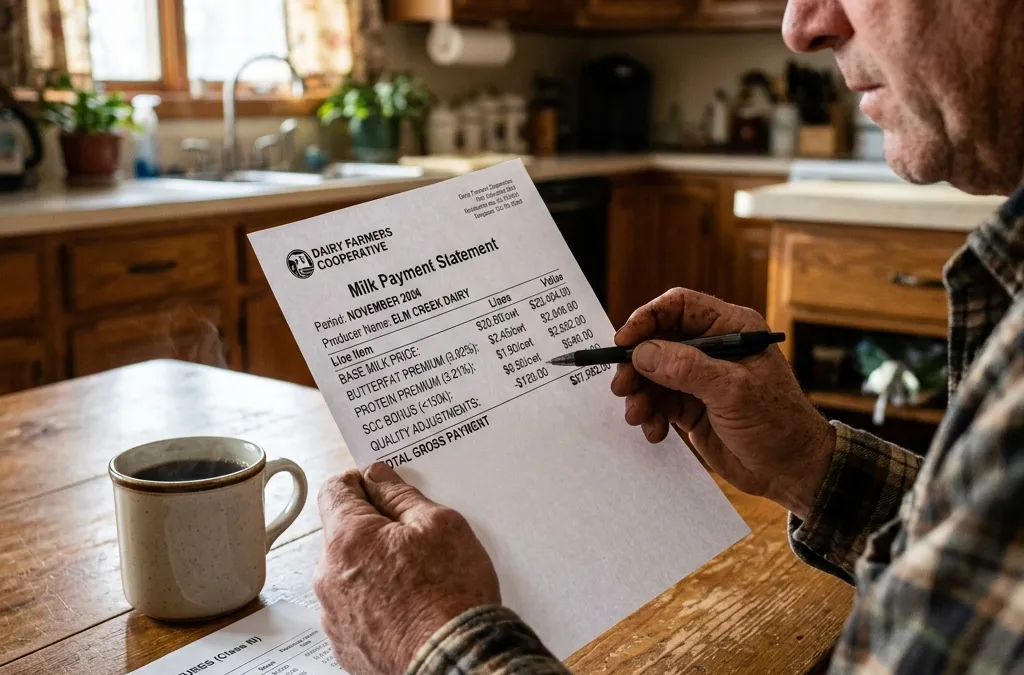
The farms that get shut down selling raw milk almost never had dirty milk on the day it happened. They had gaps on paper: a missing withdrawal record, a TB test out of date, no lot traceability. This guide is the paperwork stack that keeps a 10–50 cow dairy selling.
We wrote this for owner-operated US dairies selling on-farm, via herdshare, or retail where legal — the exact small-farm segment our own comparison guide calls the most underserved in dairy software. It's a records and standards guide, not legal advice: your state's rules govern, and they change.
Sources: RAWMI Common Standards (rawmilkinstitute.org), Farm-to-Consumer Legal Defense Fund state materials, state raw-milk guidance pages checked November 8, 2026. Confirm current requirements with your state's milk-grading agency before selling.
Get dairy management tips weekly
Join 200+ dairy farmers getting practical KPIs, breeding insights, and profitability tips — no spam, unsubscribe anytime.
The legal landscape in one paragraph (plus your homework)
US raw-milk law splits states into three camps: retail/on-farm legal (with permits, labeling, and testing regimes), herdshare-legal (you sell shares of a cow, members receive "their own" milk — the structure many small D2C farms run on), and prohibition states where only incidental/animal-use sales survive. Within legal states, requirements typically stack: animal health (TB/brucellosis testing schedules), a plant/equipment inspection and sanitation program, cold-chain temperature logs, labeling with herdshare disclaimers where applicable, and record-keeping you can produce on demand. The FCLDF maintains a state-by-state map worth bookmarking before you spend a dollar on bottles — and the state-specific pricing rules change often enough that "current within a week" is the right reflex.
The one rule that kills small dairies
Antibiotic-withdrawal violations. A treated cow milked into the share tank inside her withdrawal window is a contaminant event that ends a brand instantly — and it is 100% preventable with dated treatment records and an app that flags "discard milk from cow 14 until Nov 18" automatically.
The five-file records stack
Inspectors and lawyer-adjacent advisors converge on the same set. Five folders, always current:
| Folder | Contains | Cadence |
|---|---|---|
| 1. Animal health | TB / brucellosis test results per animal or herd status, vaccination records, vet visit log, dead-stock disposal | Per schedule (RAWMI: TB check at least annually) |
| 2. Medication & withdrawal log | Every treatment: animal ID, drug, dose, route, dates, withdrawal end date, who administered | Every single treatment, same day |
| 3. Milk safety testing | Lab reports: coliform, standard plate count, pathogens per state list; RAWMI adds rolling-average tracking | Monthly minimum (weekly while building) |
| 4. Sanitation & cold chain | Cleaning/sanitizer logs, equipment swabs, cooling temps at fill and storage | Continuous |
| 5. Traceability & members | Lot logs linking day's milk → cows milked → distribution; herdshare agreements + member list where required | Every sale/distribution day |
RAWMI: the standard that's becoming the market expectation
The Raw Milk Institute's Common Standards started as voluntary good practice; they're now internationally referenced (Oregon has cited them in rulemaking contexts) and increasingly what sophisticated buyers mean by "tested milk." The core, as published:
- Monthly indicator testing minimum (frequency set by your own written RAMP plan), tracked as a rolling three-month average: coliforms under 10 per ml, standard plate count under 5,000 per ml — numbers well tighter than many legal maxima.
- No pathogens: Salmonella, E. coli O157:H7, Campylobacter, Listeria. Small farms without pathogen-lab access may rely on coliform/SPC as hygiene indicators under RAWMI's framework.
- TB-free herd, tested at least once per year (or per local requirement).
- A RAMP plan — a written, farm-specific risk analysis covering water, feed, animals, parlor, and testing — renewed and reviewed, not bought.
The economics are easy: RAWMI points to on-farm plate testing at roughly $1–$3 per test (peel-plate style), so weekly testing costs a small dairy less than one flat tire per month. Farms like Mountain Heritage publish every result publicly — the transparency itself is marketing, and it works: raw-milk buyers are purchasing risk management, not just milk.
Estimate Your Real Per-Gallon Margin
Testing, bottles, cooling and labor are line items most D2C beginners forget. Put yours against the price you actually charge.
Launch Profit Calculator →The per-cow half — where small D2C farms fall behind
Folder #2 (medications) is per-cow, daily, and the hardest to keep in a notebook: withdrawal math by hand, for every animal, every treatment, at 6 AM. Farms that scale past ~10 cows in direct sales almost always move this part into software, for three concrete reasons:
- Withdrawal timers that are automatic — record a treatment on cow 14 and her discard window shows up on every milking screen until it clears. This is the single failure point of the whole business model.
- Yield records per cow — your best customers buy because the herd produces; a cow quietly dropping 30% costs you share capacity you didn't know you promised.
- Exportable documentation — inspector or member asks for records and you print a clean animal history in one action, instead of a shoebox.
DairyFarmManager's free tier covers up to 10 cows — right around the size most herdshare farms start — and Starter at $19/month takes the whole 50-animal operation with treatment flags, calving/dry-off tracking, and per-cow production. Your state paperwork stays paper-perfect while the animal data stops depending on handwriting.
Withdrawal Clocks You Never Have to Calculate
Log a treatment and the discard window is on that cow's profile until it clears — with production, breeding and health history exportable for inspection day. Free up to 10 cows.
Inspection-ready: the 15-minute monthly ritual
Do this on the same day every month
- Enter last month's lab results into your testing folder — and check the rolling averages, not just this month's pass/fail.
- Reconcile the medication log against the milk-out dates: any overlap gets fixed today, because a violation found later is a recall.
- Verify TB/brucellosis certificates for every lactating animal and the herd status doc.
- Update member roster and share-count vs. production math.
- Skim sanitation logs and spot one gap (last Thursday nobody signed the parlor cleanout — close it).
- Re-read your state agency's raw-milk page for rule changes (FCLDF's map flags drift).
Farms that run this ritual pass inspections uneventfully and — the part that pays — market it: a monthly results post is the highest-trust content a raw-milk farm can publish.
Frequently asked questions
What records do I need to sell raw milk legally?
Every state that permits raw sales requires, at minimum: animal health records (tuberculosis and brucellosis testing per schedule), a clean-milking and equipment-sanitation log, medication treatments with withdrawal periods, and product traceability (who got which milk when). States allowing retail add temperature/cold-chain logs and labeling rules. Herdshare states add member lists and share agreements. If you want independent credibility beyond your state's floor, adopt RAWMI's Common Standards.
What is the RAWMI standard for raw milk?
RAWMI (Raw Milk Institute) Common Standards require at minimum monthly indicator testing with rolling three-month averages under 10 coliforms per ml and under 5,000 standard plate count (SPC) per ml, no detectable pathogens (Salmonella, E. coli O157:H7, Campylobacter, Listeria), TB-free herd status with at least annual testing, and a written RAMP food-safety plan tailored to your farm. RAWMI-listed farms can market through an internationally recognized program — important for buyers in states without strong labeling frameworks.
How often should I test my raw milk?
RAWMI's floor is monthly coliform + SPC testing, but the practical advice from RAWMI's own guidance is to test more often while you're building your process — many farms test weekly — and small farms can run on-farm plate tests at roughly $1–$3 per test. Think of the lab bill as the cheapest insurance on your most expensive asset: your customer list. One contamination event ends a raw-milk business.
Do herdshare farms need DHIA milk testing?
Not legally — herdshare regimes govern animal health and records, not official production testing. But DHIA/DHIR-style records still pay for themselves on a D2C dairy: per-cow yield trends protect your most valuable cows, SCC data correlates with the hygiene numbers your members watch, and official lactations raise the value of any stock you sell. Many raw-milk farms run on-farm testing plus a good records app instead of full DHIA enrollment.
What does an inspector actually look at on a small raw-milk dairy?
In practice: the herd health file (TB/brucellosis test dates, vet visits), the medication log with withdrawal compliance — the single most common violation, milking-equipment cleaning records and swabs, milk temperatures at cooling and storage, and lot traceability (today's gallon back to specific cows and forward to specific members). Have all five in one folder, current within a week, and your inspection is a conversation instead of an audit.
Is raw milk more profitable than selling to a cooperative?
Per cow, often dramatically. Direct customers commonly pay $8–$10+ per gallon versus $3–$4 class pricing, and herdshare members prepay. The trade is workload: testing, cold chain, member management, and regulatory exposure. The farms that survive treat records like a product feature — because for risk-averse raw-milk buyers, the published test results are a big part of what they're purchasing.
Can an app replace my paper raw-milk record book?
Yes, and it's usually better: DairyFarmManager keeps per-cow milk yields, treatments with automatic withdrawal flags, calving/dry-off dates, and exportable records — the animal-side documentation inspectors ask for. Your state still requires certain physical things (lab reports, sanitation logs) — apps organize them, they don't waive them. Keep lab PDFs in one dated folder and link the herd data to it.
Keep the Animal Half of Your Paperwork Flawless
Treatments with automatic withdrawal flags, per-cow production, exportable histories — in any browser, works offline in the barn. Free for up to 10 cows.
 Management
DHIA Milk Testing for Small Dairies
Is official milk testing worth ~$25/cow/yr on a small dairy? Costs, owner sampling, the 202 sheet, and what to do between test days.
Read Guide → Management
How to Start a Dairy Farm: The Complete 2026 Guide
Comprehensive step-by-step guide to starting a dairy farm. Covers startup costs, choosing breeds, essential equipment, feeding, and operations.
Read Guide → Management
Dairy Farm KPIs: The Complete Metrics Guide (2026)
Master every dairy farm KPI — from IOFC and profit margins to SCC and pregnancy rates. Learn what to measure and industry benchmarks.
Read Guide →