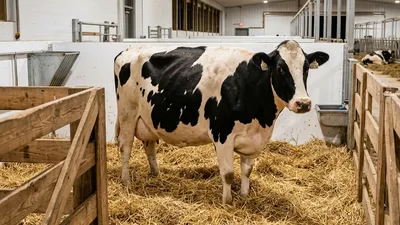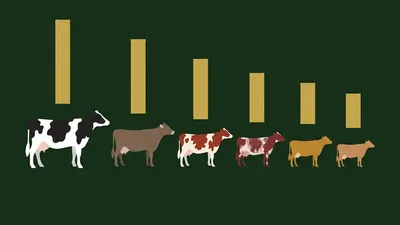
Managing herd health is a daily battle for dairy profitability. Cattle diseases are not just veterinary problems; they are major economic challenges. From milk production drops to treatment costs and premature culling, disease accounts for billions in losses globally each year. This comprehensive guide covers the symptoms, treatments, and prevention of the most common dairy cattle diseases: mastitis, metabolic conditions, reproductive disorders, hoof lameness, and calf illnesses.
Key Takeaways
- Mastitis remains the single costliest disease in the dairy industry, driven largely by subclinical cases.
- The Transition Period (3 weeks before to 3 weeks after calving) is the highest risk window for metabolic disorders.
- Lameness is often a silent profit-killer, reducing feed intake and milk yield long before clinical signs are obvious.
- Biosecurity & Vaccination are the most cost-effective investments a dairy manager can make to prevent outbreaks.
The True Cost of Cattle Diseases
In dairy farming, a disease's impact extends far beyond the veterinarian's bill. When a cow falls ill, the financial damage spreads across several categories:
- Discarded Milk: Treatment with antibiotics requires holding milk back from the bulk tank for statutory withdrawal periods.
- Reduced Yield: Many diseases cause permanent damage to secretory tissue, lowering a cow's yield for the rest of her lactation.
- Reproductive Delays: Sick cows take longer to cycle, leading to more days open and higher semen costs.
- Culling and Mortality: Severe infections or downer cows result in high-value replacement animal losses.
Udder Health & Mastitis: The Costliest Disease
Mastitis is the inflammation of the mammary gland, typically caused by bacterial pathogens. It is categorized into clinical (visible changes in milk, swelling of the udder) and subclinical (milk looks normal, but somatic cell count is elevated).
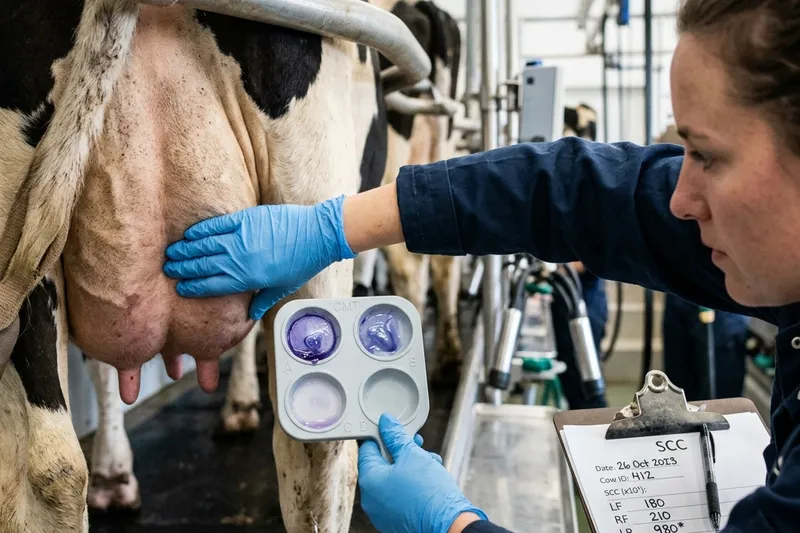
Veterinarian performing a California Mastitis Test (CMT) to detect subclinical mastitis in a cow's quarters.
Subclinical mastitis is particularly insidious because it goes unnoticed without testing, yet it consistently reduces milk yield and quality. Managing this disease is directly linked to milk premiums and avoiding processor penalties. For a detailed breakdown of the biological indicators and financial penalties associated with udder infections, read our Somatic Cell Count (SCC) Guide.
Prevention and Hygiene
Effective mastitis management relies on strict parlor hygiene. Teats should be cleaned, pre-dipped with a sanitizing solution, and wiped dry with a single-use towel before milking. After the milking unit is removed, applying a post-dip barrier is critical to protect the open teat canal from environmental pathogens.
Metabolic Diseases & The Transition Period
The transition period is the ultimate test of a dairy cow's physiology. During this time, the cow transitions from pregnant and non-lactating to calving and high milk production. The sudden demand for calcium and energy can easily trigger a cascade of metabolic disorders.
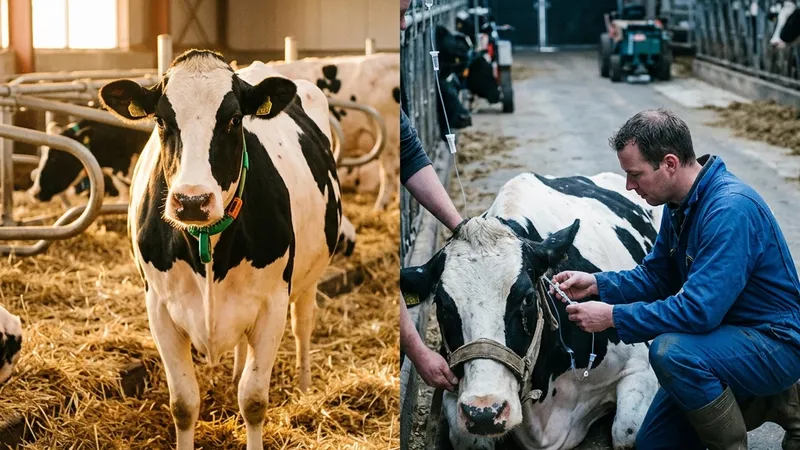
Prevention vs. Consequence: Active transition monitoring (left) prevents severe clinical cases like milk fever requiring IV calcium (right).
Milk Fever (Hypocalcemia)
Milk fever occurs when blood calcium levels drop too low around calving. Calcium is vital for muscle contraction; without it, the cow becomes weak and cannot stand. Feeding a Dietary Cation-Anion Difference (DCAD) diet during the dry period helps prime the cow's body to mobilize calcium from her bones when lactation starts.
Ketosis
Ketosis develops when a cow undergoes a severe negative energy balance in early lactation. Unable to consume enough feed to match her milk output, she breaks down body fat too rapidly, creating toxic ketone levels in her blood. Symptoms include weight loss, reduced appetite, and a distinct sweet breath odor. Treatment involves administering propylene glycol to raise blood glucose levels.
Reproductive Disorders
Uterine infections and reproductive failure often stem directly from a difficult transition period. Common reproductive diseases include:
- Retained Placenta: Failure to expel the afterbirth within 12 hours of calving. It significantly increases the risk of uterine infection.
- Metritis: A severe bacterial infection of the uterus occurring within the first few weeks after calving, causing foul discharge and fever.
Both conditions delay breeding and increase days open. Cleanliness in the maternity pen and minimizing stress during calving are key preventive measures.
Lameness & Hoof Health
Lameness is a significant welfare and economic issue. Pain from hoof lesions reduces a cow's willingness to walk to the feed bunk, lowering her dry matter intake and milk yield.
Digital Dermatitis (Hairy Heel Warts)
This highly contagious bacterial infection causes painful red sores near the heel bulb. It spreads rapidly in wet, manure-covered alleys. Regular footbaths containing copper sulfate or formalin are essential to control the bacteria and keep hooves healthy.
Foot Rot
Foot rot is a deep bacterial infection of the tissue between the claws, causing rapid swelling and severe lameness. It requires prompt antibiotic treatment. Keeping alleys clean and dry is the best way to prevent foot rot pathogens from entering the hoof tissue.
Calf Health: The Vulnerable Stage
The health of a farm's calves determines the future of the milking herd. Calves are born without an active immune system, making them highly vulnerable to infections during their first few weeks.
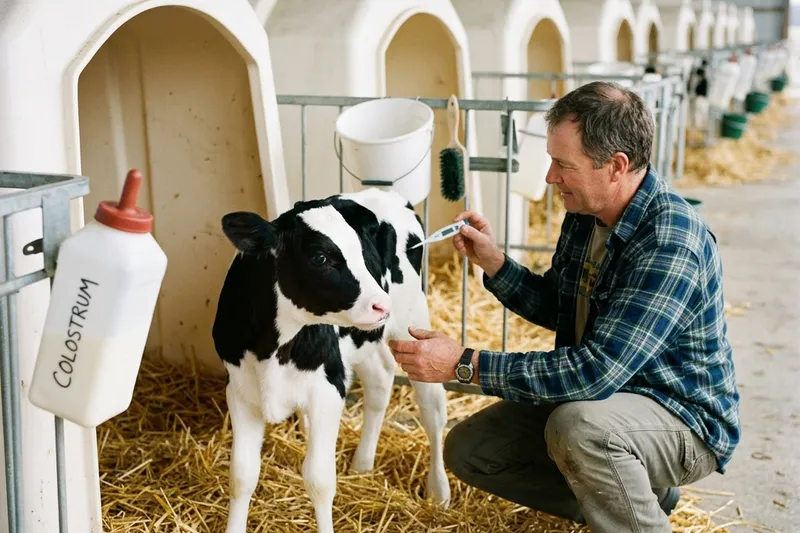
Providing clean housing and checking temperatures early are vital steps in protecting vulnerable newborn calves.
Colostrum: The Shield
Newborn calves must receive high-quality colostrum (the first milk rich in maternal antibodies) within 2 to 4 hours of birth. This transfer of passive immunity protects them until their own immune system develops. Colostrum quality should be verified using a refractometer before feeding.
Calf Scours & Pneumonia
Scours (diarrhea) is the leading cause of death in young calves, caused by rotavirus, coronavirus, or bacteria like E. coli. It leads to rapid dehydration. Supportive care with oral electrolytes is the primary treatment. Pneumonia is also common in poorly ventilated calf barns, stressing the need for clean, dry, individual hutches with excellent air circulation.
Herd Prevention & Biosecurity Protocols
A reactive approach to disease is expensive and inefficient. Implementing proactive protocols is the key to maintaining a healthy, profitable herd.
- Biosecurity: Quarantine new cattle arrivals for at least 21 days before introducing them to the main herd. Limit visitor access to animal areas.
- Vaccination: Follow a vet-approved vaccination program for respiratory and reproductive pathogens (such as BVD, IBR, and Leptospirosis).
- Cow Comfort: Provide clean, soft, dry beds (sand bedding is the gold standard) to reduce environmental mastitis and hoof wear.
Track Your Somatic Cell Counts & Avoid Penalties
Elevated somatic cell counts are a direct indicator of herd mastitis and lead to lower milk checks. Use our free tool to see how reducing your SCC will increase your milk premiums and protect your farm's bottom line.
Open SCC Penalty CalculatorFrequently Asked Questions
What is the most expensive disease in dairy cattle?
Mastitis is the costliest dairy cattle disease worldwide. On average, a single case of clinical mastitis costs a farm $200 to $450 in direct expenses (antibiotics, discarded milk, vet fees) and indirect costs (lost future milk production, increased risk of premature culling, reproductive delays).
How does subclinical mastitis differ from clinical mastitis?
Clinical mastitis shows visible symptoms: swelling or heat in the udder, clots or flakes in the milk, and sometimes a feverish, listless cow. Subclinical mastitis has no visible symptoms. The milk and udder look normal, but somatic cell count (SCC) rises, indicating an infection. It can only be detected via testing (such as the California Mastitis Test or laboratory cell counts).
What is the transition period, and why is it high risk?
The transition period covers the 3 weeks before calving to 3 weeks after calving. During this time, the cow's energy needs surge for milk production while her dry matter intake drops. This negative energy balance triggers metabolic disorders like milk fever, ketosis, and displaced abomasum, which frequently trigger secondary infections like metritis.
What are the first signs of milk fever?
Early signs of milk fever (hypocalcemia) include muscle tremors, excitability, stiff gait, and cold ears. As it progresses to Stage 2, the cow becomes unable to stand, exhibits a classic 'kink' in her neck, and becomes lethargic. In Stage 3, the cow goes flat on her side, loses consciousness, and faces imminent death without treatment.
How can scours in calves be prevented?
Calf scours prevention relies on excellent colostrum management (feeding 4 quarts of clean, high-quality colostrum within 2 hours of birth), sanitizing all feeding utensils after every use, maintaining dry, well-ventilated housing (like calf hutches), and vaccinating pregnant dams to boost maternal antibodies in the colostrum.
References
- National Mastitis Council. (2025). "Guidelines for Mastitis Control and Udder Health." NMC Resource Manual.
- University of Wisconsin-Madison Extension. (2025). "Transition Cow Management and Metabolic Disorders." UW-Madison Division of Extension.
- Penn State Extension. (2025). "Preventing Lameness and Managing Digital Dermatitis in Dairy Herds." Penn State University Agricultural Sciences.
- USDA APHIS Veterinary Services. (2025). "Calf Health and Management Practices on U.S. Dairy Operations." National Animal Health Monitoring System (NAHMS) Reports.