Dairy Farming India: Complete Guide to Herd Management Software (2026)
India is the world's largest milk producer, generating 216 million tonnes annually from 80 million dairy farmers. But here's the paradox: while India leads globally in volume, the average Indian dairy farmer earns just ₹80-₹120 per day. The difference between subsistence and prosperity lies in one thing — management software that transforms smallholder operations into profitable businesses.
हिंदी में जानकारी (Information in Hindi)
भारत दुनिया का सबसे बड़ा दुग्ध उत्पादक है। हमारा डेयरी प्रबंधन सॉफ्टवेयर भारतीय किसानों के लिए विशेष रूप से डिज़ाइन किया गया है। यह हिंदी और अंग्रेजी दोनों में काम करता है।
- मुख्य विशेषताएं: दूध रिकॉर्डिंग, पशु स्वास्थ्य ट्रैकिंग, वित्तीय प्रबंधन
- कीमत: छोटे किसानों के लिए मुफ्त, बड़े डेयरी के लिए ₹500-₹2,000/माह
- सहयोग: AMUL, NDDB, और राज्य स्तरीय डेयरी सहकारी समितियों के साथ एकीकरण
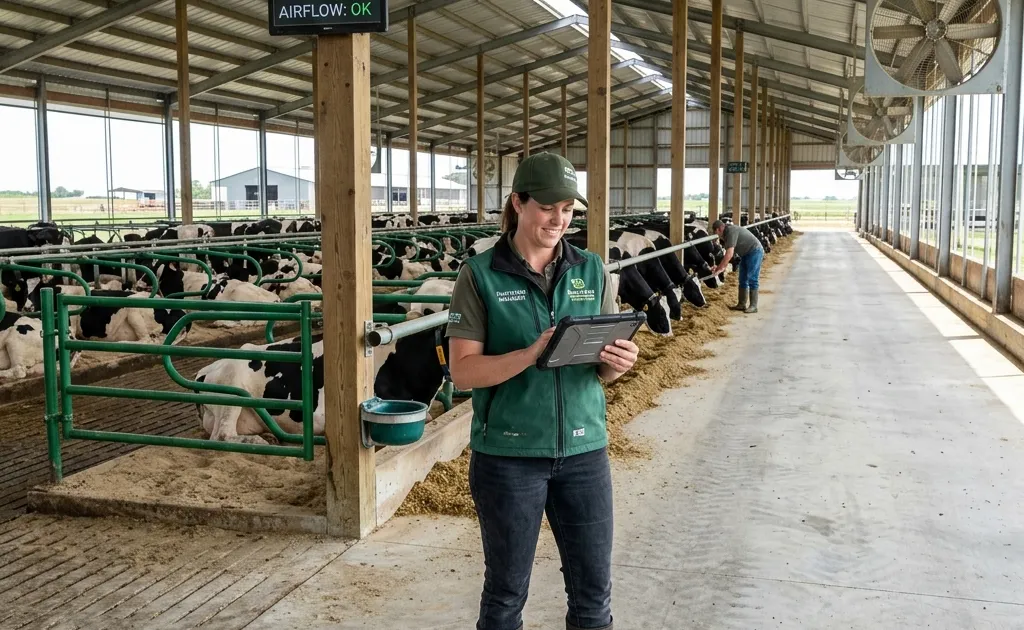
Key Takeaways
- India produces 216 million tonnes of milk annually — more than the US, EU, and New Zealand combined
- 80% of Indian dairy farmers are smallholders with 2-5 cows/buffaloes — cooperative integration is essential
- Top Indian apps: DairyKhata (AI-powered), MyCow (free basic), eGoat (NABARD), DairyFarmManager (free enterprise)
- Indian milk price: ₹35-₹45/litre vs. feed cost ₹20-₹30/litre — track IOFC daily
- NABARD subsidies and FPO schemes can cover 25-33% of dairy project costs — apply before investing
India Dairy Industry Overview
India's dairy industry is unique globally. Unlike Western countries dominated by large commercial operations, India's 216 million metric tonnes of annual production comes primarily from millions of smallholder farmers keeping 2-5 cows or buffaloes each. The cooperative model — exemplified by AMUL and the National Dairy Development Board (NDDB) — has transformed rural economies across Gujarat, Rajasthan, Maharashtra, and Punjab.
India Dairy Statistics (2026)
- Annual production: 216 million tonnes (world's largest producer)
- Projected production: 250 million tonnes by 2030
- Number of farmers: 80 million dairy farmers
- Average herd size: 2-5 animals (smallholder dominated)
- Major buffalo breeds: Murrah, Nili-Ravi, Jafarabadi
- Major cow breeds: Sahiwal, Gir, Rathi, Tharparkar, crossbreds
- Key regions: Uttar Pradesh, Rajasthan, Madhya Pradesh, Gujarat, Andhra Pradesh
India's dairy sector contributes to rural livelihoods more than any other agricultural activity. The cooperative model provides stable pricing, pooling, and risk management, but smallholders still need technology to optimise individual farm performance. The right software bridges this gap.
Indian Dairy Software Comparison
Choosing the right dairy farm app for Indian operations requires understanding the unique needs of smallholder farmers: cooperative integration, Hindi language support, mobile-first design for low-bandwidth areas, and subsidy compliance for government schemes.
1. DairyKhata — Most Popular in India
DairyKhata is India's most downloaded dairy management app, with AI-powered features for milk tracking, cattle management, and payment automation. It's built specifically for the Indian market with Hindi support and integration with local milk collection systems.
- Price: Free trial; ₹300-₹800/month depending on herd size
- India strengths: AI-powered insights, Hindi support, cooperative integration
- Milk recording: Manual entry with AMUL/NDDB integration
- Mobile: Excellent Android app for Indian network conditions
2. MyCow — Free Basic Option
MyCow is designed specifically for Indian cattle and buffalo owners. It provides milk production tracking, medical history, insemination records, and financial management — all tailored to the Indian dairy market at no cost.
- Price: Free for basic features
- India strengths: Built for Indian cattle/buffaloes, basic milk tracking
- Milk recording: Manual entry with payment tracking
- Mobile: Simple Android app for basic record keeping
3. eGoat — NABARD Digital Solution
eGoat is a digital platform from NABARD (National Bank for Agriculture and Rural Development) for livestock management. It supports dairy, goat, and poultry operations with government scheme integration.
- Price: Free (government subsidised)
- India strengths: NABARD integration, subsidy compliance, multi-species
- Milk recording: Basic entry with scheme tracking
- Mobile: Mobile app for scheme management
4. DairyFarmManager — Free Enterprise Option
DairyFarmManager offers enterprise-level features at no cost for small Indian farms. Its AI-powered analytics and financial tracking make it ideal for farmers who want data-driven insights without subscription fees.
- Price: Free basic tier (up to 100 cows); paid plans for larger herds
- India strengths: AI insights, financial tracking, production analytics
- Milk recording: Manual entry with Indian price benchmarks
- Mobile: Mobile-first design with offline capability
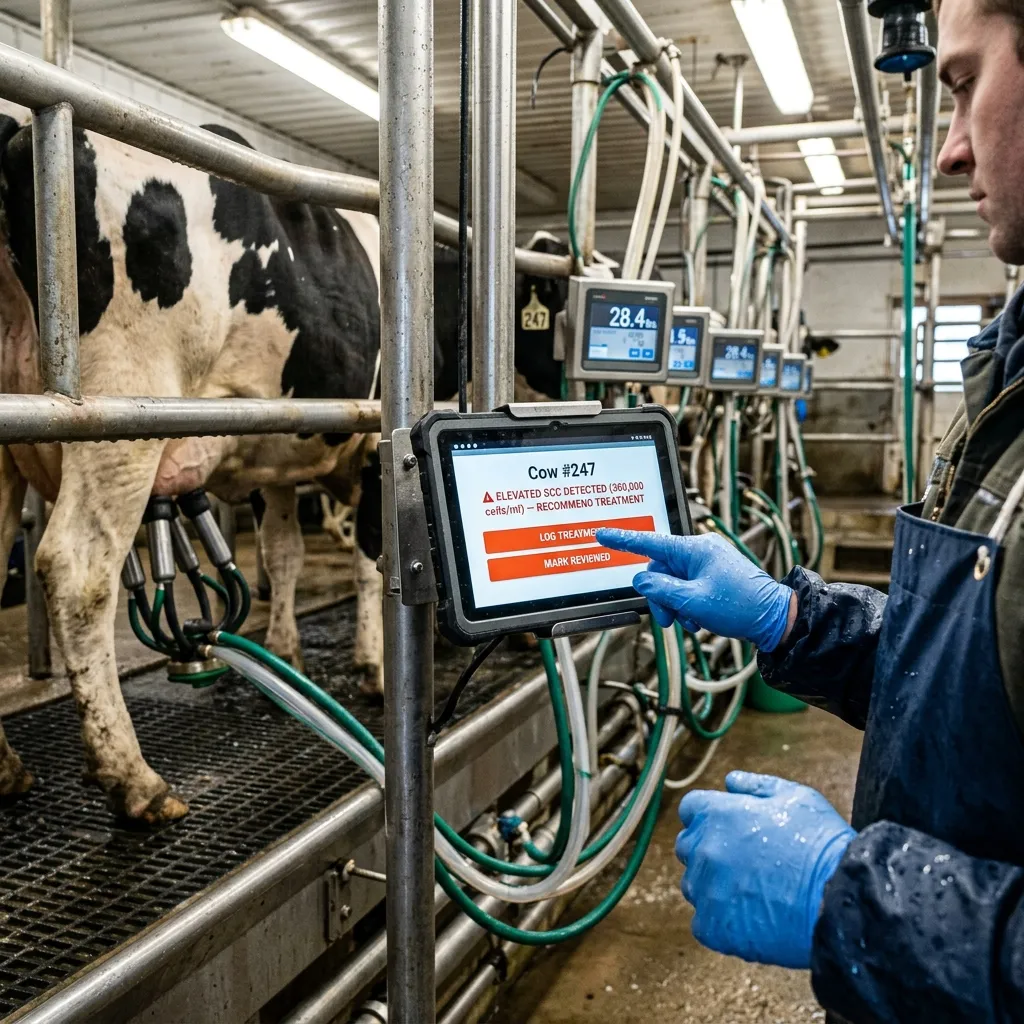
Indian Dairy Software Pricing Comparison (2026)
| Software | Free Tier | Paid Plans | Best For |
|---|---|---|---|
| DairyKhata | 14-day trial | ₹300-₹800/month | AI-powered, cooperative integration |
| MyCow | ✅ Free basic | N/A | Smallholders, basic tracking |
| eGoat | ✅ Free (NABARD) | N/A | Government scheme compliance |
| DairyFarmManager | ✅ Up to 100 cows | ₹500-₹2,000/month | AI analytics, free tier |
DairyKhata vs DairyFarmManager: India Head-to-Head
| Feature | DairyKhata | DairyFarmManager |
|---|---|---|
| Hindi Support | ✅ Full Hindi interface | ⚠️ English only |
| AMUL Integration | ✅ Direct integration | ⚠️ Manual entry |
| AI Analytics | ✅ AI-powered insights | ✅ AI-powered insights |
| Payment Automation | ✅ UPI/Bank transfers | ⚠️ Manual tracking |
| Offline Mode | ✅ Works offline | ✅ Offline capability |
| Cattle Trading | ✅ Built-in marketplace | ❌ Not available |
| Price (50 animals) | ₹300/month | Free |
Need help choosing?
See our complete Best Dairy Farm Apps for Android guide for detailed analysis of every major option, including Indian-specific features and pricing.
AMUL & Cooperative System
India's dairy cooperative system is the backbone of the industry. AMUL (Anand Milk Union Limited) is the world's largest dairy cooperative, collecting milk from 3.6 million farmers across Gujarat and beyond. Understanding how cooperatives work is essential for Indian dairy farmers.
How Indian Dairy Cooperatives Work
- Milk collection: Farmers deliver milk to local collection centres (chilling centres)
- Quality testing: Milk is tested for fat content, SNF (solids-not-fat), and adulteration — calculate SNF instantly with our free tool
- Payment: Based on fat and SNF content — calculate indicative fair price with our rate calculator
- Pooling: Milk from multiple farmers is pooled for processing
- Marketing: Cooperative handles branding, distribution, and retail
Software that integrates with cooperative systems helps farmers track which cows produce high-fat milk, identify payment discrepancies, and optimise feeding for component quality. Ask potential software providers: "Do you support AMUL/NDDB milk collection integration?" — this is critical for Indian farmers.
NDDB & Milk Recording
The National Dairy Development Board (NDDB) provides milk recording infrastructure for Indian dairy farms through the Dairy Cooperative Management Information System (DCMIS). This data is critical for herd management decisions, breeding programs, and financial tracking.
What NDDB Data Tells You
- Milk yield: Daily litres per cow/buffalo — identify production trends
- Fat content: Target 4.0%+ for cows, 6.0%+ for buffaloes — affects payment
- SNF (Solids-Not-Fat): Indicator of milk quality and nutrition — check your SNF with our calculator
- Payment records: Track cooperative payments and pricing trends
Software that imports NDDB data automatically eliminates manual entry errors and ensures your records are always current. For smallholders, this integration means better visibility into which animals are most profitable and which need attention.
Indian Dairy Breeds & Production
Indian dairy farming uses a mix of indigenous breeds, crossbreds, and buffaloes. For the latest state-by-state yield data, see our average milk production per cow in India guide, with breed deep-dives on the Sahiwal and Gir. Understanding breed characteristics is essential for optimising feed, health, and production.
Indian Breed Comparison
- Sahiwal: 1,500-2,000 litres/lactation, heat tolerant, disease resistant. Good for extensive systems.
- Gir: 1,200-1,800 litres/lactation, docile temperament, high butterfat. Popular in Gujarat.
- Rathi: 1,500-2,200 litres/lactation, adapted to arid regions. Rajasthan favourite.
- Tharparkar: 1,200-1,600 litres/lactation, drought tolerant. Good for western India.
- Crossbreds (HF/Jersey x Indigenous): 2,500-4,000 litres/lactation, higher yield but less heat tolerant.
- Murrah Buffalo: 1,800-2,500 litres/lactation, high butterfat (6.0%+). Premium milk price.
- Nili-Ravi Buffalo: 2,000-2,800 litres/lactation, high yield. Popular in Punjab.
Your breed choice affects software requirements. Buffalo operations need butterfat tracking, while crossbreed systems may prioritise production volume. Most modern apps support all breeds, but check that your chosen software handles Indian breed-specific benchmarks.
Indian Dairy Farm Costs & Benchmarks
Understanding Indian-specific costs is essential for profitability. The average Indian milk price (2026) is ₹35-₹45/litre, with feed costs averaging ₹20-₹30/litre. This leaves a margin over feed cost of approximately ₹10-₹15/litre — but only if you're tracking these metrics.
Indian Dairy Cost Benchmarks (2026)
- Milk price: ₹35-₹45/litre (varies by fat content and cooperative)
- Feed cost: ₹20-₹30/litre (grass + concentrate systems)
- IOFC: ₹10-₹15/litre (target: above ₹12/litre for profitability)
- Feed cost per animal per day: ₹150-₹250 depending on breed and yield
- Labour cost: ₹8,000-₹15,000/month for farm workers
- Vet costs: ₹2,000-₹5,000/animal/year
Track your herd’s performance in one place
Log milk yield, monitor breeding, track expenses, and generate reports — all from your browser. No download needed.
Getting Started in India
Implementing dairy software on an Indian farm requires understanding your specific needs. Start with cooperative integration and milk recording, then add health tracking and financial analytics as your farm grows.
India Implementation Checklist
- Month 1: Choose software, set up herd register, connect with cooperative
- Month 2: Train family members on mobile data entry, start recording milk yields
- Month 3: Analyse production data, optimise feeding for fat content
- Month 4: Review breeding program, apply for NABARD/FPO subsidies if eligible
For a complete guide on starting a dairy farm in India, see our How to Start a Dairy Farm guide which includes India-specific startup costs and cooperative models. For the data foundation that makes software valuable, read our Dairy Farm Record Keeping guide.
Transform Your Indian Dairy Farm Today
Whether you're in Gujarat, Rajasthan, or Tamil Nadu, the right software transforms your operation. DairyFarmManager was built for farmers who want enterprise-level tracking without enterprise-level costs — completely free for small Indian farms.
Start Your Free AccountIndia Case Study: How DairyKhata Increased a Gujarat Dairy's Income by 35%
The Challenge
A 15-buffalo dairy in Anand, Gujarat was selling to AMUL but had no visibility into which animals were profitable. The farmer was earning ₹80-₹100 per litre but suspected some buffaloes were costing more in feed than they produced. Manual records were incomplete and payments didn't match expected yields.
The Solution
The farmer installed DairyKhata with AMUL integration. The app automatically synced milk collection data, tracked fat content per animal, and calculated payment projections. The AI feature identified three low-producing buffaloes that were consuming feed but giving poor returns.
The Results (6 Months)
- Income increase: 35% higher monthly income (₹12,000 to ₹16,200)
- Fat content improvement: Average fat % up from 6.2% to 6.8% through better feeding
- Payment accuracy: Zero payment discrepancies with AMUL — all tracked automatically
- Time savings: 2 hours/day saved on manual record keeping
- Culling decision: Sold 2 low producers, reinvested in 1 high-quality buffalo
"DairyKhata ने मेरी डेयरी बदल दी। अब मैं जानता हूं कि कौन सी भैंस ज्यादा दूध देती है और कौन सी कम। पहले मुझे अनुमान लगाना पड़ता था, अब डेटा बोलता है।" (DairyKhata changed my dairy. Now I know which buffalo gives more milk and which gives less. Before I had to guess, now the data speaks.) — Ramesh Patel, Anand, Gujarat
Frequently Asked Questions
What is the best dairy farm app for Indian farmers?
The best dairy farm app for Indian farmers depends on herd size and needs. DairyKhata is India's most downloaded dairy app with AI-powered features and Hindi support. MyCow provides basic tracking for smallholders. NDDB's DCMIS system integrates with cooperative milk collection. DairyFarmManager offers free AI analytics for larger Indian operations.
How does AMUL dairy software work?
AMUL (Anand Milk Union Limited) provides cooperative members with milk procurement integration through the AMUL milk collection system. Farmers can track daily milk yields, payment records, and quality metrics. Third-party apps like DairyKhata integrate with AMUL's collection data for herd management beyond basic procurement.
What milk recording systems do Indian dairy farms use?
Indian dairy farms primarily use cooperative-based milk recording through AMUL, NDDB, and state-level milk federations. For individual farm management, apps like DairyKhata, MyCow, and eGoat (NABARD) provide digital record keeping. NDDB's DCMIS system is used by larger commercial operations.
How much does dairy farm software cost in India?
Indian dairy farm software ranges from free (DairyFarmManager basic tier, MyCow) to ₹500-₹2,000/month for premium features. DairyKhata offers a free trial then ₹300-₹800/month depending on herd size. The ROI typically pays for itself within the first month through optimised feed costs and better milk pricing.
What Indian dairy regulations affect software choice?
Indian dairy farmers must comply with FSSAI (Food Safety and Standards Authority of India) milk quality standards, cooperative society rules, and state-level livestock regulations. Software should support these requirements. FPO (Farmer Producer Organisation) schemes and NABARD subsidies may influence software choices for eligible farmers.
क्या डेयरी सॉफ्टवेयर हिंदी में काम करता है? (Does dairy software work in Hindi?)
हाँ, DairyKhata पूरी तरह से हिंदी में काम करता है। DairyFarmManager अंग्रेजी में है लेकिन जल्द ही हिंदी समर्थन आ रहा है। अधिकांश डेयरी सॉफ्टवेयर अब भारतीय भाषाओं का समर्थन करते हैं।
How do I get NABARD subsidy for dairy farming?
Apply through your local NABARD district office or commercial bank before investing. The Dairy Entrepreneurship Development Scheme (DEDS) provides 25% subsidy (33% for SC/ST) on project costs up to ₹10 lakh. You'll need a detailed project report, land documents, and animal purchase quotes.
Which app works best with AMUL milk collection?
DairyKhata has the best AMUL integration — it automatically syncs with AMUL collection centres for milk data and payments. DairyFarmManager requires manual entry but tracks the same data. Ask your local AMUL society which apps they support.
Can I track fat content and SNF in dairy software?
Yes, both DairyKhata and DairyFarmManager track fat content and SNF (Solids-Not-Fat). This is critical in India because milk prices are based on fat percentage. Higher fat content means higher payment — so tracking helps you optimise feeding for component quality.
What's the best free dairy app for small Indian farmers?
For small Indian farmers with under 10 animals, MyCow is completely free and covers basic milk tracking. DairyFarmManager is free for up to 100 cows with AI analytics. eGoat (from NABARD) is also free but focuses on government scheme compliance.
 Management
 How to Start a Dairy Farm: The Complete 2026 Guide
Comprehensive step-by-step guide to starting a dairy farm. Covers startup costs, choosing breeds, essential equipment, feeding, and operations.
Read Guide → Management
 Dairy Farm KPIs: The Complete Metrics Guide (2026)
Master every dairy farm KPI — from IOFC and profit margins to SCC and pregnancy rates. Learn what to measure and industry benchmarks.
Read Guide → Management
 Dairy Farm Record Keeping Guide & Excel Templates
Master dairy farm record keeping with our complete guide. Learn the 6 essential record types, download free Excel templates, and build a routine.
Read Guide →Get dairy management tips weekly
Join 200+ dairy farmers getting practical KPIs, breeding insights, and profitability tips — no spam, unsubscribe anytime.