![Dairy Farm Business Plan Template [Free Download 2026]](/_astro/hero_business_plan.MEiti57h_i9ql0.webp)
Whether you are approaching an agricultural lender for a $1,000,000 startup loan, or self-funding a 50-cow family operation, a dairy farm business plan is the foundation of your success. It forces you to move from dreams to numbers. It tests your assumptions about milk yields, feed costs, and cash flow before you put actual money on the line.
In this guide, we break down exactly what goes into a winning dairy business plan in 2026. We cover the 9 essential sections, the common mistakes that get loans rejected, and provide a roadmap to structure your financials.
Get The Free Template
Don’t want to start from scratch? Download our free, fully formatted 2026 Dairy Farm Business Plan Template — includes worked examples, financial formulas, a monthly cash flow projection sheet, and a stress-testing framework.
Download Free Template (PDF) ↓Why You Need a Business Plan (Even If You Aren’t Borrowing)
Many new farmers view the business plan as a chore—a hoop to jump through for the bank. This is a dangerous mindset. Starting a dairy farm is incredibly capital-intensive. You are dealing with living assets, volatile commodity markets, and unpredictable weather.
- Cash Flow Visibility: It takes 3-5 years for most dairies to break even. Your plan maps out exactly how you will survive the months where feed costs exceed milk revenue.
- Risk Management: What happens if the milk price drops by $3/cwt? What if corn prices spike? A good plan includes sensitivity analysis to ensure you don’t go bankrupt during industry downturns.
- Operational Clarity: It forces you to define your breeding strategies, nutrition plan, and labor requirements upfront.
The 9-Part Dairy Farm Business Plan Structure
A professional business plan should be 15 to 30 pages long. Lenders aren’t looking for a novel; they want clear, concise data. Based on lender expectations, here is the exact structure you should follow:
I. Executive Summary (1-2 pages)
A high-level overview of your dairy farm, your mission, and your funding requirements. Write this section last.
- Mission Statement
- Business Concept & Value Proposition
- Founding Team Experience
- Funding Requirements & Use of Funds
- Key Financial Projections Summary
II. Business Description (2-3 pages)
The legal structure, ownership details, and current status of your farm.
- Farm History & Current Status
- Legal Structure (LLC, Sole Proprietorship, etc.)
- Location & Property Details
- Size (acreage, herd capacity)
- Current Stage (startup, expansion, modernization)
III. Market Analysis (3-4 pages)
An overview of the local and national dairy market, including trends and opportunities.
- Industry Overview: Dairy market trends (organic vs. conventional), milk price forecasts, regional supply/demand analysis.
- Target Market: Milk buyers (cooperatives, processors, direct), product diversification opportunities, value-added products (cheese, yogurt, ice cream).
- Competition Analysis: Direct competitors within a 50-mile radius, competitive advantages & differentiators, market share expectations.
SWOT Analysis Framework — Fill this in for your specific operation:
| Helpful | Harmful | |
|---|---|---|
| Internal | Strengths: High genetic merit herd; secured feed contracts; low debt burden | Weaknesses: Aging parlor; family-labor reliance; limited tillable acreage |
| External | Opportunities: Low-SCC premium; methane digester grants; adjacent land for sale | Threats: Processing plant closures; interest rate risk; zoning encroachment |
IV. Operations Plan (4-5 pages)
The day-to-day mechanics of your farm. How will it run? What breeds? What feed?
- Herd Management: Current herd size & breed composition, acquisition plans, breeding & reproduction program, animal health protocols.
- Facilities & Equipment: Barns, parlors, free-stall housing, milking system (parlor, robotic, pipeline), manure handling systems, feed storage.
- Feed & Nutrition: Feed ration plans (TMR, grazing-based), forage production (acres, yields), grain purchasing strategy, water supply & quality.
- Labor & Management: Staffing plan (full-time, part-time, seasonal), management roles & responsibilities, training programs.
- Regulatory Compliance: Permits & licenses required, environmental regulations (NRCS, EPA), milk quality & safety standards (Grade A), animal welfare certifications.
V. Financial Plan (5-7 pages)
This is where lenders will spend 80% of their time. If your numbers don’t work, nothing else in the plan matters.

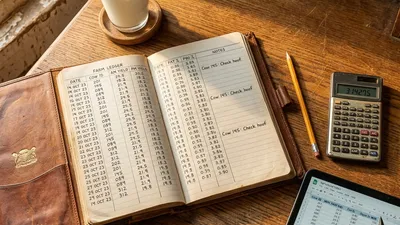
Organized desk space showing the 5-year cash flow projections, milk revenue forecasts, and USDA milk price charts.
1. Startup Costs/Use of Funds Table
List every single expense required before your first milk check arrives. Do not underestimate this. The example below is based on a 300-cow expansion scenario.
| Category | Amount |
|---|---|
| Land Acquisition (120 acres) | $600,000 |
| Buildings & Construction (free-stall addition) | $480,000 |
| Equipment & Machinery (double-12 parlor upgrade) | $220,000 |
| Livestock Purchase (120 additional milking cows) | $360,000 |
| Working Capital (6 months operating) | $190,000 |
| Total Funding Required | $1,850,000 |
2. Operating Budget (Annual)
Calculate your expected milk revenue based on conservative estimates and detail your expenses. Adjust these numbers for your region and herd size.
| Revenue Sources | Year 1 | Year 2 | Year 3 |
|---|---|---|---|
| Milk Sales (300 cows × 85 lbs × $22/cwt) | $1,400,000 | $1,520,000 | $1,680,000 |
| Cull Cow Sales | $75,000 | $80,000 | $85,000 |
| Heifer Sales | $60,000 | $70,000 | $80,000 |
| Other (manure, crops, insurance payouts) | $45,000 | $50,000 | $55,000 |
| Total Revenue | $1,580,000 | $1,720,000 | $1,900,000 |
| Expense Categories | Year 1 | Year 2 | Year 3 |
|---|---|---|---|
| Feed Costs (60% of operating) | $680,000 | $720,000 | $760,000 |
| Labor (3 full-time + 1 seasonal) | $210,000 | $220,000 | $230,000 |
| Veterinary & Health | $45,000 | $48,000 | $50,000 |
| Utilities & Maintenance | $65,000 | $70,000 | $75,000 |
| Insurance (property, liability, milk price) | $38,000 | $40,000 | $42,000 |
| Loan Payments (debt service) | $61,411 | $61,411 | $61,411 |
| Total Expenses | $1,099,411 | $1,159,411 | $1,218,411 |
| Net Farm Income | $480,589 | $560,589 | $681,589 |
3. Debt Schedule & Amortization
Lenders want to see exactly how much you owe, to whom, and when it is paid off.
| Lender / Loan | Original | Rate | Term | Annual Pmt | Current Balance |
|---|---|---|---|---|---|
| FSA Farm Ownership | $500,000 | 5.0% | 20 yrs | $40,111 | $460,000 |
| Equipment Note (Tractor) | $120,000 | 6.5% | 7 yrs | $21,300 | $98,700 |
| Operating Line of Credit | $150,000 | 8.0% | Revolving | Interest only | $65,000 |
4. Monthly Cash Flow Projection (Year 1)
Map out each month to identify seasonal cash gaps. Feed costs peak in winter; milk checks are highest in spring.
| Jan | Feb | Mar | … | Dec | Total | |
|---|---|---|---|---|---|---|
| Milk Sales | $110,000 | $112,000 | $125,000 | … | $118,000 | $1,400,000 |
| Other Revenue | $8,000 | $8,000 | $12,000 | … | $10,000 | $180,000 |
| Feed & Operating Exp. | $72,000 | $74,000 | $70,000 | … | $76,000 | $880,000 |
| Debt Service | $5,118 | $5,118 | $5,118 | … | $5,118 | $61,411 |
| Net Cash Flow | $40,882 | $40,882 | $61,882 | … | $46,882 | $638,589 |
| Ending Cash Balance | $40,882 | $81,764 | $143,646 | … | $638,589 | — |
Calculate Your Farm Profit
Enter your revenue and costs to see your actual profit margin and net income per cow.
VI. Marketing & Sales Strategy (2-3 pages)
How you will sell your milk or dairy products. Lenders want to see that you have a committed buyer before you start production—nobody wants to finance a farm that produces milk with no one to sell it to.
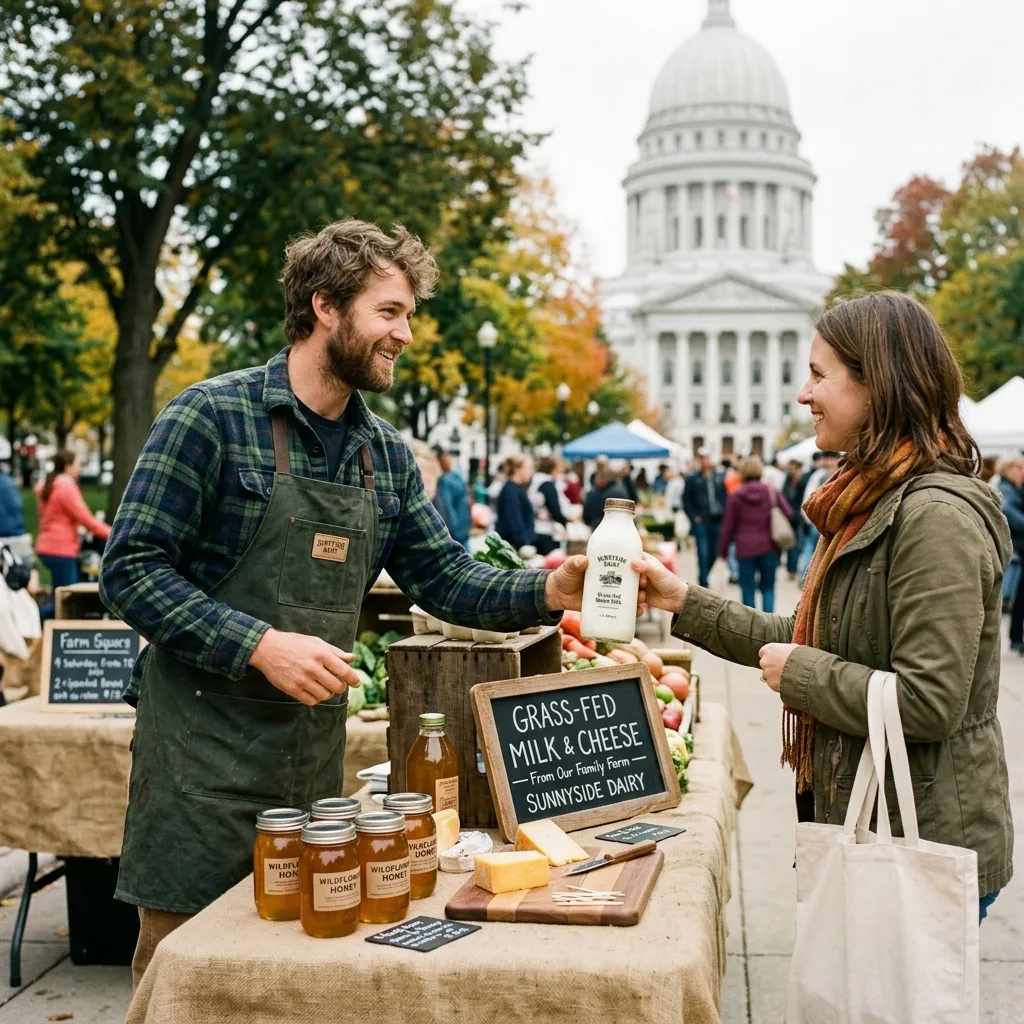
Building a strong local brand and direct marketing channels can capture higher margins for your farm’s products.
Milk Marketing Arrangements Most dairy farms sell through one of three channels, and your plan should specify which you will use and why:
- Cooperative Membership: The most common route. You join a co-op (e.g., Land O’Lakes, Dairy Farmers of America) that pools your milk with other farms and negotiates processing contracts. You receive a monthly milk check based on component pricing (butterfat, protein, lactose). Expect a 30-60 day lag between delivery and payment.
- Direct Processor Contracts: Some farms negotiate directly with a local processor or creamery. This can yield a premium of $1-3/cwt above co-op prices, but you need consistent volume and quality to hold the contract.
- On-Farm Bottling or Value-Added: Selling branded milk, cheese, yogurt, or ice cream directly to consumers. Highest margin (often 2-3x wholesale price) but requires FDA/state dairy licensing, a bottling facility, and a retail distribution strategy.
Contract Negotiations
- Lock in a base price with your co-op or processor before construction begins. Lenders want to see a letter of intent or a supply agreement.
- Understand component pricing: butterfat now commands a significant premium. If you are breeding for high-component Holsteins or Jerseys, your contract should reflect that.
- Negotiate volume commitments carefully—overcommitting forces you to buy milk from other farms to fill your quota.
Brand Development (if direct-to-consumer)
- Farm name, logo, packaging design, and shelf presence at farmers’ markets or local retailers.
- Story-driven branding works: family history, grass-fed or pasture-raised claims, animal welfare certifications (e.g., Certified Humane, Animal Welfare Approved).
- Budget $2,000-5,000 for initial branding and packaging design.
Value-Added Opportunities
- Artisan cheese, butter, yogurt, or ice cream can increase your revenue per gallon by 200-400%.
- Requires a licensed commercial kitchen or creamery—factor $50,000-150,000 in additional startup costs.
- Identify your distribution partners (restaurants, grocery stores, farmers’ markets) before investing in production equipment.
Customer Acquisition Strategy
- Farmers’ markets: low barrier to entry, direct customer feedback, but limited volume.
- Restaurant and café partnerships: consistent weekly orders, but require Grade A pasteurization equipment.
- CSA (Community Supported Agriculture) milk shares: upfront payment from subscribers improves cash flow.
- Online ordering with local delivery: requires refrigerated van and route planning, but builds repeat customers.
VII. Risk Management (2 pages)
Lenders reject business plans that do not address risk. You must demonstrate that you have thought about what happens when things go wrong—and that you have a financial buffer to survive it.
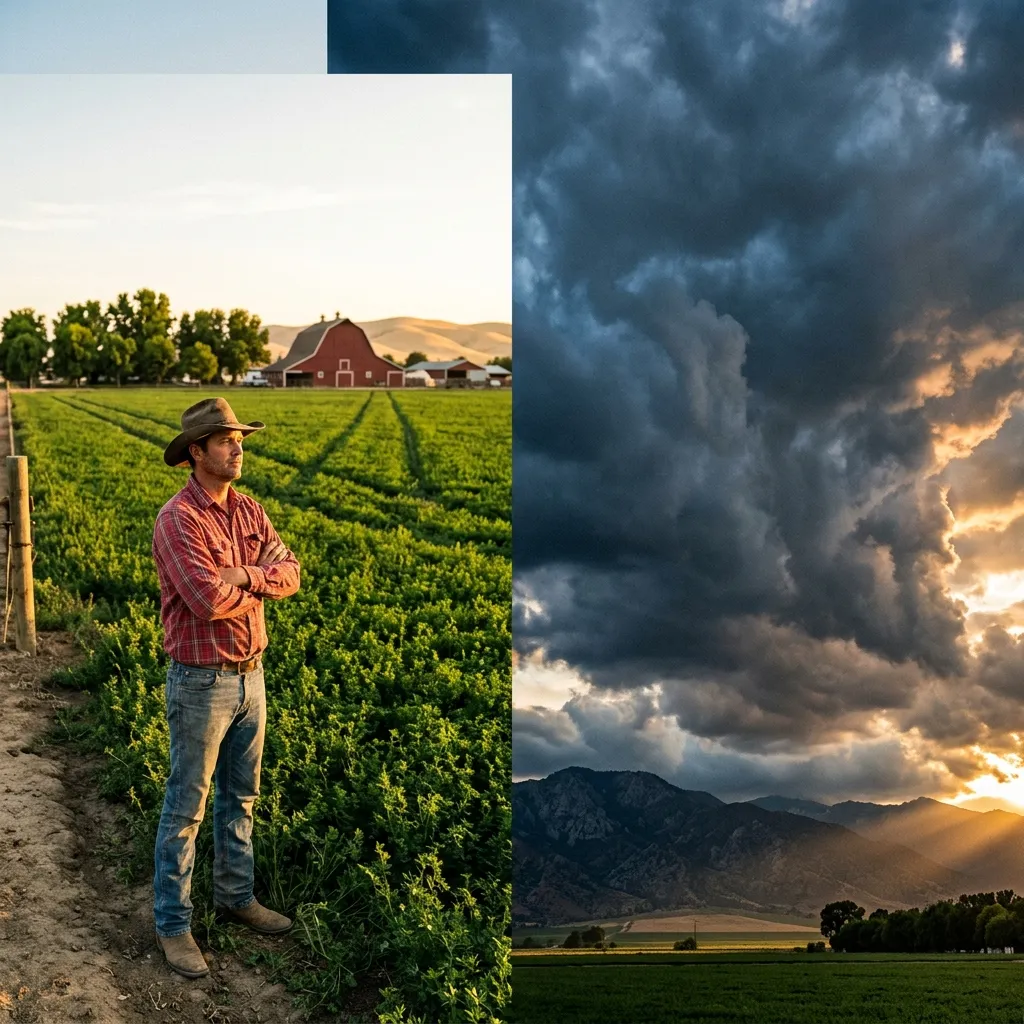
Resilience and preparedness are the cornerstones of risk management, preparing you for feed price spikes and weather uncertainty.
Production Risks
- Disease Outbreak: Maintain a veterinary care agreement with a local large-animal vet. Budget $150-300/cow/year for routine veterinary services. Have a biosecurity protocol: restricted farm access, quarantine procedures for new animals, and a vaccination schedule (IBR, BVD, Leptospirosis, BRSV). A single mastitis outbreak can cost $200-500/cow in treatment and lost production.
- Weather & Natural Disaster: If you grow your own forage, a drought or flood can double your feed costs overnight. Mitigate by securing 12-18 months of stored feed (silage, haylage, dry hay) and purchasing crop insurance through USDA RMA.
- Equipment Failure: A milking parlor breakdown stops all revenue. Maintain a $20,000-50,000 equipment reserve fund and carry breakdown insurance. Keep critical spare parts (vacuum pump seals, pulsators, milk claws) on-site.
Market Risks
- Price Volatility: Milk prices swing $4-8/cwt over a 3-5 year cycle. Your financial projections must include a downside scenario at $16-18/cwt (well below the 5-year average) to prove you can survive a downturn.
- Feed Price Spikes: Feed is 50-60% of your operating cost. Corn and soybean meal prices can double in a single year. Lock in forward contracts with local grain elevators for 6-12 months of feed. Consider purchasing put options on corn futures as price insurance.
- Contract Risk: Never depend on a single buyer. If your processor drops your contract or a co-op reduces its member quota, you need an alternative channel. Maintain relationships with at least two buyers.
Financial Risks
- Interest Rate Protection: If your loan has a variable rate, budget for a 2-3% rate increase in your projections. Consider an interest rate cap or swap with your lender.
- Credit Line Arrangements: Secure a revolving line of credit ($100,000-250,000 depending on herd size) before you need it. This covers seasonal cash flow gaps between feed purchases and milk checks.
- Insurance Coverage: Required policies include general liability ($1M minimum), property and equipment coverage, milk price insurance (USDA Livestock Gross Margin for Dairy), and workers’ compensation if you have employees. Budget 2-3% of gross revenue for total insurance costs.
Stress Testing Framework — Run your projections through at least two scenarios before submitting to a lender:
| Scenario | Assumption | What Changes |
|---|---|---|
| Scenario A: Base Case | Milk $22/cwt, corn $5.50/bu, 85 lbs/cow/day | Standard projections as shown in your operating budget |
| Scenario B: Margin Squeeze | Milk $19.80/cwt (-10%), corn $6.05/bu (+10%) | Revenue drops, feed costs rise — net farm income may turn negative. Do you survive 12 months? |
| Scenario C: Catastrophic Loss | Milk $18/cwt, 20% herd loss (disease), corn $7/bu | Worst-case: can you service debt for 6 months on reduced cash flow? |
VIII. Implementation Timeline
Break your launch into phases with clear milestones. Lenders want to see that you have a realistic schedule and that you understand the sequence of events.
Phase 1: Pre-Operation (Months 1-6)
- Finalize business plan and secure financing commitment from FSA or commercial lender
- Purchase or option land; complete soil tests and environmental assessments
- Hire architect/engineer for barn and parlor design; submit building permits
- Apply for Grade A milk license and necessary state/local permits
- Begin herd genetic planning: order sexed semen, selectAI sires
Phase 2: Construction & Acquisition (Months 7-12)
- Construct free-stall barn addition and upgrade milking parlor
- Install feed storage (bunker silo, hay barn), manure handling system, and water infrastructure
- Purchase equipment: tractor, TMR mixer, manure spreader, skid steer
- Begin herd acquisition: purchase 120 springing heifers from verified herds
- Set up farm management software (e.g., DairyComp, PCDart) and CowManager collars
Phase 3: Startup Operations (Months 13-18)
- Begin milking — target 200 cows in milking string by month 14
- Establish feed ration with consulting nutritionist; begin TMR feeding
- Hire and train 3 full-time employees; establish milking shifts and SOPs
- Execute milk marketing contract with co-op or direct processor
- Implement biosecurity protocols: farm access logs, quarantine pen, vaccination schedule
- First milk checks arrive — monitor cash flow weekly against projections
Phase 4: Full Production (Months 19-24)
- Reach full herd capacity (300 milking cows)
- Optimize breeding program: pregnancy rates above 20%, voluntary waiting period of 60 days
- First annual financial review — compare actuals to Year 1 projections
- Begin building relationship with second milk buyer to reduce contract risk
- Evaluate capital expenditure needs for Year 2 (e.g., feed mixer, additional heifer barn)
IX. Appendices
Include all supporting documents for your application.
- Personal financial statements & Tax returns (3 years if existing operation)
- Land surveys/title documents & Equipment quotes
- Herd inventory records & Milk production records
- Feed analysis reports & Environmental assessments
- Insurance certificates
Key Lender Focus Areas
When a bank reviews your business plan, they are looking for specific financial ratios to ensure repayment ability. You must calculate these in your Financial Plan:
| Ratio | Formula | Target |
|---|---|---|
| Current Ratio (Liquidity) | Current Assets ÷ Current Liabilities | >1.25 |
| Debt-to-Asset Ratio (Solvency) | Total Liabilities ÷ Total Assets | <40-60% |
| Term Debt Coverage (Repayment Ability) | (Net Farm Income + Depreciation + Term Interest) ÷ (Principal + Interest) | >1.25x |
| Return on Assets | (Net Farm Income + Interest - Unpaid Labor Value) ÷ Avg Total Assets | >8% |
Common Mistakes That Get Business Plans Rejected
Agricultural lenders review hundreds of business plans. They can spot red flags immediately. Avoid these common pitfalls:
| Mistake | The Impact |
|---|---|
| Underestimating Startup Capital | Running out of cash before the first milk check arrives is the #1 reason new farms fail. Always include a 15-20% contingency fund in your startup budget. |
| Overestimating Milk Production | Projecting 90 lbs/cow/day in year one with first-calf heifers is unrealistic. Be conservative with yield estimates to ensure cash flow covers debt. |
| Ignoring Risk Management | Failing to account for feed price spikes or milk price crashes. Use sensitivity analysis to show lenders you have a plan for bad years. |
| Vague Marketing Plans | Assuming you can just sell your milk anywhere. You must have a clear path to market, whether it’s a co-op contract or a defined local consumer base. |
Next Steps: Building Your Financial Model
Before you start writing the executive summary, you need to know your numbers. We recommend starting with your feed costs and projected profit margins. Use our free calculators to model your farm’s economics:
- Step 1: Use the Feed Cost Calculator to determine your daily expense per cow.
- Step 2: Use the IOFC Calculator to see how much income remains after feed to cover other expenses.
- Step 3: Finally, plug all your numbers into the Dairy Profit Calculator to run a full farm profitability analysis.