Best PCDart Alternatives 2026: DairyComp vs BoviSync vs Free Options
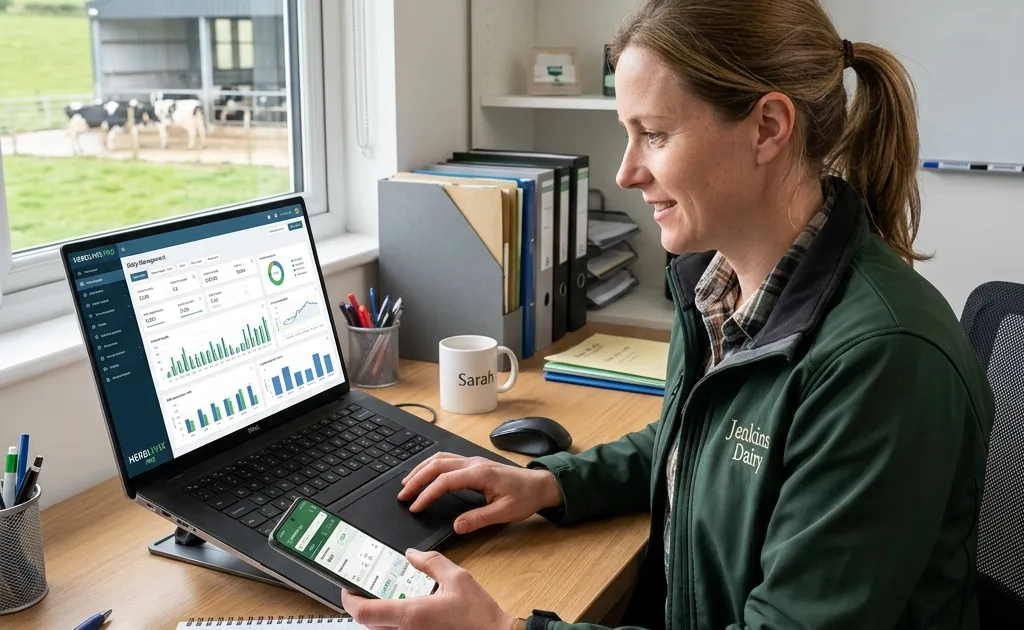
PCDart has served dairy farms well for decades. But "well" and "well enough" are different things — especially when you're staring at a Windows XP-era interface on your phone, trying to log a health event during morning milking.
You're not alone. Dairy farms across North America are evaluating whether to stick with PCDart or move to something that fits how they actually work today. The reasons are practical, not trendy: mobile access, modern interfaces, better integration with the equipment you already own, and pricing that makes sense for your herd size.
This guide helps you decide if switching is right for you, what alternatives exist, and exactly how to migrate without losing data. No sales pitch — just the facts you need to make an informed decision.
Get dairy management tips weekly
Join 200+ dairy farmers getting practical KPIs, breeding insights, and profitability tips — no spam, unsubscribe anytime.
Why farmers are looking for PCDart alternatives

PCDart is a solid piece of software. It's been around since the 1980s, it integrates deeply with DHI testing, and it produces reliable reports. But "solid" and "modern" aren't the same thing.
Here's what we hear most often from farmers considering a switch:
The top reasons farmers switch
- No real mobile access. PocketDairy exists, but it's a sync-based system, not a live mobile app. You can't pull up a cow's record on your phone in the barn.
- Dated interface. The desktop UI hasn't changed significantly in 15+ years. If you're used to modern apps, PCDart feels like using software from another era.
- Windows dependency. PCDart runs on Windows desktops. If your farm uses Macs, tablets, or Chromebooks, you're out of luck.
- Single-user by default. Multiple family members or employees accessing the same data simultaneously requires workarounds.
- Manual data entry. Without hardware integration, everything gets typed in by hand — twice if you're also keeping paper records.
These aren't complaints about PCDart's capabilities — they're about how it fits (or doesn't fit) modern farm operations. If you're running a 200-cow operation with a dedicated data manager and DHI testing, PCDart still works. If you're a 30-cow farm where the owner does everything, the friction adds up.
The real cost of sticking with outdated software
Staying with PCDart isn't free — even if you're not paying for a new subscription. Outdated software costs your farm money in ways that don't show up on any invoice:
| Problem | Annual Cost (100-Cow Dairy) | Root Cause |
|---|---|---|
| Undetected subclinical mastitis | $8,000–$15,000 | No individual SCC tracking |
| Extended calving intervals | $5,000–$12,000 | Missed heats, no breeding records |
| Keeping unprofitable cows | $3,000–$8,000 | No per-cow income data |
| Suboptimal nutrition by lactation stage | $4,000–$10,000 | No lactation curve tracking |
| Failed DHIA compliance | $2,000–$5,000 | Incomplete production records |
| Antibiotic withdrawal violations | $5,000–$50,000+ | Manual date calculations |
| Total Preventable Loss | $27,000–$100,000+ | Paper-based or outdated systems |
These aren't theoretical numbers. The average U.S. dairy loses $270–$1,000 per cow annually due to preventable management failures that modern digital systems eliminate.
The Bottom Line
If you're managing a 100-cow herd on PCDart without mobile access, SCC tracking, and automated withdrawal calculations, you're likely losing $27,000–$100,000+ per year in preventable costs. That's not a software expense — that's a software investment that pays for itself 10x over.
Calculate Your Feed Cost Per Litre
Feed is your biggest expense. Know exactly what it costs to produce each litre of milk.
Launch Feed Cost Calculator →When to stay with PCDart
Switching isn't always the right move. Stay with PCDart if:
- You're deeply invested in DHI testing and PCDart's reporting meets your needs
- You have a dedicated data manager who's proficient with the software
- Your operation is large enough that PCDart's advanced reporting justifies the learning curve
- You're comfortable with the current workflow and it's not causing problems
The best software is the one you actually use consistently. If PCDart is working for you, there's no reason to switch just because something newer exists.
PCDart: an honest assessment
Before comparing alternatives, let's be fair about what PCDart does well and where it falls short. This isn't about bashing legacy software — it's about understanding the trade-offs.
What PCDart does well
Strengths
- Deep DHI integration. Seamless data exchange with DRMS testing centers. Production records flow in automatically.
- Comprehensive reporting. 70+ pre-designed reports covering production, reproduction, health, and finance.
- Industry standard. Widely used across North America. Your vet, nutritionist, and DHIA probably already know it.
- Proven reliability. Decades of development and field testing. It does what it claims to do.
- Strong support network. Local DRMS affiliates provide hands-on help.
Limitations
- Dated interface. Desktop UI designed for Windows 95/XP era. Steep learning curve for new users.
- No native mobile. PocketDairy is sync-based, not a true mobile app. Requires WiFi sync.
- Windows only. No Mac, Linux, tablet, or Chromebook support.
- Hardware dependency. Requires installation on a specific computer. No cloud backup by default.
- Per-user licensing. Additional users cost extra. Not ideal for family farms with multiple operators.
The mobile problem
The biggest gap isn't features — it's access. Modern dairy farming happens in the barn, at the chute, in the parlor. You need information where you are, not where your desktop computer is.
PCDart's PocketDairy app requires you to sync data over WiFi, which means you're still tethered to your farm network. If you want to check a cow's breeding history while standing in the pen, you can't — not without walking back to the office or hoping your WiFi reaches.
This is the #1 reason farmers switch. Not because PCDart can't do the job, but because they need the information in a different place than PCDart lives.
Before you switch: the complete checklist
Don't jump into a new software platform without preparation. Here's exactly what to do before you even look at alternatives.
Pre-switch checklist (do this first)
- Export your PCDart data. Go to File → Export → Herd Data. Export as CSV. Save to your computer AND a USB drive.
- Request DHI data extract. Contact your DRMS affiliate and request a complete data extract of your herd records. This is separate from PCDart.
- Document your workflows. Write down what you use PCDart for daily, weekly, and monthly. This becomes your requirements list.
- List your integrations. What equipment talks to PCDart? Milk meters, activity monitors, sorting gates? You need alternatives that support these.
- Identify your users. Who accesses PCDart? Family members, employees, consultants? How many simultaneous users do you need?
- Set a budget. What are you currently paying for PCDart? What can you afford? Don't forget to factor in your time.
This checklist takes 2–3 hours to complete. It's the most important step in the entire process. Skip it and you'll regret it later.
What to look for in a PCDart alternative
Not all dairy management software is the same. Here's what matters — and what doesn't.
Must-have features
| Feature | Why It Matters | Priority |
|---|---|---|
| Mobile access | Barn-side data entry, cow lookups anywhere on the farm | Essential |
| Data import/export | Migration from PCDart, future flexibility, backup | Essential |
| Milk production tracking | Daily/weekly/monthly yield, per-cow and herd-level | Essential |
| Health & treatment records | Vet visits, treatments, withdrawal periods | Essential |
| Breeding management | Heat detection, AI records, pregnancy checks, calving dates | Essential |
| Multi-user access | Family members, employees, consultants accessing the same data | Important |
| DHI integration | Automatic import of test-day data (if you use DHI testing) | Important |
| Hardware integration | Connects to milk meters, activity monitors, RFID readers | Important |
| Offline capability | Works without internet in areas with poor connectivity | Important |
| Financial tracking | Expense tracking, income analysis, profitability reports | Nice to have |
Features that don't matter as much as you think
- "AI-powered" anything. Most dairy AI features are glorified IF/THEN rules. Don't pay extra for marketing buzzwords.
- Beautiful dashboards. Pretty charts don't milk cows. Focus on whether the data is accurate and accessible.
- Social media integration. Your herd management software doesn't need to connect to Facebook.
- Enterprise features. If you're not running multiple sites, you don't need multi-site management tools.
Know Your Income Over Feed Cost
IOFC is the gold-standard KPI for daily dairy profitability. Calculate yours in 60 seconds.
Launch IOFC Calculator →PCDart alternatives: a head-to-head comparison
Here are the main alternatives to PCDart, organized by operation size and use case. We've scored each platform across key features so you can quickly see which fits your farm.
| Software | Best For | Price | Milk Tracking | Mobile | DHI | Offline | Learning |
|---|---|---|---|---|---|---|---|
| DairyComp 305 | Large dairies (500+) | $500–$2,000/yr | ✅✅✅ | ⚠️ Limited | ✅✅✅ | ✅ | Hard |
| BoviSync | Medium-large, multi-site | $0.50–$3/cow/mo | ✅✅✅ | ✅✅✅ | ✅✅ | ❌ | Easy |
| Herdwatch | Small-medium, mobile-first | $119–$299/yr | ✅✅ | ✅✅✅ | ✅ | ✅✅✅ | Easy |
| Cattly | Small dairies, free | Free (unlimited) | ✅✅ | ✅✅ | ⚠️ Manual | ✅✅ | Easy |
| DairyFarmManager | Small to medium farms | Free (10 cows) / $19–$99/mo | ✅✅✅ | ✅✅✅ | ✅✅ | ✅✅✅ | Easy |
| MilkingCloud | Small, budget-conscious | From $15/mo | ✅✅ | ✅✅✅ | ✅✅ | ✅ | Easy |
Important: Pricing changes frequently. Always verify current pricing directly with the vendor before making decisions.
Bottom Line: Which Should You Choose?
- Under 200 cows, budget-conscious: Cattly (free, unlimited cows) or DairyFarmManager (free for 10 cows) — both offer milk tracking, health records, and mobile access at zero cost. DairyFarmManager adds AI-powered analytics, DHIA sync, and offline support for more data-driven operations.
- 100–500 cows, mobile-first: BoviSync — cloud-native with full mobile apps, multi-user access, and growing DHI integration.
- 500+ cows, dedicated data manager: DairyComp 305 — deepest analytics and query tools for complex operations.
- DHIA-enrolled, test-day focus: PCDart (if staying) or DairyComp (if switching) — both offer seamless DHI integration.
Want a deeper comparison across all features? See our full dairy farm software comparison for 2026 — including a feature matrix, pricing breakdown, and honest pros/cons for each platform. Looking for free options specifically? See our best free dairy farm apps 2026 comparison.
PCDart vs DairyComp: the enterprise comparison
DairyComp 305 is PCDart's closest competitor in terms of depth and capability. Both are desktop-based, both integrate deeply with DHI, and both are designed for operations that need comprehensive reporting.
Key differences
| Factor | PCDart | DairyComp 305 |
|---|---|---|
| Development | DRMS (cooperative) | VAS (Valley Ag Software) |
| Interface | Dated desktop UI | Slightly more modern desktop UI |
| Mobile | PocketDairy (sync-based) | MyDC on PULSE (cloud-based) |
| Pricing | Subscription via DRMS affiliate | Site license + annual support |
| Best for | DHI-focused operations | Large commercial dairies |
| Cloud option | Yes (newer versions) | Via PULSE platform |
Bottom Line: PCDart vs DairyComp
If you're switching from PCDart to DairyComp, you're trading one desktop system for another that's slightly more modern. The real question is whether you want to stay desktop-based or move to a cloud/mobile solution.
Choose DairyComp if: You have 500+ cows, a dedicated data manager, and need the industry's most powerful query tools. Choose a cloud alternative if: You need mobile access and don't want to invest in enterprise software.
PCDart vs BoviSync: the cloud-native option
BoviSync represents the opposite end of the spectrum from PCDart — it's cloud-native, mobile-first, and designed for modern dairy operations.
Key differences
| Factor | PCDart | BoviSync |
|---|---|---|
| Deployment | Desktop (on-premise) | Cloud (SaaS) |
| Mobile access | Via PocketDairy sync | Native Android apps |
| Multi-user | Per-user licensing | Team/enterprise accounts |
| Updates | Manual installation | Automatic |
| Data backup | User-managed | Automatic cloud backup |
| Multi-site | Limited | Full multi-site support |
| Hardware integration | Direct (milk meters, etc.) | Via API (growing list) |
Bottom Line: PCDart vs BoviSync
BoviSync is the modern choice for operations that want mobile access and multi-user collaboration. The trade-off is internet dependency — if your farm has poor connectivity, BoviSync's value drops significantly.
Choose BoviSync if: You have 100+ cows, reliable internet, and need multiple team members accessing data from different devices. Stick with PCDart if: You're in a rural area with poor connectivity or your operation doesn't need mobile access.
PCDart vs free alternatives: what you get for $0
If you're a small operation (under 50 cows) and PCDart's subscription feels like overkill, free alternatives exist. But "free" comes with trade-offs. If you're currently on Excel spreadsheets and evaluating whether to switch to any software at all, our Excel vs dairy farm software comparison breaks down the real time cost of spreadsheet record keeping.
Cattly: the free unlimited option
| Factor | PCDart | Cattly (Free) |
|---|---|---|
| Price | $300–$800/yr | Free (unlimited cows) |
| Milk tracking | Via DHI or manual | Per-milking or daily total |
| Health records | Comprehensive | Basic |
| Financial tracking | Advanced | Basic (integrated with beef/pasture) |
| Mobile | PocketDairy | Web app (responsive) |
| Support | DRMS affiliates | Community/email |
Bottom Line: PCDart vs Cattly
Cattly is genuinely free with unlimited animals — no catch. The trade-off is less depth in reporting and support. For small operations that don't need PCDart's advanced analytics, it's a solid choice.
Choose Cattly if: You're under 100 cows, want free software, and can live without deep DHI integration. Stick with PCDart if: You need advanced reporting, DHI test-day data, or enterprise-level features.
DairyFarmManager: the freemium option
| Factor | PCDart | DairyFarmManager |
|---|---|---|
| Free tier | No | Up to 10 cows |
| Paid tier | $300–$800/yr | From $19/mo (Starter) |
| Mobile | PocketDairy | Native apps + responsive web (Android, Desktop) |
| Milk tracking | Via DHI or manual | AM/PM logging, quality scoring (Fat, Protein, SCC, SNF), adulteration detection |
| Health records | Comprehensive | Treatments, vaccinations, withdrawal tracking, AI-powered risk scoring |
| Breeding | Advanced | Heat detection engine, AI records, calving dates, cull decision engine |
| DHI integration | Native | DHIA API sync with offline queue |
| Offline support | Via install | Full offline-first (Firestore persistence, draft recovery, offline DHIA queue) |
| Best for | DHI-focused, large herds | Small to medium farms, mobile-first, analytics-driven |
Bottom Line: PCDart vs DairyFarmManager
DairyFarmManager is designed for small to medium farms that want mobile-first herd management with advanced analytics — including AI-powered health risk scoring, feed efficiency tracking, and milk quality analysis. The free tier lets you try before you buy, and DHIA API integration means you don't lose DHI connectivity when switching.
Choose DairyFarmManager if: You're under 200 cows, want a simple mobile app with powerful analytics, and need DHIA sync without enterprise complexity. Stick with PCDart if: You have a large operation (500+ cows) with a dedicated data manager, or your workflow depends on PCDart's 70+ report library.
How to switch from PCDart: step-by-step

Here's the actual process, based on what works and what doesn't.
The migration process (2–4 weeks total)
- Week 1: Export and evaluate. Export your PCDart data. Sign up for free trials of 2–3 alternatives. Test them with your actual data.
- Week 2: Choose and migrate. Pick your new software. Import your data. Set up your herd, users, and integrations.
- Week 3: Parallel operation. Run both systems simultaneously. Enter data in both PCDart and your new software. Compare outputs.
- Week 4: Verify and switch. Verify all critical data transferred correctly. Make your new software the primary system. Keep PCDart as backup.
Step 1: export your PCDart data
In PCDart, go to File → Export → Herd Data. Export as CSV format. This gives you a spreadsheet with all your cow records, production data, breeding history, and health events.
Save this file in three places:
- Your computer's hard drive
- A USB drive (physical backup)
- Cloud storage (Google Drive, Dropbox, etc.)
Critical: Also contact your DRMS affiliate and request a data extract. This is your official DHI record — separate from PCDart's local database.
Step 2: test with free trials
Most alternatives offer free trials or free tiers. Sign up for 2–3 options and test them with your actual data. Don't just look at the interface — actually enter data, run reports, and see if the workflow fits how you work.
Step 3: run parallel systems
This is the most important step. For at least 2–4 weeks, enter data in both systems. This catches any data loss, workflow issues, or missing features before you commit fully.
Don't skip parallel operation
Switching cold turkey is the fastest way to lose data. If something goes wrong with the new system, you need PCDart as a safety net. Keep it running until you're 100% confident the new system has everything.
Step 4: verify critical data
Before you stop using PCDart, verify these critical records transferred correctly:
- Active cow inventory (head count matches)
- Current lactation production data
- Recent breeding records (last 90 days)
- Open cow list (cows not yet confirmed pregnant)
- Dry cow list and expected calving dates
- Recent health events and treatments
- Withdrawal periods (milk and meat)
How switching from PCDart pays for itself
Even free software has an implementation cost (your time). Here's the ROI math that justifies the effort.
Scenario: 150-cow dairy, currently on PCDart without mobile access
| Improvement | Mechanism | Annual Value |
|---|---|---|
| Catch subclinical mastitis 2 weeks earlier | SCC tracking + alerts | $4,500 |
| Reduce days open by 15 days (avg) | Breeding protocol compliance | $6,750 |
| Cull bottom 5% producers sooner | Per-cow milk tracking | $3,000 |
| Eliminate 1 withdrawal near-miss/year | Automatic calculations | $5,000+ |
| Optimize feed by lactation group | Ration tracking | $3,750 |
| Capture milk quality premium | SCC below threshold | $2,250 |
| Total Annual Recovery | $25,250+ |
The ROI Math
Implementation cost with free software: $0 software + ~20 hours setup time = ~$500 in labor
First-year ROI: ~5,000%
Even with paid platforms ($19–$299/month), the ROI is compelling. But when the software is free, it's a no-brainer.
For more on calculating your farm's profitability, see our dairy farm profit margin guide and Income Over Feed Cost (IOFC) explained.
"We switched from PCDart to a cloud-based system last year. The breeding management and health tracking are actually better, and my milk check has improved because we're catching SCC issues earlier. The mobile app alone saved us 2 hours per day in data entry."
Common mistakes when switching from PCDart
These are the errors we see most often — and they're all avoidable.
| Mistake | What Happens | How to Avoid It |
|---|---|---|
| Skipping the export | You can't migrate data if you don't export it first | Export before you even look at alternatives |
| Going cold turkey | Data loss, missed events, confused employees | Run parallel systems for 2–4 weeks minimum |
| Deleting PCDart too early | Lost backup if something goes wrong | Keep PCDart installed for 6 months after switching |
| Ignoring integrations | Your milk meter or activity monitor stops talking to your software | Verify hardware compatibility before switching |
| Not training employees | Data entry errors, inconsistent usage | Train everyone who touches the system before going live |
| Chasing features you don't need | Paying for complexity you'll never use | Focus on your actual workflow, not theoretical capabilities |
The future of dairy management software
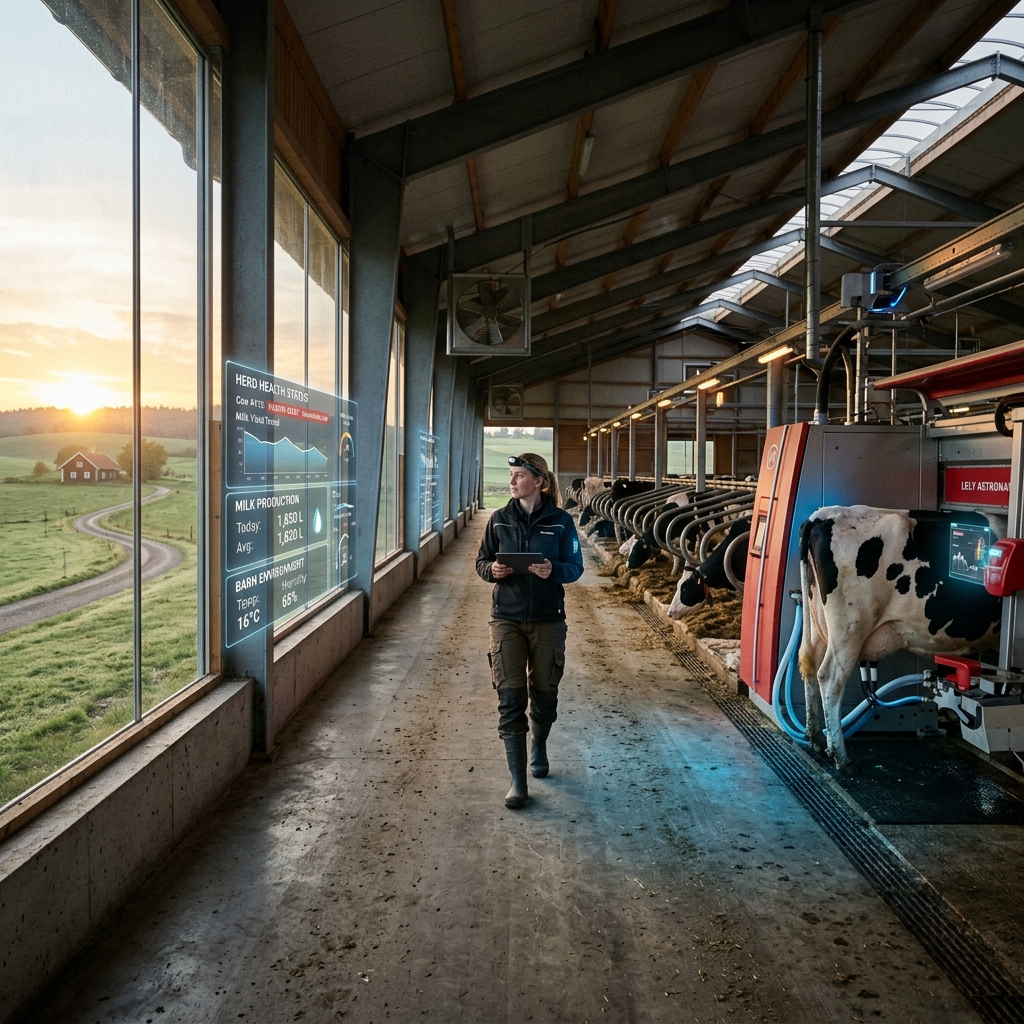
Whether you stay with PCDart or switch, here's what's coming in the next 3–5 years that will shape your decision:
1. AI-powered predictive analytics
Machine learning models that predict mastitis 48–72 hours before clinical signs appear, forecast individual cow production decline, and recommend optimal culling decisions based on lifetime profitability projections. Learn which KPIs matter most for dairy farm success.
2. IoT sensor integration
Wearable sensors (leg tags, ear tags, boluses) feeding continuous health, activity, and rumination data directly into management software — replacing manual observation with 24/7 automated monitoring.
3. Automated milking system (AMS) data convergence
As robotic milking adoption grows, management software will increasingly integrate real-time milking data (yield, conductivity, speed, blood detection) into holistic cow health scores.
4. Sustainability and carbon tracking
With dairy processors and retailers demanding carbon footprint data, management software will incorporate methane estimation models, feed efficiency carbon metrics, and sustainability reporting. See our IOFC guide for how feed efficiency impacts both profit and sustainability.
5. Blockchain traceability
End-to-end supply chain transparency from individual cow to retail package, enabling premium pricing for verifiable origin, animal welfare, and antibiotic-free claims.
Bottom Line: Plan for the Future
The software you choose today should be able to adapt to these trends. Cloud-based platforms (BoviSync, Cattly, DairyFarmManager) are better positioned to add AI and IoT features through automatic updates. Desktop-based systems (PCDart, DairyComp) require manual upgrades and may lag behind.
Dairy metrics every software should track
These are the KPIs that separate profitable dairies from struggling ones. Your new software should calculate them automatically.
Production metrics
| Metric | Target | Why It Matters |
|---|---|---|
| Rolling Herd Average (RHA) | 22,000–28,000 lbs/cow/yr | Overall herd productivity benchmark |
| Peak Milk (1st lactation) | 75–85 lbs/day | Indicates heifer development quality |
| Peak Milk (mature cows) | 90–110 lbs/day | Indicates nutrition and genetics |
| Persistency | <8% drop/month post-peak | Measures lactation curve holding power |
| Bulk Tank SCC | <200,000 cells/mL | Milk quality premium threshold |
Reproductive metrics
| Metric | Target | Why It Matters |
|---|---|---|
| Pregnancy Rate (21-day) | >25% | Single most important repro metric |
| Days Open | <120 days | Every extra day = $3–$5 lost |
| Services Per Conception | <2.5 | Breeding efficiency indicator |
| Heat Detection Rate | >65% | Are you seeing heats? |
| Calving Interval | 12.5–13.0 months | Whole-herd reproductive efficiency |
Calculate Your Expected Calving Date
Enter insemination date, get exact due date. Supports all dairy breeds.
Launch Calving Date Calculator →Health metrics
| Metric | Target | Why It Matters |
|---|---|---|
| Clinical Mastitis Rate | <25 cases/100 cows/yr | #1 dairy health cost |
| Bulk Tank SCC Trend | Declining | Herd udder health trajectory |
| Fresh Cow Disease Rate | <10% | Transition management quality |
| Cull Rate | <30%/year | Herd stability and longevity |
| Calf Mortality (pre-weaning) | <5% | Replacement pipeline health |
Financial metrics
| Metric | Target | Why It Matters |
|---|---|---|
| IOFC per Cow per Day | >$8–$12 | Core profitability indicator |
| Feed Cost per CWT Milk | <$8–$10 | Feed efficiency relative to output |
| Milk Price Received | Market + premiums | Are you capturing available premiums? |
| Revenue per Cow per Year | >$4,500 | Total economic contribution |
Calculate Your Dairy Profit Margin
Know your net profit per cow, breakeven milk price, and monthly cash flow.
Launch Profit Calculator →Frequently asked questions
Is PCDart free?
PCDart is not free. It's offered as a subscription service through DRMS (Dairy Records Management Systems) or affiliated cooperatives. Pricing is based on herd size and modules, typically ranging from $300–$800 per year for most operations.
Can I export my data from PCDart?
Yes. PCDart allows you to export herd data in standard formats (CSV, Excel). Your DHI records are also stored at the DRMS processing center, so you can request a data extract from them directly.
What's the best free alternative to PCDart?
For small to medium herds (under 200 cows), DairyFarmManager and Cattly both offer free tiers with milk tracking, health records, and reporting. DairyFarmManager is free for up to 10 cows with advanced analytics (AI health risk scoring, feed efficiency, milk quality grading) and DHIA API sync; Cattly offers unlimited animals with a simpler interface.
How long does it take to switch from PCDart?
Most farmers complete the switch in 1–2 weeks. The data export and import process takes 1–2 days. Learning the new interface takes about a week. The key is not rushing — run both systems in parallel for the first month.
Will I lose my DHI data if I switch?
No. Your DHI records are stored at the DRMS processing center independent of PCDart. You can request a data extract and import it into your new software. Most platforms support DHI data import.
Do I need internet access to use PCDart alternatives?
It depends on the software. Cloud-based solutions like BoviSync and DairyFarmManager offer offline access through service workers — DairyFarmManager works offline after first load. Desktop solutions like DairyComp work offline but require installation on a specific computer.
What's the biggest risk when switching herd management software?
Data loss during migration. Always export your data before switching, keep backup copies, and run both systems in parallel for at least one month. Never delete your PCDart installation until you've verified your new system has all critical records.
Track your herd’s performance in one place
Log milk yield, monitor breeding, track expenses, and generate reports — all from your browser. No download needed.
 Software
 Dairy Farm Software ROI: The $17,360 Cost of Spreadsheets
Calculate the true ROI of dairy farm software. Learn why spreadsheets cost the average 100-cow dairy over $17,000 a year in missed heats, high SCC, and feed shrink.
Read Guide → Software
 Best Dairy Farm Management App for Android (2026)
Discover the best dairy farm management app for your Android device. Track milk yield, breeding, and expenses all from your pocket.
Read Guide →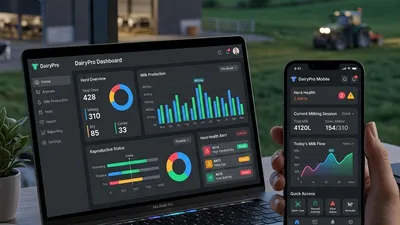 Software
 Best Dairy Farm Management Software 2026: Honest Comparison
Compare 12 dairy farm management software options side-by-side — including DairyComp, DeLaval DelPro, Lely T4C, Afimilk, BoviSync, and more. Features, pricing, mobile apps, and integrations.
Read Guide →