Best BoviSync Alternatives 2026: Honest Comparison, Real Pricing, and When to Stay
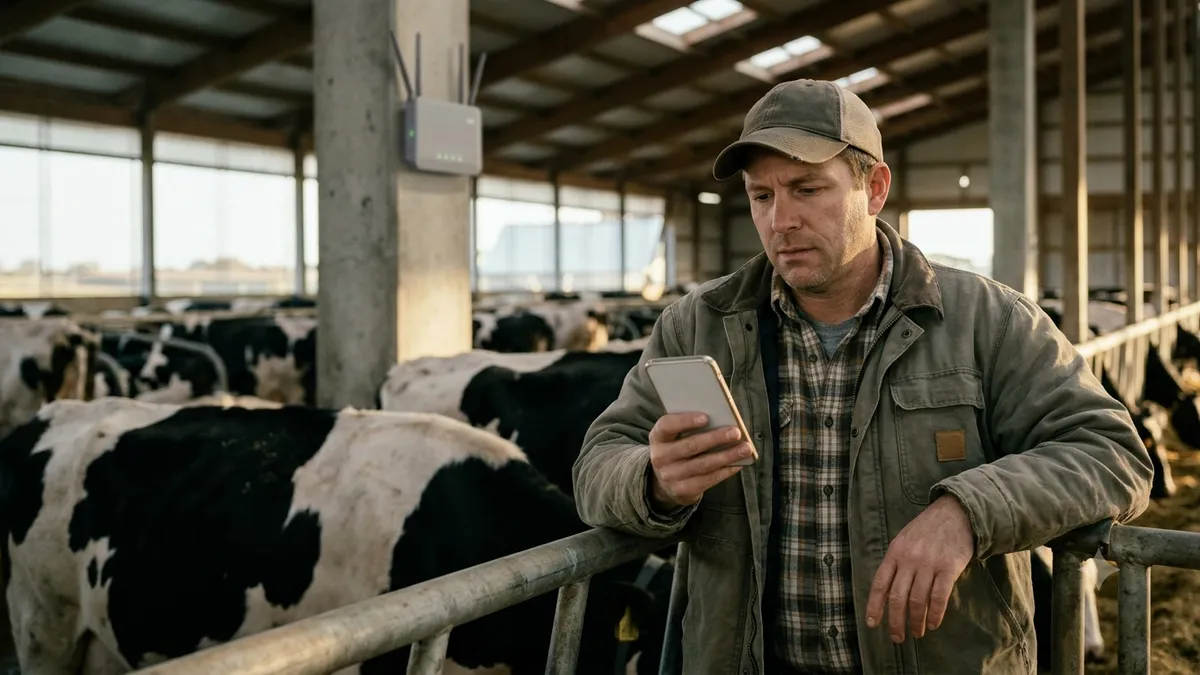
BoviSync is genuinely good software — and for a 500-cow dairy with reliable internet and a herdsman who lives in the app, it may be the right choice. This guide will tell you exactly when that's true, and when a lighter, cheaper, or offline-first alternative fits your farm better.
Most "BoviSync alternative" articles are listicles that recycle the same four names. This one goes deeper: what BoviSync actually costs as your herd grows (subscription, interfaces, setup, team accounts), where farmers hit friction (connectivity, self-service reporting, per-head scaling), and which tools beat it for small and mid-size operations.
Disclosure: DairyFarmManager is our own product and appears in every comparison here. We've kept the same standard we use for every tool: real strengths, real limitations, published pricing. All competitor pricing was checked against vendor pages and third-party reviews on November 8, 2026 — verify current rates with vendors before buying. All trademarks belong to their respective owners.
Get dairy management tips weekly
Join 200+ dairy farmers getting practical KPIs, breeding insights, and profitability tips — no spam, unsubscribe anytime.
Why farmers look for BoviSync alternatives

BoviSync built its reputation on a simple promise: enter data cow-side on a phone, keep everything in the cloud, and let the whole team see the same records. For many commercial dairies, it delivers. But three recurring pain points push farms to evaluate alternatives.
The five most common reasons farmers evaluate other options
- Connectivity dependency. BoviSync is cloud-native — its architecture assumes you have internet. A farmer on a dairy forum put it bluntly: before installing satellite internet, cloud-based herd software was "out of the question" for his barn. If signal drops in your parlor, so does the platform's main advantage.
- Interface and setup fees on top of the subscription. The published $2.50–$3.00/cow/year sounds inexpensive, but parlor, activity, and feed-system interfaces require vendor setup, and third-party estimates put interface work at $500–$5,000 each. On a small herd, the fixed costs dominate.
- Advanced reporting leans on support. Users in BoviSync's own feedback community report that the modern report builder can be slow or blank with complex formulas, cell-count limits, and multi-filter queries — and several dairies note that building custom reports often becomes "call us and we'll build it." If you like digging through data yourself, that friction adds up.
- Per-head pricing scales with growth. Include youngstock and a growing herd's cost climbs every year. Multi-site and DataSync pricing ($10/farm + $10 per 1,000 head/month, plus team account fees of $25–$1,100/month) is built for aggregators, not family farms.
- The platform is designed for commercial operations. BoviSync's own positioning targets dairies that want employee protocols, chore accountability, and multi-site reporting. A 40-cow farm buying an enterprise workflow tool pays for — and trains on — machinery it will never use.
None of that means BoviSync is bad. It means fit depends on herd size, connectivity, and whether you actually run a team with SOPs. Let's give the platform full credit first.
BoviSync: an honest assessment
What BoviSync does genuinely well
- Modern per-head pricing. $2.50–$3.00/cow/year published rate, youngstock included — one of the few vendors in this category with public pricing at all.
- Cow-side mobile entry done right. The app supports EID readers, chore lists, and event entry where the work happens; employees actually use it.
- Employee accountability. Every task is timestamped and attributed to a user — rare visibility for managing a workforce.
- Broad integration ecosystem. DHIA, CowManager, TMR systems, parlor controllers, genomics, classification.
- Multi-site from day one. Cloud architecture makes moving cows between farms and reporting across sites seamless.
- Spanish-language support line. A real differentiator for US dairies with Spanish-speaking staff.
Where BoviSync frustrates farmers
- Cloud-dependent. Weak barn connectivity guts the workflow. No offline-first desktop mode like legacy systems offer.
- Fixed setup costs. Concierge setup plus interface fees (commonly $500–$5,000/interface) make the true first-year number far above the sticker subscription.
- Report builder complaints. The modern reporting UI has known issues — reports that spin or load blank with formulas, cell limits on large queries — pushing complex reporting through support tickets.
- Self-service depth is limited. The old-line comparison: DairyComp's command line lets an expert answer anything instantly; BoviSync trades some of that power for simplicity, then charges for help recovering it.
- Per-head + per-site fees compound. Team accounts run $25–$1,100/month on top of herd subscriptions once you cross into multi-farm territory.
- Overkill for simple record keeping. A 20-cow farm doesn't need protocols, chore attribution, and interface contracts.
Bottom line on BoviSync
BoviSync earns its reputation at 200–1,000+ cow commercial dairies with reliable internet and staff who work cow-side. Below that size, or below that connectivity, you're paying setup and fixed fees for an enterprise-grade system — and that's exactly where alternatives win.
When to stay with BoviSync
Before you switch anything, be honest about your situation. Stay with BoviSync if you can check three or more of these:
- You milk 200+ cows and per-head pricing is a rounding error against your revenue.
- You have reliable internet in the barns (fiber, 5G, or Starlink).
- You run employees or family members entering data cow-side and need protocol-driven task lists and accountability logs.
- You operate multiple sites (heifer barns, off-farm rearing) and want one live record across them.
- You're connected to parlor meters, activity sensors, or a TMR system that BoviSync already interfaces with.
If instead you're a 1–3 person operation under 150 cows, recording from your phone in a barn with patchy signal, and your "reporting team" is one person who wants today's numbers without a support ticket — the alternatives below will serve you better and cheaper.
See What a Small-Herd Platform Feels Like
DairyFarmManager is built for 1–200 cow farms: offline-first, five-minute setup, free for up to 10 cows. No setup fees, no per-interface invoices, no sales call.
How we compared these tools
Every alternative below was scored on the five things that actually decide small and mid-size farm software, not marketing buzz:
- Total annual cost at your herd size — subscription plus setup, interfaces, and per-site fees.
- Offline capability — can you record milk, treatments, and breeding with no signal?
- Time to first record — minutes or weeks of training?
- Data access and reporting — self-service or support-ticket dependent?
- Dairy depth — lactation curves, DHIA, SCC tracking, reproduction protocols.
BoviSync alternatives compared
| Software | Best For | True Starting Cost | Offline | Mobile Cow-Side | Learning Curve |
|---|---|---|---|---|---|
| DairyFarmManager | Small–mid farms (≤250 cows) | $0 (10 cows) / $19/mo (50 cows) | ✅ Full offline-first web app | ✅ Any browser, PWA | Minutes |
| Cattly | Budget ops wanting basic records free | $0 (unlimited animals) | ✅ Offline-first Android | ✅ Android | Easy |
| DairyComp 305 | Large commercial + parlor hardware | Quote (~$500–$2,000+/yr) | ✅ Desktop (Windows) | ⚠️ Sync-based app | Weeks (command language) |
| PCDart | DHIA-enrolled herds on a budget | ~$300–$800/yr via DRMS | ✅ Desktop | ⚠️ PocketDairy sync | Moderate |
| Herdwatch | UK/Ireland compliance & simplicity | Free tier → ~$10–20/mo | ✅ Strong offline app | ✅ iOS + Android | Easy |
| TrackDairy | EU farms wanting modular free start | Free Starter → $18.99/mo Pro | ✅ Mobile | ✅ iOS + Android | Easy |
| MilkingCloud | IoT/hardware-driven operations | Paid subscription, limited free | ⚠️ Web-first, limited offline | ⚠️ Web on mobile | Moderate |
Three picks by scenario:
- Under 100 cows, simple records: DairyFarmManager or Cattly — both free at small size, both work offline.
- Under 200 cows, DHIA-connected US herd: PCDart through your processing center, or DairyFarmManager with DHIA data import.
- UK/Ireland, movement + medicine compliance: Herdwatch.
Compare the Real Cost of Your Current Setup
Estimate what switching from spreadsheets or enterprise software saves per year in labor and prevented losses.
Launch ROI Calculator →BoviSync vs DairyFarmManager: the detailed head-to-head
This is the comparison most small and mid-size farmers actually need: a commercial cloud platform versus a purpose-built small-herd tool.
| Feature | BoviSync | DairyFarmManager |
|---|---|---|
| Pricing model | $2.50–$3.00/cow/year + setup/interface fees | Flat: $0 / $19 / $39 per month — no setup fees |
| Free plan | ❌ BoviCorral only (basic pen scoring) | ✅ Full features, up to 10 cows |
| Offline operation | ⚠️ Cloud-dependent sync | ✅ Works offline after first load |
| Install requirements | Web + mobile apps (Play/App Store) | Any browser; optional PWA/Android app |
| AI insights | ❌ Not a focus | ✅ Health risk scoring, feed efficiency, milk quality grading |
| DHIA / DHI data | ✅ Interface (setup fees apply) | ✅ API sync + CSV import |
| Parlor hardware integration | ✅ Broad (Tier I–III interfaces) | ⚠️ Manual/auto milk weight logging, no parlor controller feeds |
| Multi-user / employees | ✅ Protocols + task attribution (team fees) | ✅ Role-based multi-user on paid plans |
| Multi-site reporting | ✅ Core strength | ⚠️ Single-farm focus |
| Setup time | Days–weeks (concierge) | ~5 minutes self-service |
| Reporting | ✅ Dashboards; complex reports often via support | ✅ Auto-calculated dashboards, shareable PDF/CSV reports |
Bottom Line: BoviSync vs DairyFarmManager
Choose DairyFarmManager if: you're under ~200 cows, want to log from your phone in a barn that has no signal, hate quote-based pricing and setup invoices, and want AI insights without an enterprise stack. The free tier lets you run a real 10-cow operation indefinitely — BoviSync has no equivalent.
Choose BoviSync if: you're a multi-site commercial operation that needs parlor controllers, activity sensors, and TMR data in one system, with staff who'll use protocols and chore accountability daily.
BoviSync vs DairyComp 305: the quick verdict
Farmers switching from DairyComp usually choose BoviSync for exactly one reason: modern access. No command line, no Windows box in the office, no waiting for one trained person. DairyComp wins where BoviSync is weakest — deep self-serve analytics, offline desktop reliability, and parlor integrations that legacy DHIA herds depend on.
- 1,000+ cows with a records manager: DairyComp 305 still has no equal for query power.
- 200–1,000 cows, mobile workforce: BoviSync.
- Under 150 cows: honestly, neither — you're buying complexity. A flat-priced, offline-first tool (DairyFarmManager) or a free one (Cattly) fits better.
See our full DairyComp 305 alternatives guide for the detailed comparison.
What BoviSync actually costs — by herd size
Subscription is only part of the number. Here's a realistic year-one view combining BoviSync's published per-cow rate with typical setup and interface ranges from third-party reviews. Treat interface costs as estimates — your quote depends on hardware and partners.
| Herd (incl. youngstock) | BoviSync Sub/yr | Typical Year-1 Extras* | Year-1 Reality | DairyFarmManager Plan |
|---|---|---|---|---|
| 25 head | ~$63–$75 | $500–$5,000+ (setup/interfaces) | $563–$5,075 | Free tier won't fit — use Cattly (free) or Starter $180/yr |
| 75 head | ~$188–$225 | $500–$5,000+ | $688–$5,225 | Starter: $180/yr (50) → Pro if grown |
| 200 head | ~$500–$600 | Interfaces likely needed | $1,000–$5,600 | Pro: $372/yr |
| 500 head + 2 sites | ~$1,250–$1,500 + team fees | Multi-site DataSync + interfaces | $2,000–$8,000+ | Enterprise (custom) |
*Third-party estimates for interface setup ($500–$5,000/interface) and concierge/onboarding costs. BoviSync does not publish interface pricing; confirm with the vendor.
The hidden scaling problem
Per-head pricing feels fair until your herd grows: every bred heifer added to the youngstock count increases the bill. A 150-cow milking herd with 120 replacements is billed on 270 head. Fixed + variable costs mean your software bill rises every time you succeed at reproduction.

Calculate What Your Herd Software Really Costs
Work out income over feed cost with your actual numbers — then decide what a tool should cost relative to what it's worth.
Launch IOFC Calculator →How to switch from BoviSync: step by step
Switching herd software is a data project, not a download. Follow the order:
- Export everything. Request a full CSV export of animals, events, breeding, health, and production from BoviSync support. Also pull your DHIA test-day file from your processing center — it's independent of the software.
- Set a 30-day parallel run. Keep BoviSync active (or frozen) while you record everything in the new system for a full month. Compare totals weekly — milk weights, breeding dates, treatment records.
- Import and verify. Load your CSV into the new platform, then spot-check 20 random cows against known facts (fresh dates, dry dates, last treatment). Never trust bulk imports blind.
- Rebuild your critical reports first. Whatever you print every Monday — list the reports the new tool must match before you cancel anything.
- Cancel only after two clean cycles. One month proves the import works; two months proves your habits transferred.
For DairyFarmManager specifically: sign up free, import the CSV (or start fresh with current lactating cows if your history lives at the DHIA center), and you'll be recording on day one. Setup is minutes, not weeks — which is the point.
Frequently asked questions
Is BoviSync cheap for small farms?
BoviSync's published subscription rate is $2.50–$3.00 per cow per year (youngstock included), which is reasonable at commercial scale. But the total cost includes concierge setup and interface fees, which third-party reviews estimate at $500–$5,000 per interface. For a 30–50 cow farm, those fixed costs dwarf the subscription. DairyFarmManager is free for up to 10 cows and $19/month for up to 50, with no setup or interface fees.
Does BoviSync work offline?
BoviSync is cloud-native by design. The mobile app syncs to the cloud and works well when connectivity exists, but farmers in low-connectivity areas have historically found cloud-only platforms unusable until they got reliable internet. Desktop systems like DairyComp and offline-first tools like DairyFarmManager (which works offline after first load) are better fits for barns without reliable signal.
What is the best alternative to BoviSync?
For small and mid-size dairies (under ~200 cows), DairyFarmManager is the strongest alternative: free for up to 10 cows, flat $19–39/month pricing, offline-first web app, and AI-powered health and feed analytics. For large commercial operations needing deep parlor integration, DairyComp 305 remains the standard. For simple, unlimited-herd record keeping at zero cost, Cattly is the best free option.
Is there a free version of BoviSync?
BoviSync includes a free default tier called BoviCorral (basic pen scoring), but full dairy herd management — breeding, production, health, chore workflows — requires a paid subscription. True free dairy management comes from DairyFarmManager (up to 10 cows, full features) or Cattly (unlimited animals, basic features).
BoviSync vs DairyComp — which is better?
They solve different problems. DairyComp 305 is a Windows desktop application with a command-line query engine — unmatched analytical depth, but it takes weeks to learn and is tied to a computer. BoviSync is cloud-first with mobile cow-side data entry and modern reports, but depends on connectivity and vendor support for advanced reporting. Most mid-size farms that want ease of use pick BoviSync; large operations with dedicated records staff tend to stay on DairyComp.
Can I export my data if I leave BoviSync?
Yes. BoviSync can export herd and event data in standard formats (CSV), and your DHIA records are also held at your processing center independently. The standard approach: request an export, sign up for the new platform, import the CSV, then run both systems in parallel for a month before deleting anything.
How long does it take to switch from BoviSync?
The data export and import takes 1–2 days for a typical herd. Learning a simpler interface like DairyFarmManager takes under a day. The safe process is to run both systems in parallel for one full month, which means the full transition is about 4–6 weeks even though setup itself takes minutes.
Does BoviSync have AI features?
BoviSync focuses on workflow, protocols, and reporting rather than AI-driven insights. If you want automated analysis — like AI health risk scoring, feed efficiency tracking, and milk quality grading — DairyFarmManager includes these features from its free tier.
Try the Small-Herd Alternative Free
DairyFarmManager runs in any browser, works offline, and costs $0 for up to 10 cows. Import your BoviSync export and compare it against your current system for a month.
 Software
Dairy Software for Small Farms 2026
What a 20–100 cow dairy really pays for herd software: per-herd-size cost math across every credible option, free tiers included.
Read Guide → Software
DairyComp 305 Alternatives 2026
An honest switching guide for small and mid-size dairies: learning curve, quote-based pricing, offline barn use, and a step-by-step migration plan.
Read Guide → Software
Cattly vs DairyFarmManager (2026)
The free-app head-to-head: real free-tier limits, DHIA sync, offline apps, AI insights, and which tool fits your herd size and budget.
Read Guide →